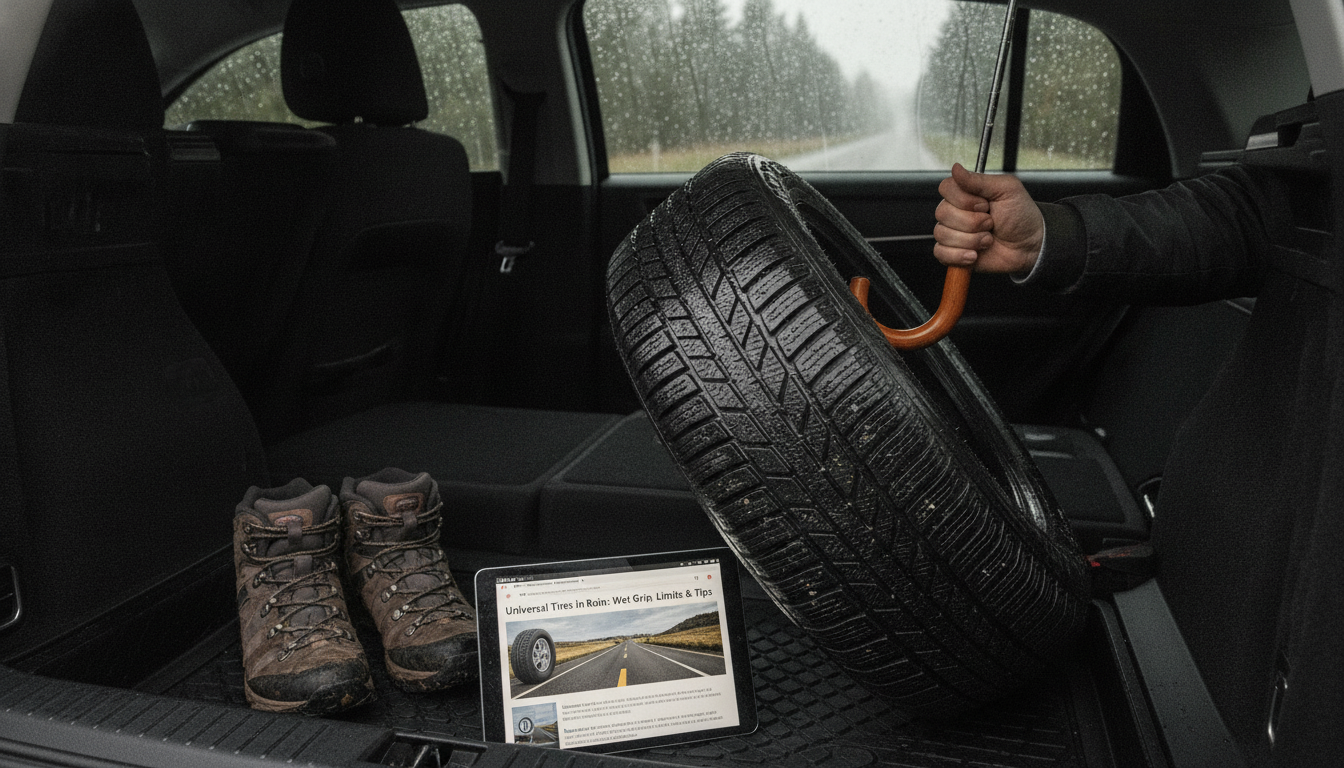
Universal (all-season) tires can be good in rain when they’re in good condition and designed with strong wet-traction features. Most all-season tires use tread grooves and sipes to channel water away from the contact patch, helping reduce hydroplaning and improving braking on wet pavement. For everyday commuting, errands, and highway driving in mild-to-moderate rain, a quality set of universal tires is often a solid choice.
That said, “universal” doesn’t guarantee excellent wet performance. Wet traction varies a lot by tire model, tread depth, rubber compound, and how the tire is maintained. If you frequently drive through heavy downpours, standing water, or high-speed highways, choosing a tire with top wet-grip ratings and keeping it properly inflated matters as much as the tire category itself.
Look for deep circumferential grooves, lots of sipes, and a tread pattern designed to evacuate water efficiently. A more advanced silica-rich rubber compound can also improve grip on wet surfaces. Independent test results and the tire’s UTQG traction grade (where applicable) can provide additional clues, but real-world reviews and wet braking tests are often more useful than marketing claims.
If temperatures stay warm but rain is intense and frequent, a dedicated summer tire can outperform most all-season options in wet braking and cornering. In colder regions, rain plus low temperatures can make all-season tires feel less confident; a true winter tire may be safer when conditions shift toward slush or ice.
Even the best universal tire can lose traction if tread depth is low. Replace tires before they become too worn, keep tire pressure at the vehicle’s recommended spec, and rotate regularly to maintain even wear. Slow down in heavy rain, avoid puddles when possible, and increase following distance.
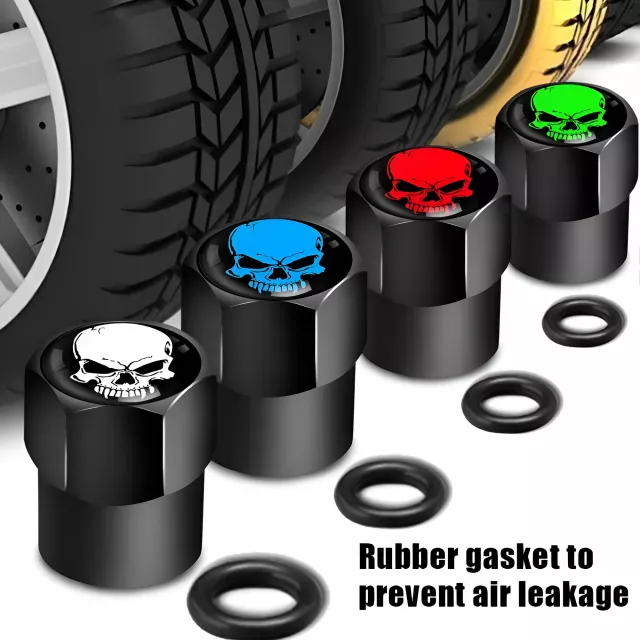
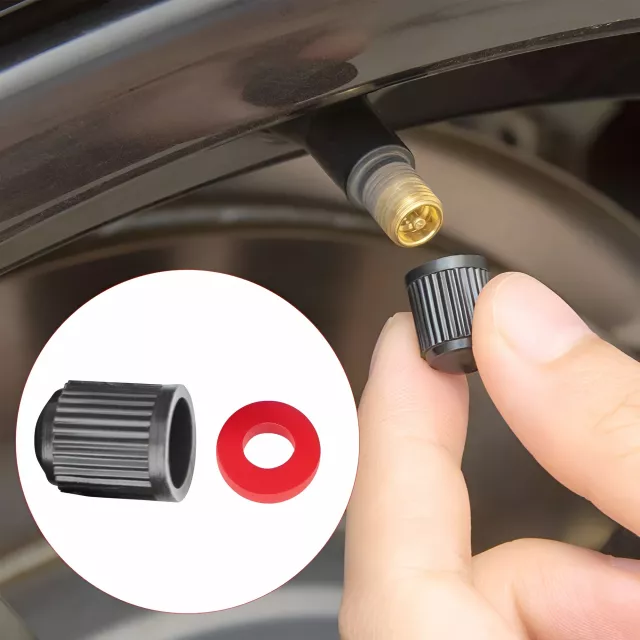
For related car essentials and fitment guidance, see this guide: universal valve stem caps for Toyota, Ford, and Honda.
Keep tires properly inflated, maintain healthy tread depth, and reduce speed when water is pooling. Smooth steering and braking inputs also help the tire maintain contact with the road.





Leave a comment