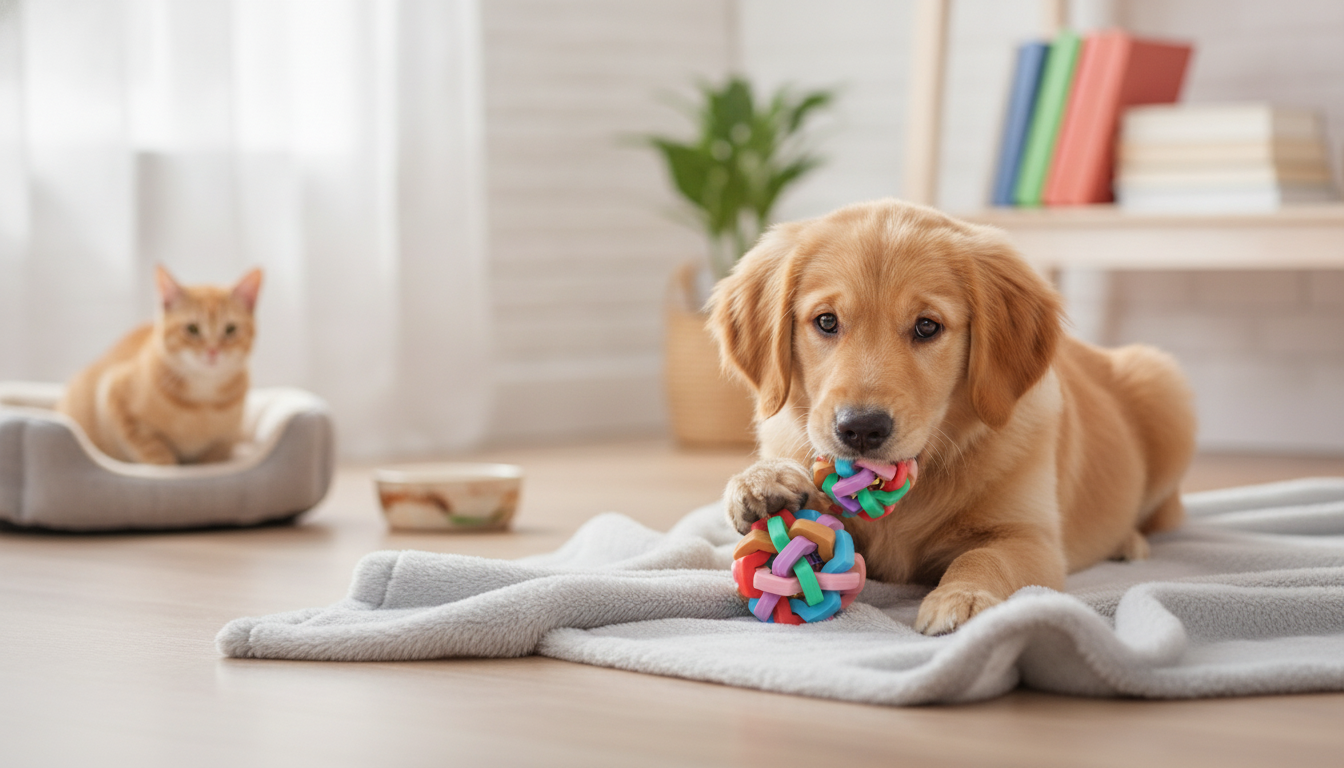
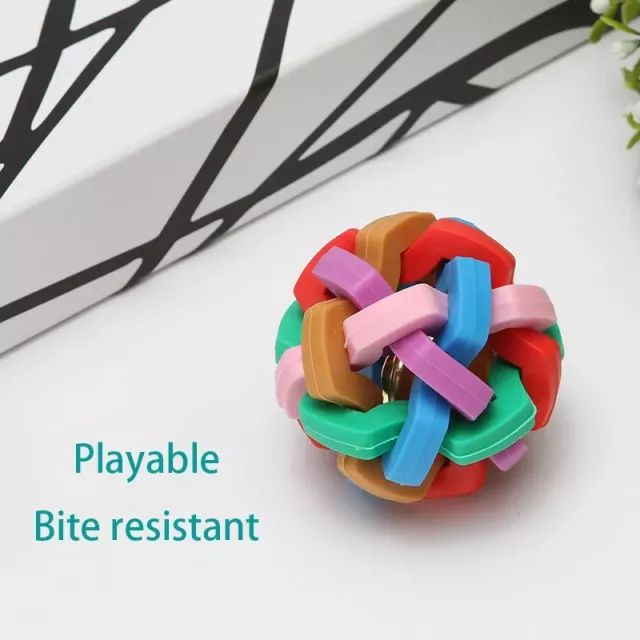
A lightweight chew-and-chase ball can turn restless pacing, nibbling, or midnight zoomies into healthy play. This colorful TPR ball combines a grippy texture with a built-in bell sound to encourage pouncing, chasing, batting, and gentle chewing—making it a simple way to add movement and enrichment for both dogs and cats. For more guidance, see Chews Wisely: A Guide to Safe Dog Chews and Non-Toxic Toys.
Some toys get ignored because they don’t give your pet enough feedback. This ball stacks three attention-grabbing elements—sound, texture, and unpredictable motion—so play stays interesting longer. For further reading, see Best Non-Toxic Dog Toys in 2026 (BPA and Phthalate Free).
If you’re adding it to a rotation, it pairs well with quick training moments or calm post-meal play so your pet gets enrichment without ramping into chaos.
Consistency matters more than marathon sessions. A few short bursts of play spread across the day can reduce restless behaviors while keeping arousal in check.
TPR (thermoplastic rubber) is popular for enrichment toys because it’s flexible and springy. That “give” can feel satisfying to mouthy pets without the hardness of some plastic or dense nylon chews. The ridged texture also helps keep attention on the toy—pets often work a little longer with a textured surface than with a perfectly smooth ball.
General toy-safety guidance from the ASPCA and the AKC is clear: pick an appropriate size, supervise early use, and remove toys that start to break down.
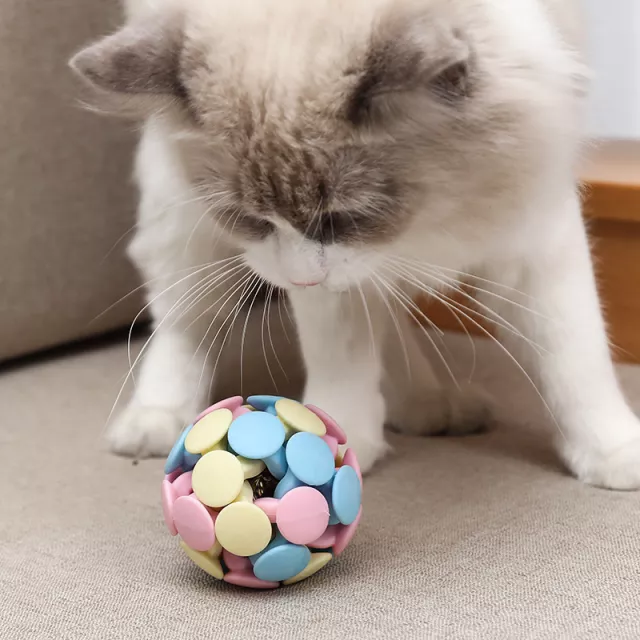
Cats love toys that behave like “escaping prey.” The rolling motion plus the bell’s jingle can bring out stalking and pouncing—especially in hallways and along walls.
For dogs, this ball works best as a movement-and-enrichment toy you can control—rolling it, calling your dog back, and rewarding calm behaviors. It’s especially handy on days when outdoor time is limited.
| Checkpoint | What to look for | What to do |
|---|---|---|
| Size | Ball fits comfortably in mouth without lodging | If in doubt, size up or use only for supervised rolling |
| Wear and tear | Cracks, missing chunks, rough edges | Replace immediately |
| Chewing style | Power chewing, rapid shredding, swallowing attempts | Switch to a more durable chew option and supervise |
| Play area | Stairs, balconies, fragile items | Move play to a clear, flat space |
| Detail | Value |
|---|---|
| Product | Colorful TPR Bell Chew Ball for Dogs & Cats – Boredom Relief Toy |
| Material | TPR (thermoplastic rubber) |
| Sound feature | Built-in bell |
| Suggested pets | Dogs and cats (supervised play) |
| Price | 6.51 USD |
| Availability | In stock |
| Stock | 295 |
| MPN | 18160 |
| SKU | 5:100014064;14:29 |
Generally, yes—when the toy is properly sized and play is supervised. Inspect it often and stop using it if the toy cracks, pieces loosen, or your pet tries to chew it apart.
Short, frequent sessions (often 5–10 minutes) tend to work better than one long session. Rotate toys and end play while your pet is still engaged to avoid overstimulation.
Wash it with warm water and mild soap, rinse well, and air-dry completely. Avoid harsh chemicals, and check textured areas for trapped debris before the next play session.



Leave a comment