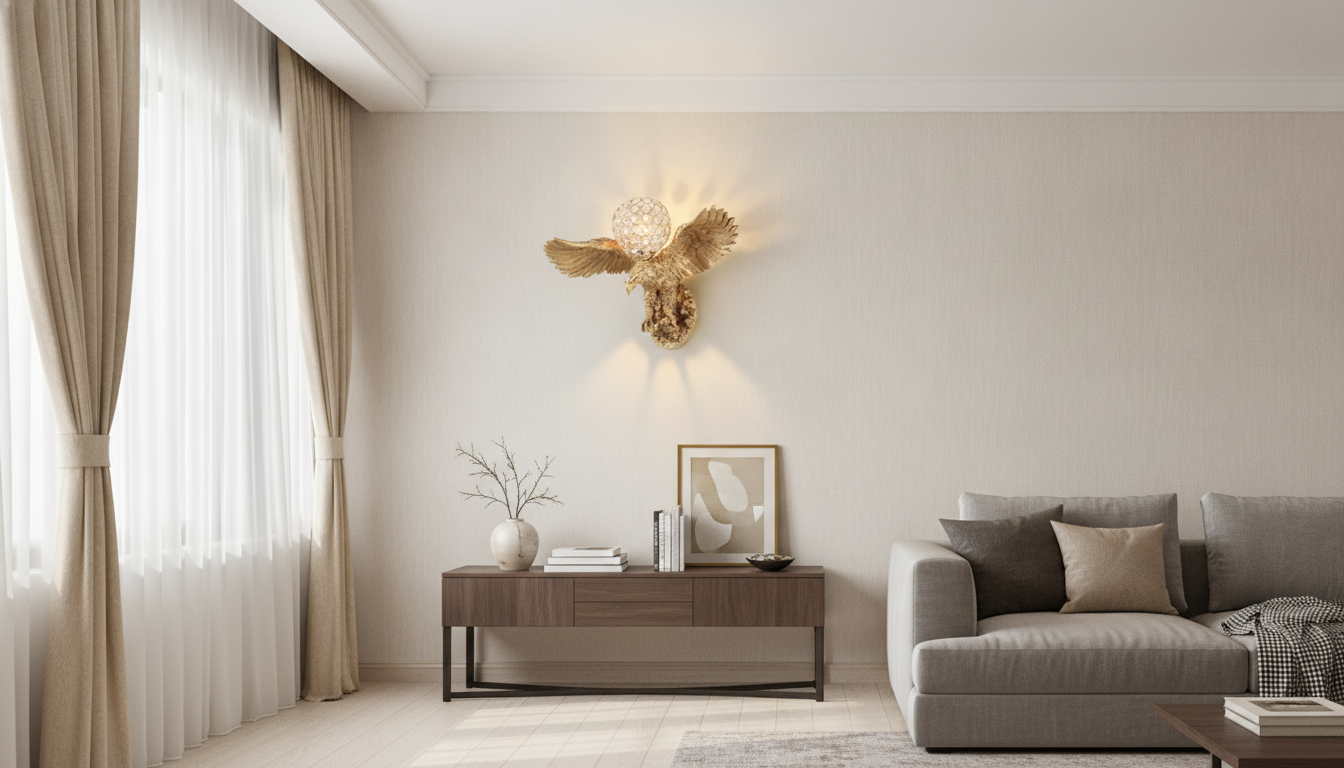
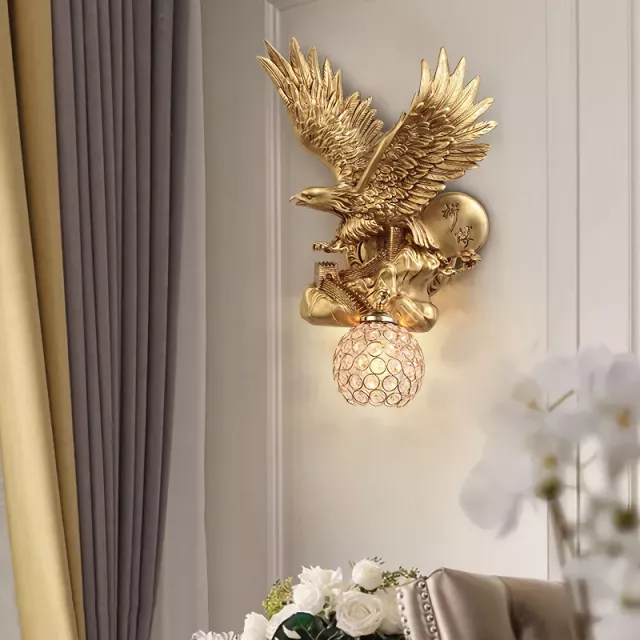
A statement wall lamp can act like functional art—adding focused light while anchoring the style of an entryway, living room, or bedroom. With its eagle-inspired silhouette and modern gold finish, this wall-mounted piece is designed to bring dramatic presence, directional illumination, and a gallery-like focal point to the wall. For more guidance, see Statesboro Campus – Georgia Southern University.
Animal-inspired lighting has a built-in sense of drama, and an eagle form is especially striking because it reads as both graphic and sculptural from a distance. For further reading, see Photo Gallery: 2023 Juried Fine Art Student Exhibition.
If you’re looking for that “one piece that finishes the wall,” the Modern Gold Eagle Wall Lamp is designed to do double duty: décor first, lighting second—without sacrificing function.
Wall lamps shine (literally and visually) when they’re placed where you’ll see them often and where their light supports how the room is used.
For layered lighting guidance (ambient + task + accent), the American Lighting Association’s overview is a helpful reference: https://www.americanlightingassoc.com/lighting-layers/.
The finish may be gold, but the feeling of the fixture is set by the bulb. Color temperature and brightness determine whether the lamp reads as cozy, crisp, or purely dramatic.
| Lighting goal | Recommended color temperature | Best locations |
|---|---|---|
| Relaxed, intimate glow | 2700K–3000K | Bedrooms, living rooms, entryways |
| Balanced everyday light | 3000K–3500K | Hallways, mixed-use rooms |
| Crisper, gallery-like feel | 3500K–4000K | Modern interiors, feature walls |
For practical bulb efficiency tips and what to look for on packaging, ENERGY STAR has a clear guide: https://www.energystar.gov/products/lighting_fans/light_bulbs.
Statement sconces look best when they’re sized and positioned like a deliberate design decision—not an afterthought.
| What to measure | Why it matters | Tip |
|---|---|---|
| Wall width and height | Ensures the lamp doesn’t look undersized or crowded | Mark the outline with painter’s tape |
| Distance above furniture | Prevents visual clutter and accidental bumps | Leave comfortable breathing room above consoles and nightstands |
| Pathway clearance | Avoids snag points in hallways and near doors | Check door swing arcs and walk lines |
| Power source location | Determines ease of installation and cord visibility | Plan for concealed wiring when possible |
To finish a console moment beneath a sculptural wall lamp, add one or two grounded accessories rather than many small items. A single textured piece—like the Vintage Embossed Glass Storage Jar with Airtight Seal – 23.7 oz—can add pattern and depth without competing with the eagle silhouette.
| Detail | Info |
|---|---|
| Product name | Modern Gold Eagle Wall Lamp |
| Availability | In stock |
| Price | 512.51 USD |
| Product page | https://brillaria.com/modern-gold-eagle-wall-lamp/ |
It’s best treated as accent or layered lighting. For primary room brightness, pair it with overhead lighting, a floor lamp, or additional sconces based on room size and how much light you prefer.
Warm white (around 2700K–3000K) typically looks best, giving gold a richer, more inviting glow. Neutral white (around 3500K) can work well for a cleaner, more modern feel—especially with crisp wall colors.
A practical starting point is around eye level for the fixture’s main visual mass, then adjust for ceiling height, furniture below, and glare control. The exact mounting height depends on the lamp’s dimensions and the room layout.



Leave a comment