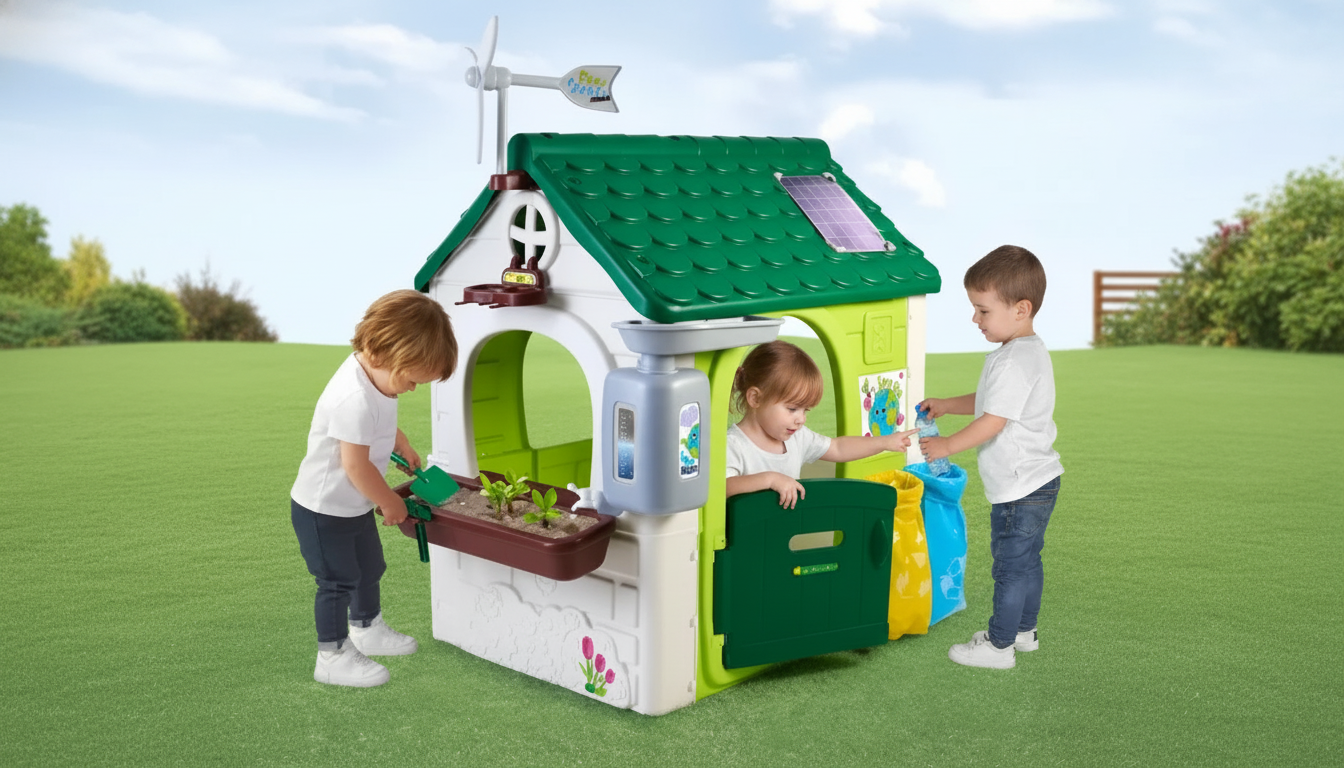
A backyard playhouse can do more than entertain—it can help kids practice everyday earth-friendly habits through hands-on sorting, planting, and pretend play. This eco-themed playhouse combines imaginative spaces with simple recycling and gardening activities that build real-world routines while keeping outdoor play active and engaging.
Unlike a standard backyard “clubhouse,” an eco-themed setup invites kids to act out the kinds of routines they see adults do every week—sorting recyclables, watering plants, and taking care of shared spaces. The result is role play that feels purposeful without turning playtime into a lecture.
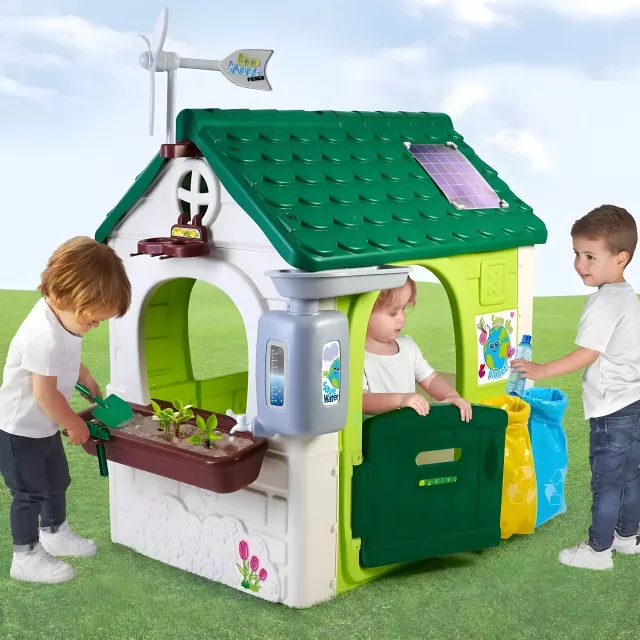
If you’re looking for a centerpiece that naturally prompts these themes, Children’s Eco Playhouse with Recycling and Gardening Activities is designed to keep the “game” going long after the first day in the yard.
Recycling play works best when it’s simple, repeatable, and mess-free. Use clean, dry, safe items and keep the rules short so kids can run the routine on their own.
For quick family guidelines on what belongs in recycling (and why it can vary by location), the United States Environmental Protection Agency (EPA) — Recycling Basics is a helpful reference for grown-ups setting the “house rules.”
Gardening pairs perfectly with pretend play because it offers real results kids can watch unfold. Keep the first projects fast and forgiving, then add complexity as attention spans grow.
Need kid-friendly gardening pointers that work for containers, raised beds, and small backyard plots? Browse the USDA — Gardening and Kids resources for practical starting points.
When kids are “running” their recycling station or “managing” a mini garden, they’re building skills that transfer to school and home routines—without the pushback that can come from formal instruction.
| Age range | Recycling activity | Gardening activity | Grown-up support |
|---|---|---|---|
| 2–3 | Match colors/shapes to labeled bins using safe, clean items | Water a single potted plant; look for “new leaves” | Close supervision; keep items large and non-chokable |
| 4–5 | Sort a mixed pile into 2–3 categories; practice “rinse and dry” role play | Plant big seeds (beans/sunflowers) and check daily for sprouts | Help with planting depth; remind gentle handling |
| 6–8 | Create a mini “recycling station” with simple rules and weekly routines | Measure plant growth; start a small herb pot | Light coaching; introduce basic tool safety |
| 9+ | Plan an upcycle craft (seed starters, planters) and explain the choices | Try a small seasonal garden plan and simple compost discussion | Occasional check-ins; support longer-term projects |
To keep supplies from migrating all over the yard, many families like a dedicated storage spot for kid tools and garden extras. If you want a sturdier outdoor option, consider a separate storage solution like the Sturdy 6×4 FT Metal Outdoor Storage Shed for Garden, Bike, and Tools.
For smaller items—seed packets, plant markers, twist ties, or craft “recycling tokens”—a clear container helps kids find what they need and put it back. The Vintage Embossed Glass Storage Jar with Airtight Seal – 23.7 oz works well for keeping tiny supplies visible while staying neatly contained.
For a simple, kid-friendly handwashing refresher that supports outdoor routines, the CDC — Handwashing: Clean Hands Save Lives guide is a solid go-to.
It’s a great fit from preschool through early elementary (roughly ages 3–8), with close supervision for younger kids. The same setup scales well as kids grow—toddlers can match colors to bins, while older kids can manage routines and track plant growth.
Stick to clean, dry, safe items like cardboard, paper, and rinsed plastic containers, and avoid sharp edges or small parts that could be choking hazards. Labeled bins plus a quick “reset” step at the end keeps play contained and easy to repeat.
Fast, forgiving options include beans, radishes, sunflowers, and simple herbs like basil or mint. Use pots or a small bed, place them in good light, and keep watering consistent without soaking the soil.


Leave a comment