AI shows up in family life through phones, school platforms, streaming, and chat-based helpers. Used well, it can reduce mental load and support calmer routines; used carelessly, it can amplify conflict, erode privacy, or replace connection with convenience. The goal is simple: keep human values in charge while letting smart tools handle repetitive tasks, offer options, and create space for warmer moments at home. For more guidance, see Navigating AI as a Parent: How to Support Your Child’s Digital Well ….
Even with new technology in the mix, kids still need the same basics: safety, predictability, belonging, and limits delivered with respect. What AI changes is speed and access—answers are instant, content is endless, and persuasion can be personalized in ways families don’t always notice right away. For further reading, see Parenting in the AI age – UNICEF.
That means everyday decisions now include invisible factors: data collection, recommendations, and default settings. A practical north star helps: tools can assist planning and communication, but caregivers remain responsible for judgment, consent, and follow-through. If a tool makes a decision feel automatic, that’s a cue to slow down and bring it back to the family’s values.
The best uses of AI at home tend to be the ones that lower background stress without taking over the parts of parenting that build trust.
| Family need | AI can assist with | Caregiver responsibility |
|---|---|---|
| Morning routine | Checklist drafts, reminders, time estimates | Set priorities, model calm starts, adjust for real life |
| Sibling conflict | Neutral phrases, compromise options | Coach empathy, enforce safety, repair hurt feelings |
| Homework time | Practice prompts, step-by-step examples | Prevent copying, protect curiosity, talk to teachers when needed |
| Big feelings | Coping ideas, journaling prompts | Co-regulate, ensure support, seek professional help when appropriate |
| Screen boundaries | House rules templates, device setting guides | Decide values, explain reasons, follow through consistently |
Clear rules keep AI helpful instead of sneaky, confusing, or overly influential.
When a household is stressed, the issue is often less about “knowing what to do” and more about how to say it in a way a child can actually hear. A few language shifts can reduce power struggles while keeping boundaries steady.
A useful standard is “less heat, more clarity.” If a script sounds clever but doesn’t feel kind, it’s not the right fit for your home.
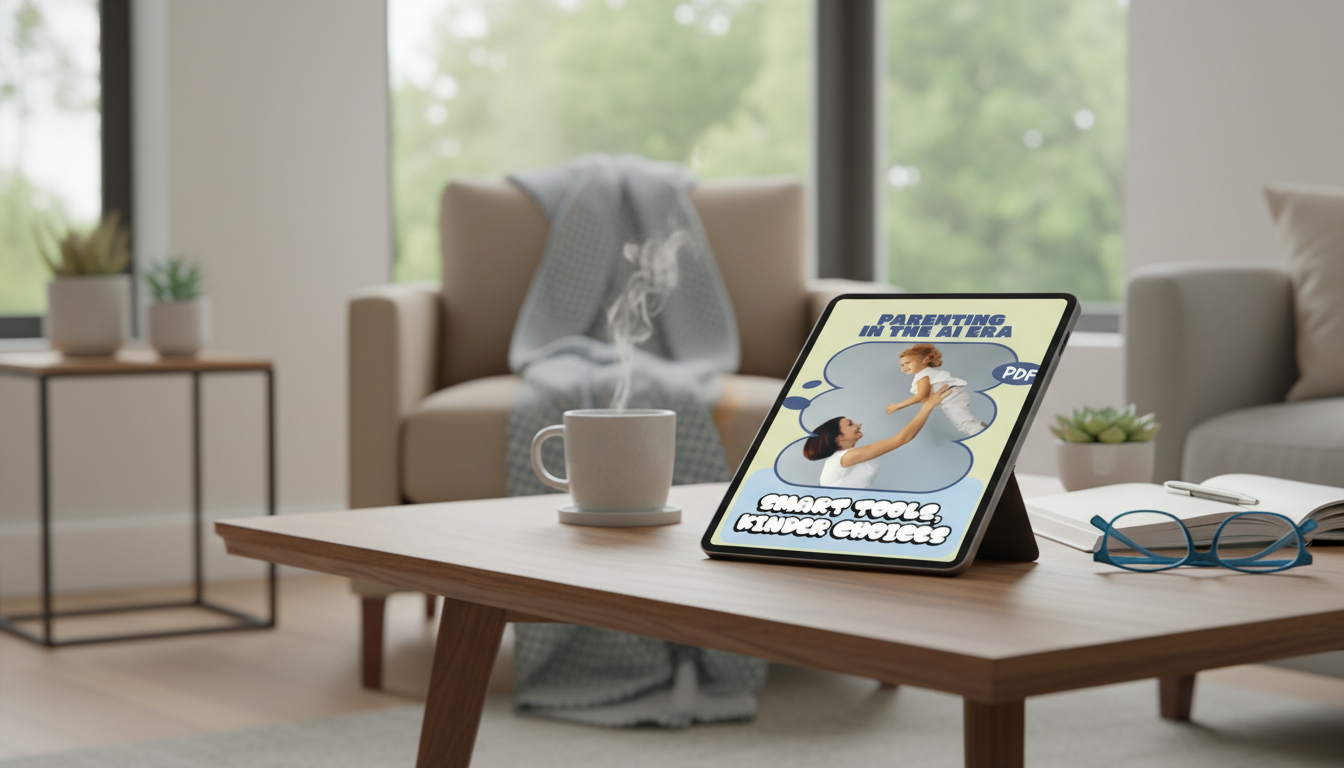
For families who want a structured, quick-reference approach, Parenting in the AI Era: Smart Tools, Kinder Choices (digital download) is designed to help save time while keeping connection and kindness at the center. It includes prompts and frameworks for routines, boundaries, problem-solving, and calmer conversations—especially useful during hectic weeks or big seasonal resets.
Physical environment still matters. A simple organization upgrade can reduce friction around snacks, homework supplies, or “where did that go?” moments. For example, a clear container like the Vintage Embossed Glass Storage Jar with Airtight Seal – 23.7 oz can be used as a visual “snack station” or a drop spot for note cards and routine tokens—low-tech support that pairs well with high-tech planning.
AI can be a helpful source of ideas and scripts, but it shouldn’t be treated as a professional authority. Verify sensitive topics (medical, mental health, legal, school policy), avoid sharing personal data, and lean on qualified support when the stakes are high.
Use AI to draft simple house rules, transition scripts, and a short menu of predictable consequences, then pair that plan with device settings, timers, and consistent routines. Keep empathy in the moment—limits land better when kids feel understood during transitions.
Avoid full names, addresses, school details, identifying photos, health records, ongoing location, and any combination of details that could expose a child’s identity or safety. When in doubt, generalize the situation and keep the request anonymous.







Leave a comment