
Thrifted decor makes it possible to build a home that feels layered, personal, and intentional—without overspending or relying on mass-produced pieces. With a simple system for sourcing, cleaning, styling, and upgrading secondhand finds, rooms can look curated while keeping waste out of landfills and money in the budget. The best part: every find comes with a story, and those stories are what make a space feel like yours.
Secondhand pieces bring a lived-in richness that new items often can’t imitate. Patina, uncommon silhouettes, and vintage materials instantly add depth—especially when you mix them with cleaner-lined modern basics.
Great thrift styling starts before you hit the aisles. A quick plan helps you avoid “cute but nowhere to put it” purchases.
If you’re building a home with thrift finds, prioritize pieces that change the feeling of a room without requiring a full renovation.
| Thrift find | Best rooms | Quick upgrade | What to inspect before buying |
|---|---|---|---|
| Table lamp | Living room, bedroom, entry | New shade + warm bulb | Cord condition, switch function, socket wobble |
| Picture frames | Hallway, gallery wall, shelves | Spray paint or unified mats | Glass cracks, warped backing, secure hanging hardware |
| Woven basket | Any room (storage + texture) | Liner fabric or label tags | Odors, broken reeds, sharp edges |
| Small side table | Bedroom, sofa side, reading nook | Sand + stain/paint + new knobs | Stability, loose joints, water damage rings |
| Mirror | Entry, bathroom, above dresser | New frame color or mounting system | Chips, desilvering, secure hanging points |
Cleaning isn’t just about looks—it’s about longevity and comfort. Build a habit of cleaning before styling so you’re not tempted to “just set it down for now.”
Looking for the bigger “why” behind reuse? The Ellen MacArthur Foundation’s circular economy overview is a helpful primer on keeping materials in use longer.
Thrifted canisters, jars, and trays make countertops look tidy. For a quick upgrade that still feels vintage, consider a dedicated storage piece like the Vintage Embossed Glass Storage Jar with Airtight Seal – 23.7 oz for coffee, sugar, tea, or baking staples.
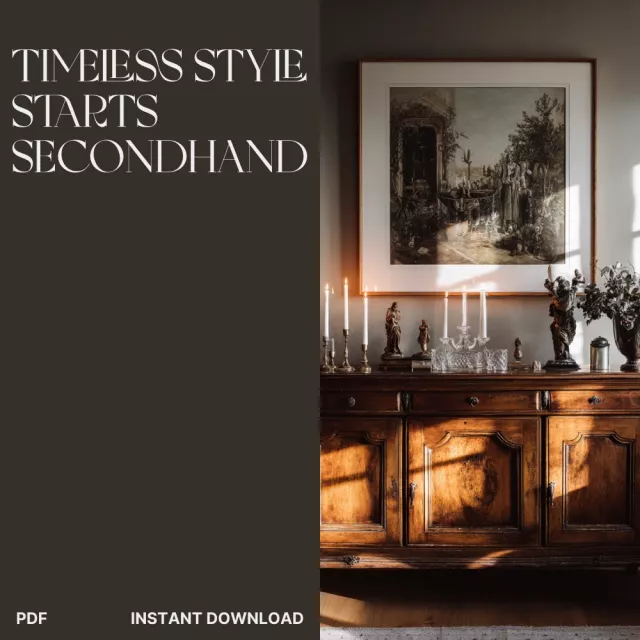
If you want step-by-step prompts, checklists, and styling direction, the Treasure Your Space with Thrifted Style digital guide keeps the process simple—so each trip leads to progress, not piles.
Lamps, frames, mirrors, baskets, and washable textiles are high-impact and low-risk because they’re easy to clean, easy to style, and don’t require perfect sizing. A simple starter list is: 1 table lamp ($10–$30), 3–6 frames ($1–$8 each), 1 mirror ($15–$60), 1–2 baskets ($5–$20), and a throw or set of napkins ($5–$25).
Use mild soap and water for wood/metal (dry immediately), hot soapy water for glass/ceramics, and follow care tags for textiles—washing hot when safe or using an oxygen-based soak. Deodorize fabrics with baking soda in a sealed bin, and always inspect seams/undersides for pests and test electrical items before use.
Limit your color palette, repeat one finish (like black metal or warm brass), and balance vintage shapes with a few modern basics. Use fewer larger statement pieces, then “edit” regularly by rotating smaller decor seasonally instead of displaying everything at once.




Leave a comment