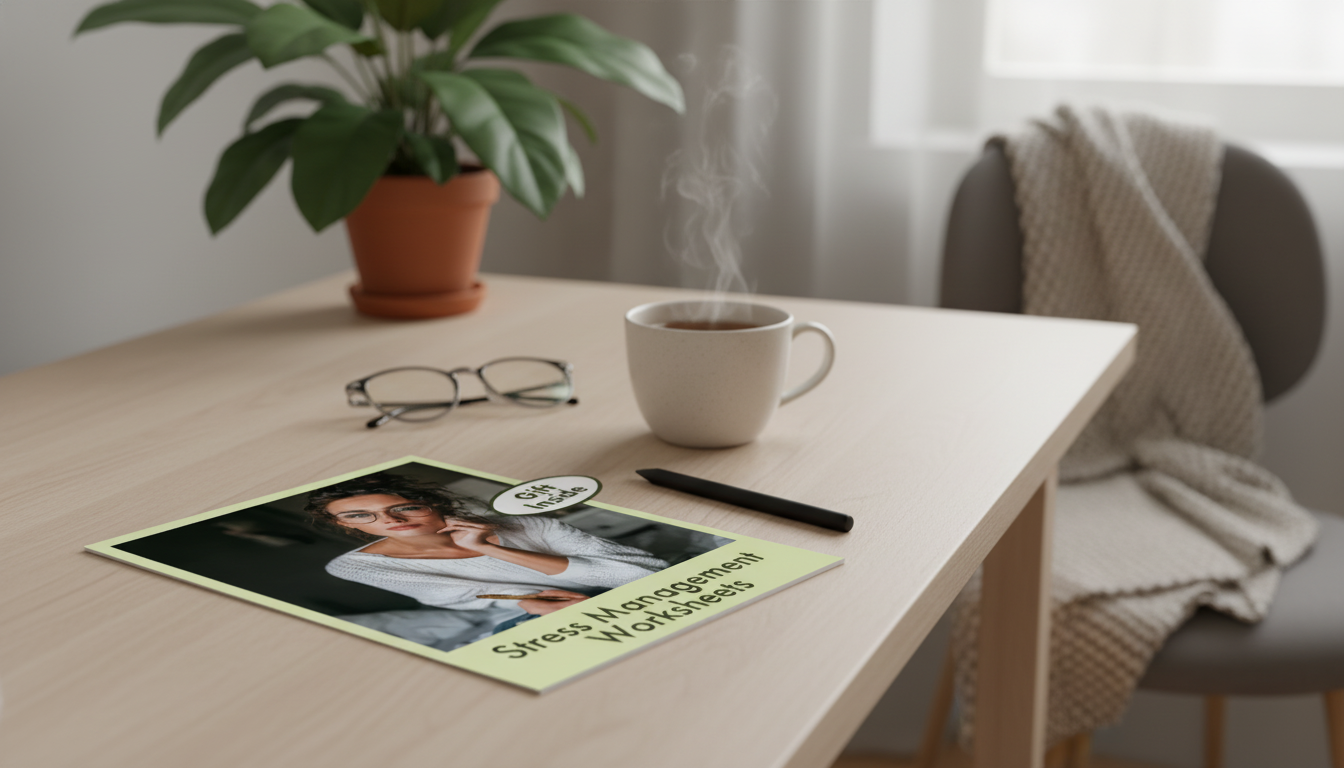
Stress can feel scattered and hard to pin down—especially when routines, sleep, work, and relationships all tug at the same time. A simple set of worksheets can turn vague overwhelm into clear next steps by helping identify triggers, choose calming tools, and build a repeatable self-care routine that fits real life.
Stress isn’t always dramatic. Often, it shows up as a pileup of small signals that get ignored until they become impossible to miss.
A quick pause point practice: stop for 20 seconds, notice body sensations (jaw, shoulders, breath), label the emotion (“anxious,” “overwhelmed,” “irritated”), then choose one small next step (water, a 5-minute walk, a single email reply, or a boundary).
Worksheets create a middle ground between “powering through” and “trying to relax” without a plan. They turn stress into something observable and workable.
| Approach | What it feels like | Typical outcome | What to do instead |
|---|---|---|---|
| Trying to relax on the spot | Pressure to calm down quickly | Temporary relief, stress returns | Use a short checklist: name trigger, pick a tool, set a 10-minute reset |
| Keeping it all in your head | Spinning thoughts, mental fatigue | Overwhelm grows, decisions stall | Write it down: brain-dump + prioritize 1–3 doable steps |
| Random self-care | Unclear what helps | Inconsistent results | Track what works: note stress level before/after and repeat the best options |
| Waiting until burnout | Everything feels urgent | Harder recovery | Build a routine: daily baseline + emergency plan |
A strong stress checklist is simple enough to use on a busy day, but specific enough to guide real choices.
If you want an all-in-one set that’s ready to use, Stress Management Worksheets: Your Easy Checklist for a Calmer Mind (Printable Digital Download) offers guided pages that make it easier to start small and stay consistent.
This one-week plan builds momentum without requiring a major lifestyle overhaul.
| Prompt | Example entry |
|---|---|
| Stress level (0–10) | 7 |
| Main trigger | Back-to-back meetings |
| Body signals | Tight shoulders, shallow breathing |
| One need | A short break and food |
| One action in 10 minutes | Drink water + 5-minute walk |
| One boundary | Block 15 minutes between calls |
For additional guidance on stress and coping strategies, see the American Psychological Association’s stress resources, the CDC’s coping with stress information, and the National Institute of Mental Health overview of stress. If stress feels intense or persistent, consider speaking with a qualified mental health professional.
To reduce decision fatigue in another everyday area (getting dressed, packing, or photographing outfits for resale or social posts), a structured checklist can help: Snap It in Style: iPhone Outfit Photo Checklist.
And for small routines that support calmer days—like keeping tea, snacks, or hydration add-ins visible and easy to grab—simple organization helps: Vintage Embossed Glass Storage Jar with Airtight Seal – 23.7 oz.
Worksheets provide structure—prompts, checklists, and tracking—so it’s easier to spot patterns and decide on clear next steps. Journaling can be helpful too, but it’s often more open-ended and harder to turn into an action plan.
Yes. Print a weekly set for fast access at home or work, and use a tablet or phone for on-the-go check-ins. Keeping your entries consistent (same scale, similar prompts) makes tracking changes over time much easier.
A brief daily check-in (about 2–5 minutes) plus a weekly review is a realistic rhythm for most people. Consistency matters more than length, so it’s better to do a short version regularly than a long version once in a while.




Leave a comment