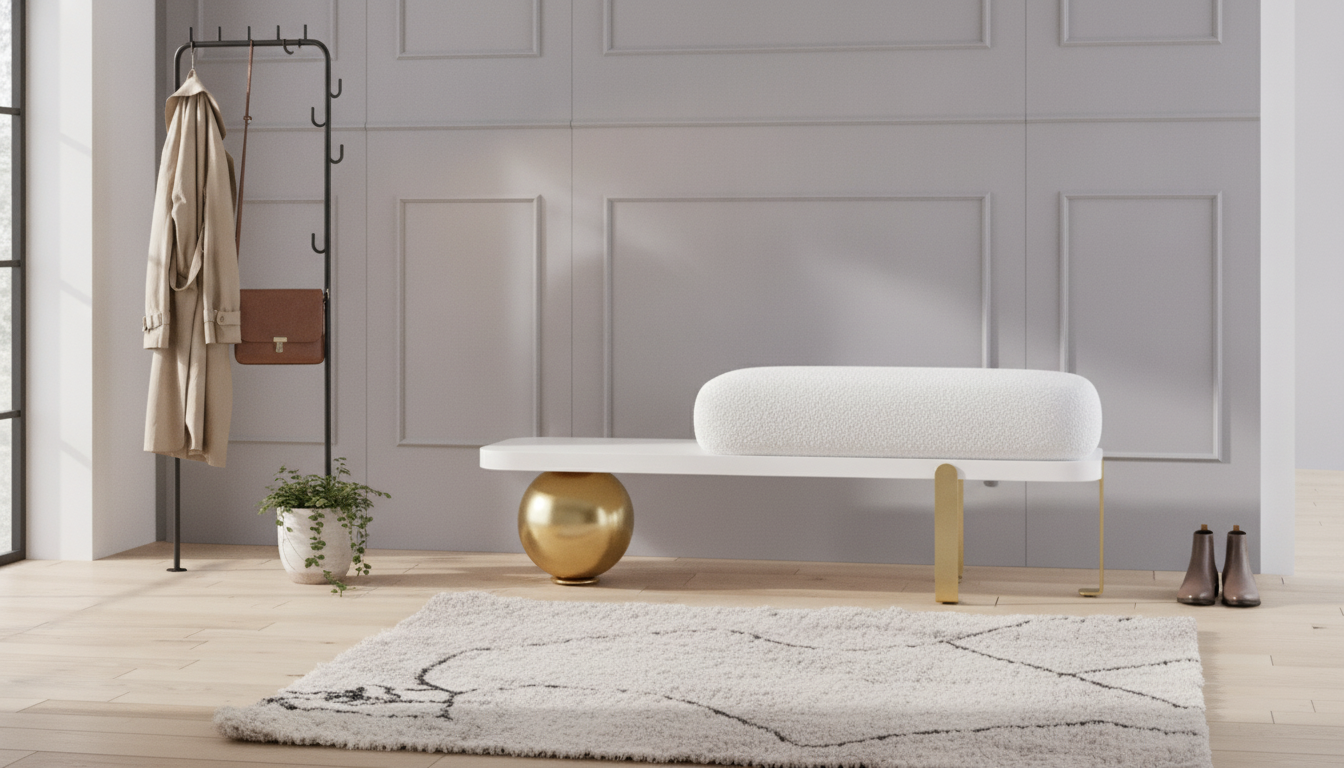
A well-chosen entryway bench makes daily routines smoother—shoes on, bags down, and a comfortable spot to pause before heading out. This modern design pairs a warm wood body with a cushioned upholstered seat and sculptural metal legs for a look that feels both inviting and architectural. For more guidance, see [PDF] 2025-nyu-langone-design-guidelines.pdf.
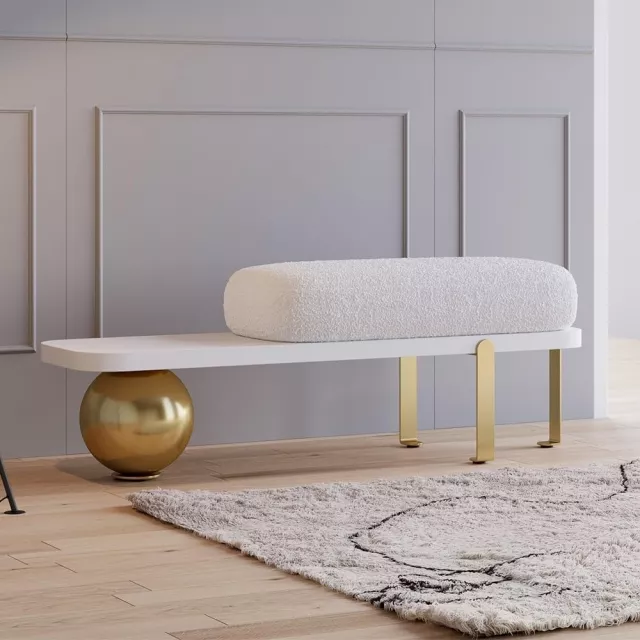
If you want one piece that helps an entry feel “finished” without adding visual clutter, the Modern Wooden Entryway Bench with Upholstered Seat & Abstract Metal Legs brings a grounded wood presence, a soft place to sit, and an artful base that stays airy in tight spaces. For further reading, see Vintage Benches – Chairish.
The strongest first impression comes from contrast: warm wood and soft upholstery up top, paired with metal legs that read like sculpture. That mix helps the bench feel intentional—more like a design decision than a quick fix for shoe piles.
Mixed-material furniture tends to look more “collected” because it mirrors what’s already in a home: wood tones, textiles, and metal finishes. Here’s how each element contributes to the overall effect and daily usability.
| Feature | What it means for the space |
|---|---|
| Wood base | Adds warmth and helps the bench blend with other natural finishes |
| Upholstered seat | More comfortable for daily use and a softer look in hard-surfaced entryways |
| Abstract metal legs | Sculptural accent that visually opens up tight hallways |
| Modern profile | Pairs easily with contemporary, minimalist, and mixed-material interiors |
For upholstery care, it’s helpful to know the cleaning code (such as W, S, WS, or X) so you can choose the right method and avoid set-in stains. A quick primer is available in this guide: Care and Cleaning Codes for Upholstery (W, S, WS, X).
This bench is versatile because it doesn’t rely on bulk for presence. The open base makes it easier to place in areas where furniture can feel tight or blocking.
In a narrow entry, a bench with visual “lift” (like metal legs) can make the floor read larger, especially when you keep what’s around it streamlined—one hook rail, one catchall, and a single piece of wall decor.
The leg design does a lot of the styling work, so the most effective approach is restraint: let negative space show the geometry, and repeat materials sparingly.
Runner placement matters in an entry or hall: sizing that’s too small can look “floating,” while the right proportion makes the whole zone feel intentional. For practical guidance, see Rugs 101: Size and Placement Basics for Hallways and Entryways.
For a crisp, organized landing spot, pair the bench with a small lidded container on a nearby console or shelf—something like the Vintage Embossed Glass Storage Jar with Airtight Seal – 23.7 oz can hold spare keys, coins, or matches while keeping the surface looking calm.
An entry bench earns its keep in the in-between moments: tying shoes, switching bags, juggling a coffee, or helping kids with boots. Upholstery turns those moments into a quick sit rather than a balancing act.
Yes—upholstery makes daily shoe-on/shoe-off routines more comfortable, and it holds up well with basic habits like vacuuming grit and blotting spills quickly. Using a doormat helps reduce the dirt that reaches the seating area.
Place it along the longest uninterrupted wall and maintain a clear walking path so traffic doesn’t pinch. A mirror above the bench can visually open the space, and an open-leg design helps the bench feel lighter.
Repeat the metal finish in small accents (hooks, a lamp, or hardware), and keep wall art minimal so the leg geometry stands out. Balance the look with warm textures like wood tones, a woven basket, or a neutral runner.



Leave a comment