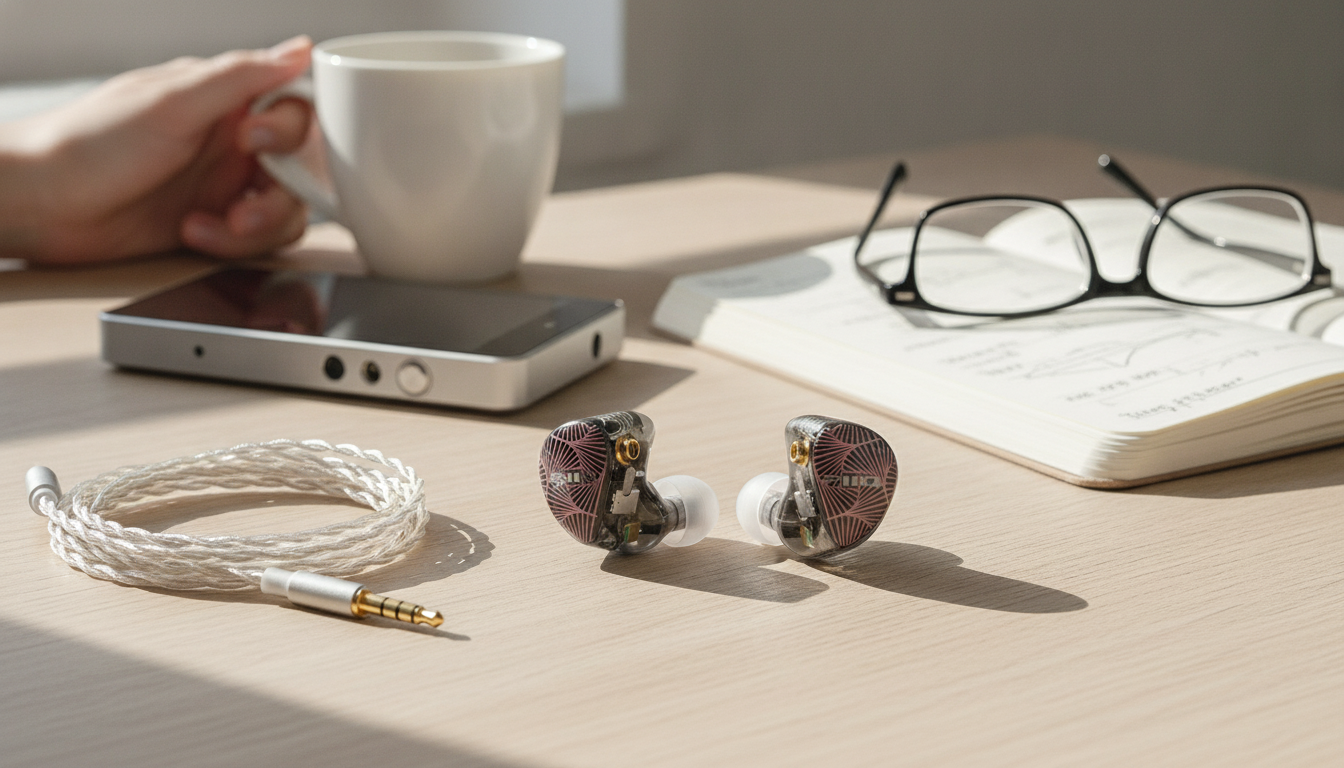
Hybrid in-ear earphones combine different driver types to deliver weighty bass, clear mids, and crisp treble in a compact fit. With a 4-driver hybrid layout and an MMCX detachable cable, this style targets listeners who want detailed playback, easy cable replacement, and flexibility for upgrades like balanced cables or Bluetooth adapters.
For shoppers looking for a long-term daily set that can scale with better sources and accessories, the Hi-Res Hybrid In-Ear Earphones with MMCX Detachable Cable and 4 Drivers offer a serviceable build approach (detachable cable) paired with a driver design aimed at separation and layering.
A hybrid earphone uses more than one driver type to cover the full frequency range. Most commonly, a dynamic driver handles the lows while balanced armatures cover mids and highs. The idea is simple: let each driver type do what it’s best at, then blend them through tuning and crossover design.
In practice, “4 drivers” can help keep busy passages from turning into a single wall of sound. When the tuning is done well, vocals sit more confidently in the center, bass lines keep their texture, and cymbals can sound less splashy—especially when the recording itself has good dynamic range.
“Hi-Res” claims and certifications generally point to an earphone’s ability to reproduce extended frequency response with low distortion when paired with capable sources and high-quality recordings. It doesn’t automatically mean everything will sound “better,” but it can translate into cleaner detail when the rest of the chain supports it.
If you want to understand what “Hi-Res” labeling means from the standard-setting side, the Japan Audio Society publishes the Hi-Res AUDIO Logo Guidelines. For streaming playback settings and what they change, Apple’s overview on Understanding Audio Quality is a practical reference.
| Step | Why it matters | What to try |
|---|---|---|
| Tip fit and seal | Bass and overall balance depend on airtight seal | Try different ear tip sizes/materials; confirm bass is full, not thin |
| Volume matching | Louder can seem “better” even when it isn’t | Compare at the same loudness when testing sources or EQ |
| Use familiar tracks | Known references reveal differences faster | Pick 3–5 tracks covering vocals, bass, and bright percussion |
| Quality source | Poor DAC/amp can add noise or harshness | Use a wired connection and a reputable dongle/DAC if needed |
Detachable cables are a practical feature on premium in-ears because cables are the part most likely to wear out first. MMCX is a popular connector choice, and its rotating design can help reduce twist stress during movement.
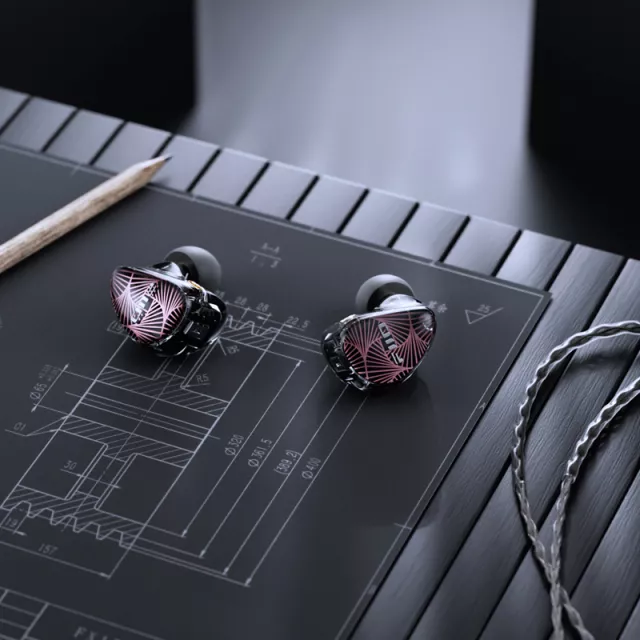
For a flexible, upgrade-friendly in-ear setup, the Hi-Res Hybrid In-Ear Earphones with MMCX Detachable Cable and 4 Drivers focus on a hybrid multi-driver approach plus an MMCX cable connection for easy replacement. Pairing it with a clean phone dongle DAC is a straightforward portable option, while a desktop DAC/amp can provide more headroom and control for dynamic swings and bass grip.
| Item | Details |
|---|---|
| Product | Hi-Res Hybrid In-Ear Earphones with MMCX Detachable Cable and 4 Drivers |
| Cable connection | MMCX detachable |
| Driver configuration | Hybrid, 4 drivers |
| Availability | In stock |
| Price | 1139.65 USD |
MMCX is a connector standard, but small differences in housing shape and tolerances can affect fit. Check whether your earphones use recessed or flush sockets, align the connectors carefully, and never force a connection if it feels wrong.
It can, especially if the current source has a noisy output or weak power delivery. Improvements often show up as a lower noise floor, cleaner separation, and tighter control in bass and dynamics, though results depend on recording quality and earphone sensitivity.
Start with tip rolling to get a reliable seal, then consider mild EQ to fine-tune bass and treble. Keeping nozzles/filters clean, using lossless or high-bitrate playback, and inserting to a consistent depth can also make a clear difference.


Leave a comment