Happy Hamster Feeding Routine Checklist: A Simple Daily Schedule for Balanced Nutrition
A consistent feeding routine helps hamsters maintain a healthy weight, supports healthy tooth wear, and reduces waste from accidental overfeeding. A simple checklist also makes it easier to spot when something is “off” early—especially for new owners, busy families, and pet sitters who need clear, repeatable steps.
Why a routine matters for hamster nutrition
Hamsters are natural foragers, built to search and nibble throughout their active hours. A predictable refill schedule supports steady intake without turning every interaction into “treat chasing.”
- Less spoilage from hoards: Overfeeding often shows up as large stashes and fresh food tucked into nests, where it can spoil. A routine makes quick spot-checks practical.
- Easier health monitoring: Appetite changes can be an early sign of stress or illness. If feeding is consistent, you can tell whether your hamster is truly eating less—or just being picky.
- Better timing: Evening-focused feeding aligns with most hamsters’ awake time and can reduce daytime disturbance around food bowls.
What belongs in a balanced hamster feeding plan
A hamster’s “balanced” diet isn’t complicated, but it does require consistency and portion control.
- Main diet (base): Use a quality hamster mix or lab block as the dependable foundation. Measure portions rather than free-pouring.
- Fresh foods: Offer small servings of safe vegetables on a predictable cadence. Remove uneaten fresh items promptly (including anything found in stash spots).
- Treats: Keep treats limited, planned, and recorded. “Treat creep” is one of the most common reasons hamsters gain weight.
- Protein add-ons (species/age dependent): Small, occasional add-ons (such as plain cooked egg or mealworms) can be useful, but track them so they don’t become daily extras.
- Chew support: Safe chew items and appropriate textures help with tooth wear; replace as needed.
- Water: Check daily for bottle function (ball movement, leaks, clogs) or bowl cleanliness, then refill with fresh water.
For general care guidance, see trusted resources like RSPCA hamster advice, Blue Cross hamster care, and the Merck Veterinary Manual hamster overview.
Daily routine: the quick checklist (morning and evening)
Morning (2–3 minutes)
- Verify water access and function (leaks, clogs, low level).
- Remove any leftover fresh food you find in stash areas to prevent spoilage.
Evening (primary feed time)
- Add the measured base diet; scatter-feed a portion to encourage natural foraging.
- Offer a small, planned fresh food serving only on scheduled days; write down what was offered.
- Observe normal eating behavior and droppings; note sudden changes (reduced appetite, diarrhea, lethargy).
Weekly rhythm
- Pick 1–2 days for a slightly more thorough stash check (especially in warm weather).
Hamster feeding schedule planner (example)
Use the sample below as a starting point. Adjust based on hamster species, age, activity level, and veterinarian guidance. Keep portions stable for 1–2 weeks before changing anything so patterns are easier to spot, and assign treats to specific days to keep them under control.
Sample weekly feeding rhythm (customize in the printable planner)
| Time |
Daily task |
Mon/Wed/Fri |
Tue/Thu/Sat |
Sun |
| Morning |
Water check + remove leftover fresh food |
Yes |
Yes |
Yes |
| Evening |
Measured base diet (scatter + bowl) |
Yes |
Yes |
Yes |
| Evening |
Fresh vegetables (small portion) |
Yes |
Optional |
Yes (rotate variety) |
| Evening |
Treat (planned, tiny) |
No |
Yes (1 item) |
No |
| Weekly |
Stash spot-check + wipe food area |
— |
— |
Yes |
Portioning and monitoring: avoiding overfeeding while respecting hoarding
- Measure the base diet: Consistent portions help prevent accidental double-feeding and make appetite changes obvious.
- Expect hoarding: Don’t remove normal dry-food stashes unless you’re concerned about excess. Do remove fresh/soft items that can spoil.
- Weigh weekly: Check weight on the same day and time each week, and note body condition. Adjust portions gradually if weight trends up or down.
- If fresh foods are ignored: Reduce the amount and change timing or vegetable choice rather than offering larger servings.
- Track changes: New food brand, new treats, bedding change, travel, or a cage rearrangement can all affect eating patterns.
Setting up the printable checklist for success
A printed routine works best when it’s visible and simple enough that anyone in the household can follow it.
- Print one sheet per week and keep it near the enclosure or food storage area.
- Assign responsibilities to avoid duplicate feeding in multi-person households.
- Use checkboxes for water, base diet, fresh foods, treats, and stash checks, plus a short “observations” line.
- For pet sitters, clearly list approved fresh foods and emphasize “do not overfeed treats.”
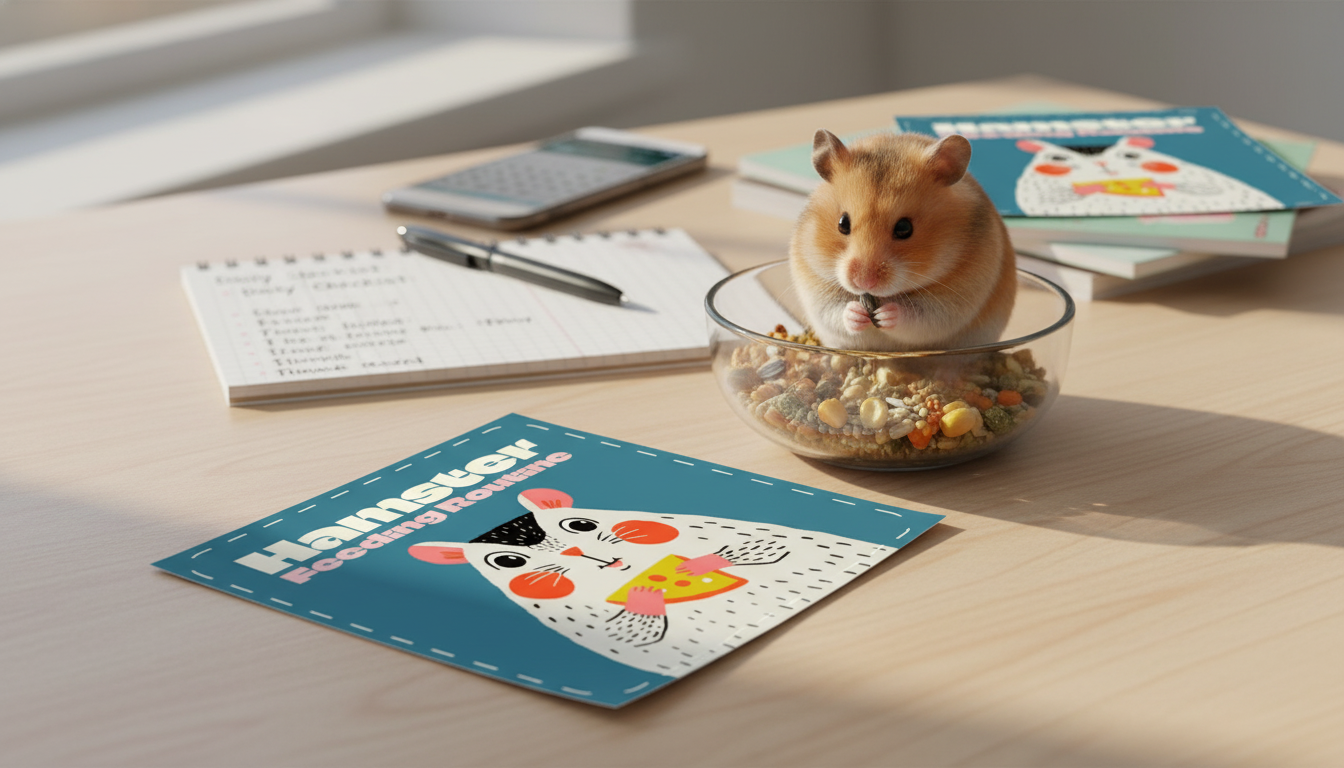
If you want a ready-to-use format, the Happy Hamster Feeding Routine Checklist printable download provides a structured daily/weekly layout with space for notes.
Food storage and freshness tips
For neat, low-fuss storage, consider the Vintage embossed glass storage jar with airtight seal to help keep dry food fresh between refills.
When to contact a veterinarian
Printable digital download: what’s included and how it helps
FAQ
How often should a hamster be fed?
Most owners offer a measured base diet daily, often in the evening when hamsters are naturally active. Fresh foods are typically offered in small amounts on scheduled days, with adjustments based on species, age, and veterinary guidance.
Should food be left in the cage all the time?
Hamsters naturally hoard, so you’ll often see food stored even when portions are appropriate. Instead of unlimited refills, use measured daily servings and routinely remove perishable fresh food from stash areas to prevent spoilage.
How do I know if I’m overfeeding treats?
Common signs include weight gain, selective eating (ignoring the staple diet), and leftover treats accumulating. Assign treat days and a tiny limit, then track it on your checklist so treats don’t quietly become daily extras.
Recommended for you





Leave a comment