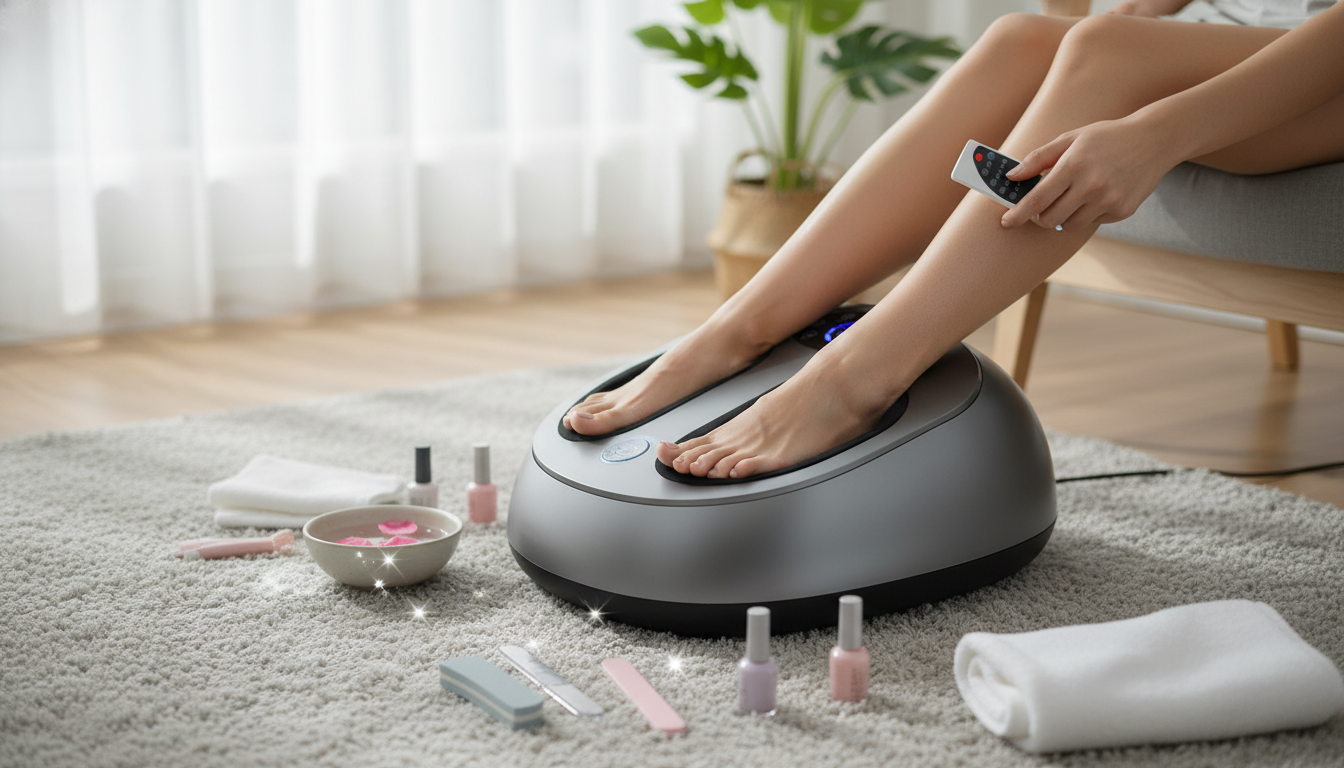
Long days on hard floors, intense workouts, or frequent standing can leave feet feeling tight and heavy. A foot massager that combines air compression, heat, and a built-in pedicure feature can turn routine recovery into a repeatable at-home ritual—helping reduce everyday soreness, warm cold feet, and support relaxation before bed. This guide breaks down what the 6D Air-Wrapped Heated Foot Massager with Pedicure Function offers, who it suits best, and how to use it safely and effectively.
What 6D air-wrapped massage feels like
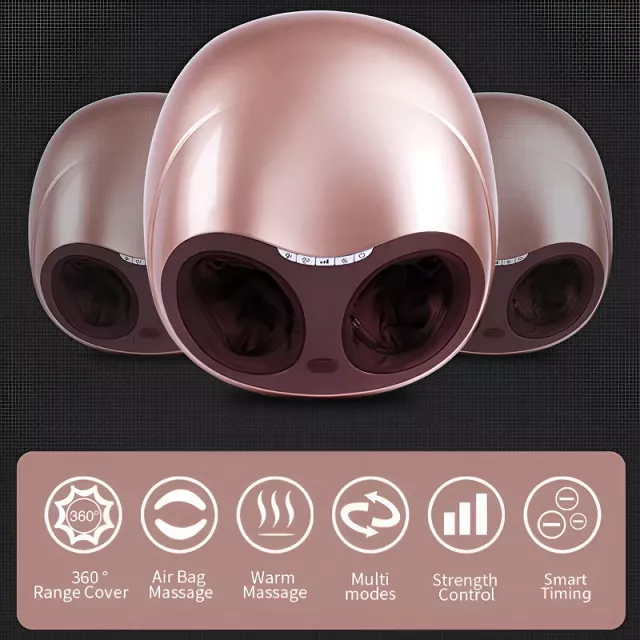
“Air-wrapped” massage uses inflatable air chambers to surround the foot with compression. Instead of feeling like pressure from a single point, it can feel more like a uniform, cushioned “hug” around the sides and top of the foot.
- More even compression: Air-wrapped pressure tends to distribute force across more surface area, which many people find more comfortable than narrow squeeze systems.
- Kneading where tension builds up: Multi-directional kneading commonly targets the arch, heel, and forefoot—useful after walking, running, or hours of standing.
- Heat softens the experience: Gentle warmth can make massage feel less abrupt and more soothing, especially for stiff or cold feet.
- Intensity varies by foot size and sensitivity: A “medium” setting may feel strong on smaller or sensitive feet. Starting low and increasing gradually helps prevent discomfort.
Pedicure function: why it matters for daily foot comfort
Foot comfort is not only about muscle relief; skin condition affects how shoes and socks feel all day. A built-in pedicure function helps keep rough areas in check, which can make everyday movement feel smoother.
- Less friction in shoes: Smoother skin can reduce rubbing inside socks and sneakers, which matters for walkers and runners.
- More consistent callus control: Regular maintenance helps prevent overly thick or uneven calluses that can create pressure points.
- One routine, two needs: Pairing massage (recovery) with pedicure care (maintenance) makes it easier to stay consistent.
- Protect sensitive skin: Keep early pedicure sessions brief, avoid repeatedly working the same spot, and moisturize afterward for comfort.
If you like keeping foot-care items organized (creams, files, or soak salts), a small countertop container can help. The Vintage Embossed Glass Storage Jar with Airtight Seal – 23.7 oz is a simple way to store frequently used essentials and keep them within reach.
Key benefits for common foot complaints
Different days call for different settings. Compression, kneading, and heat can be mixed to match how your feet feel right now—whether you’re coming home from a shift, unwinding before bed, or resetting after training.
- End-of-day fatigue: Compression plus kneading can help feet feel lighter and less “puffy” after long hours on your feet.
- Cold feet: Heat can improve perceived warmth and make rest time more comfortable, especially during colder months.
- Post-workout recovery: Massage can relax overworked muscles in the soles and around the heel after runs, gym sessions, or sports.
- Desk-job stiffness: A short session can counter the tight feeling that comes from long periods of sitting.
Quick guide: choose a mode based on how feet feel
| How feet feel |
Suggested focus |
Tips for a better session |
| Tired and achy |
Air compression + kneading |
Start on low intensity for 5–10 minutes, then increase if comfortable |
| Cold or stiff |
Heat-first session |
Warm for a few minutes before increasing pressure |
| Sore after exercise |
Targeted kneading + moderate compression |
Avoid maximum intensity on tender spots; keep sessions shorter |
| Dry, rough skin |
Pedicure feature + follow-up care |
Moisturize after; avoid aggressive smoothing on sensitive skin |
Who this massager is best for
A 6D air-wrapped heated foot massager with pedicure support fits most lifestyles, but it’s especially useful when foot comfort affects your whole day.
- People who stand or walk for work: Great for repeatable recovery after long shifts.
- Anyone who wants a calming evening routine: Heat plus gentle compression can help you settle down before sleep.
- Fitness enthusiasts: Useful for post-workout foot care without needing appointments.
- Gift buyers: A comfort-focused device that feels premium and practical, especially during colder months.
How to use it for the most comfortable results
Safety notes and who should check with a clinician first
Heat and compression are comfortable for many healthy adults, but certain conditions require extra caution. For broader foot-health guidance, the American Podiatric Medical Association (APMA) is a helpful resource.
- Avoid use on damaged skin: Do not use on open wounds, active infections, or severe inflammation.
- Check first if sensation is reduced: People with diabetes, neuropathy, circulation disorders, or reduced sensation should get medical guidance before using compression or heat. (See: Mayo Clinic – Diabetic neuropathy.)
- Special situations need clearance: If pregnant, managing a clotting condition, or recovering from a foot/ankle procedure, confirm suitability with a clinician.
- Heat should never sting: Warmth should feel soothing, not burning—especially if you tend to fall asleep during relaxation routines.
If you’re dealing with persistent heel pain or suspect plantar fasciitis, comfort devices may help temporarily, but it’s wise to learn the basics of symptoms and management. (See: Cleveland Clinic – Plantar Fasciitis.)
Care, cleaning, and storage
What makes this model stand out
FAQ
How long should a foot massage session last?
Start around 10 minutes to gauge comfort, then adjust. Many people prefer 10–20 minutes per session, and it’s smart to scale back if tenderness shows up afterward.
Is heat safe to use every day?
For most healthy adults, gentle, comfortable warmth is generally fine daily. Avoid excessive heat, monitor skin sensitivity, and seek medical guidance first if you have reduced sensation or circulation concerns.
Can a foot massager help with plantar fasciitis discomfort?
It may provide temporary relief by relaxing tight tissues and reducing the “worked over” feeling in the soles. Use gentle settings, avoid aggressive pressure on a painful heel, and pair sessions with stretching; see a clinician for persistent or worsening pain.
Recommended for you





Leave a comment