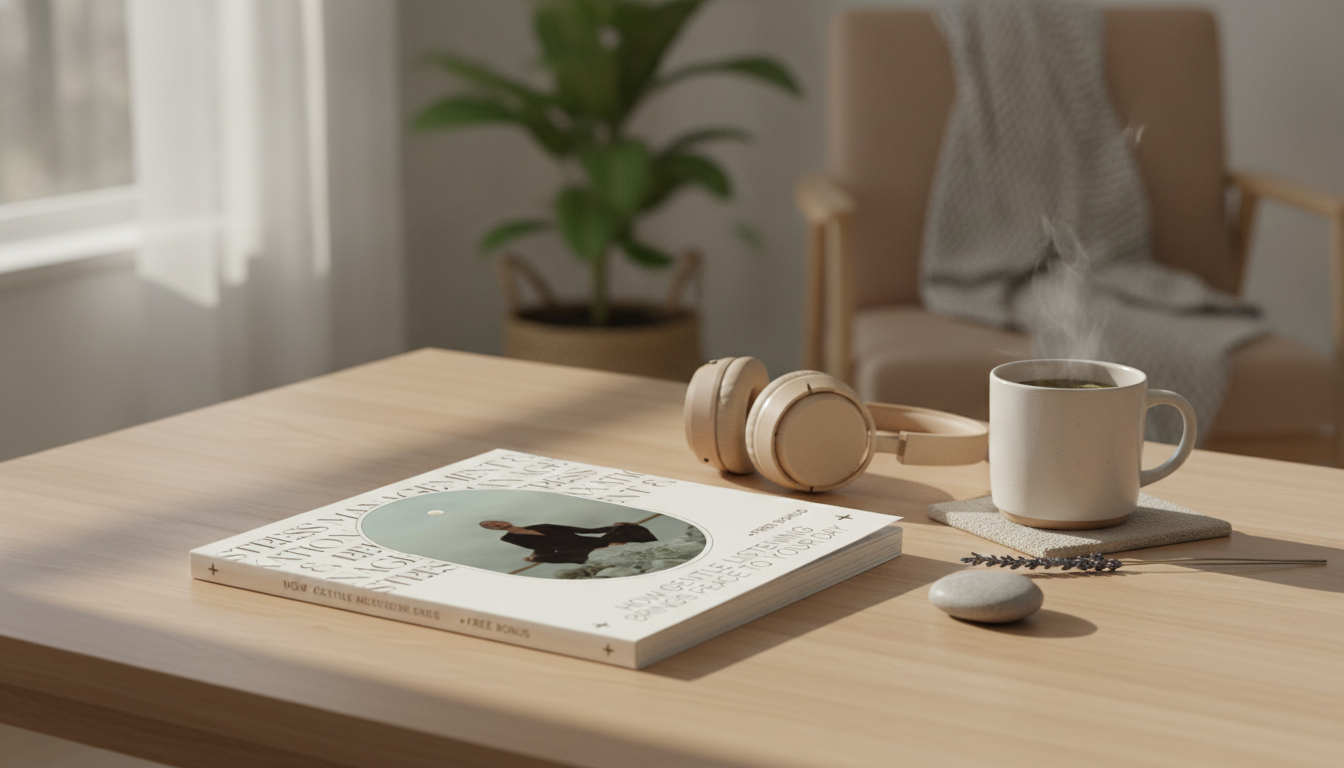
Gentle listening is a simple way to shift the nervous system from “on” to “at ease” without adding another task to the day. With the right sounds, a few minutes can soften racing thoughts, ease tension in the body, and create a steadier mood that carries into work, home, and sleep. This guide breaks down what gentle listening is, how to use it in everyday moments, and how to build a calming routine that feels natural.
Gentle listening is a style of listening that favors softness: steady volume, smooth textures, and predictable patterns that feel safe to the brain. Instead of grabbing attention with dramatic changes, the sound stays supportive—easy to follow without demanding focus.
This approach often includes nature soundscapes, slow ambient music, soft spoken guidance, or low-intensity instrumental tracks. The goal isn’t to block life out; it’s to create a calm layer that reduces internal noise and supports emotional regulation—especially during moments when the mind wants to sprint ahead.
When thoughts spiral, the mind tends to hunt for threats, unfinished tasks, or “what-ifs.” A steady, non-threatening sound gives attention a simple place to rest, reducing rumination and making it easier to return to what you’re doing.
Slow pacing in music or consistent sound patterns can encourage slower breathing and a steadier heart rate through entrainment-like effects. This doesn’t require perfect technique—your body often follows the tempo naturally when the sound isn’t demanding.
Transitions can be surprisingly activating: waking up, commuting, shifting from work to home, and winding down for sleep. Calming audio can smooth those edges and signal, “You’re safe to downshift.” For a broader overview of relaxation methods that pair well with audio, see the NCCIH guide to relaxation techniques.
Silence isn’t always soothing—especially in noisy buildings or open offices. Gentle listening can soften harsh background noise (traffic, neighbor sounds, chatter) without total isolation. Over time, this can reduce the “always bracing” feeling that chronic stress can create in the body. The American Psychological Association’s overview of stress effects on the body is a helpful reference for why small daily downshifts matter.
A gentle listening routine works best when it fits into moments that already exist. The aim is to create tiny “reset points” so calm becomes more available, more often.
Start with low-volume ambient sound or birdsong while stretching, showering, or making tea. This sets a slower pace before notifications and decisions pile up.
Keep eyes open, drop your shoulders, and let the sound stay in the background. Pair it with a short walk, a window break, or a simple breath count (for example, inhale 4, exhale 6).
Choose a consistent “closing track” that signals tasks are done. Over time, repeating the same sound in the same context can become a powerful cue for recovery.
| Moment | What to play | How long | Best setting tip |
|---|---|---|---|
| Waking up | Soft ambient or birdsong | 3–5 min | Keep volume low; avoid fast beats |
| Before focused work | Steady soundscape (rain, fan-like noise) | 5–15 min | Use the same track to build a cue for focus |
| Between meetings | Slow instrumental | 2–5 min | Unclench jaw; drop shoulders while listening |
| After work | Nature sounds + gentle guidance | 7–10 min | Dim lighting to reinforce the downshift |
| Bedtime | Very soft ambient or body scan audio | 10–20 min | Set a sleep timer; keep the phone face down |
A practical way to support a tea-based wind-down is to keep your favorite herbs within reach in an airtight container like the Vintage Embossed Glass Storage Jar with Airtight Seal – 23.7 oz, so the routine feels effortless rather than another chore.
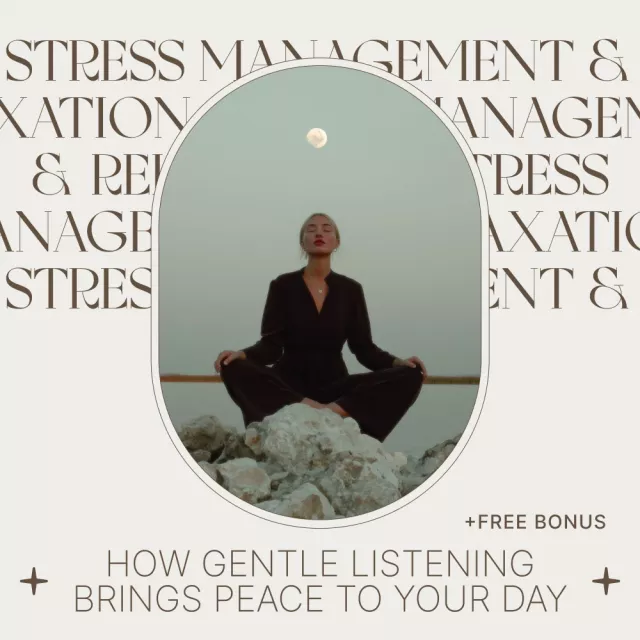
Consistency matters more than length. Regular brief sessions can be more effective than occasional long ones—especially when the goal is a calmer baseline across the week. For a structured option, explore How Gentle Listening Brings Peace to Your Day – A Soothing Relaxation Guide for Everyday Calm, a digital guide designed for everyday moments.
For a helpful companion concept, breath control is often the fastest “lever” to pull while listening; Harvard Health’s overview of breath-based relaxation explains why slower exhales can help quiet the stress response: Relaxation techniques: Breath control helps quell an errant stress response.
Three to ten minutes is a practical starting point, especially if you’ll do it most days. Longer sessions can be useful for bedtime, but consistency is usually what makes the biggest difference.
Predictable, low-intensity sounds tend to work best—nature soundscapes, soft ambient, slow instrumental music, or guided relaxation with a calm tone and steady pacing.
Yes—short micro-breaks can interrupt stress momentum, especially before meetings or during task switches. Gentle sound can also mask harsh background noise while you relax posture and slow your breathing for a minute or two.






Leave a comment