L-shaped desks can be a smart way to gain surface area, but they’re not a perfect fit for every room, workflow, or budget. Before committing to the corner footprint, it helps to weigh the most common downsides that shoppers run into after setup.
Even when an L-shaped desk is designed for a corner, the “return” side often extends farther into the room than a straight desk would. That can reduce walking clearance, crowd nearby furniture, or make a small office feel boxed in.
L-shaped desks typically work best in a specific orientation (left-return or right-return). If the room layout changes—moving a door swing, adding storage, relocating outlets, or shifting a window-facing setup—the desk may no longer fit comfortably without blocking something important.
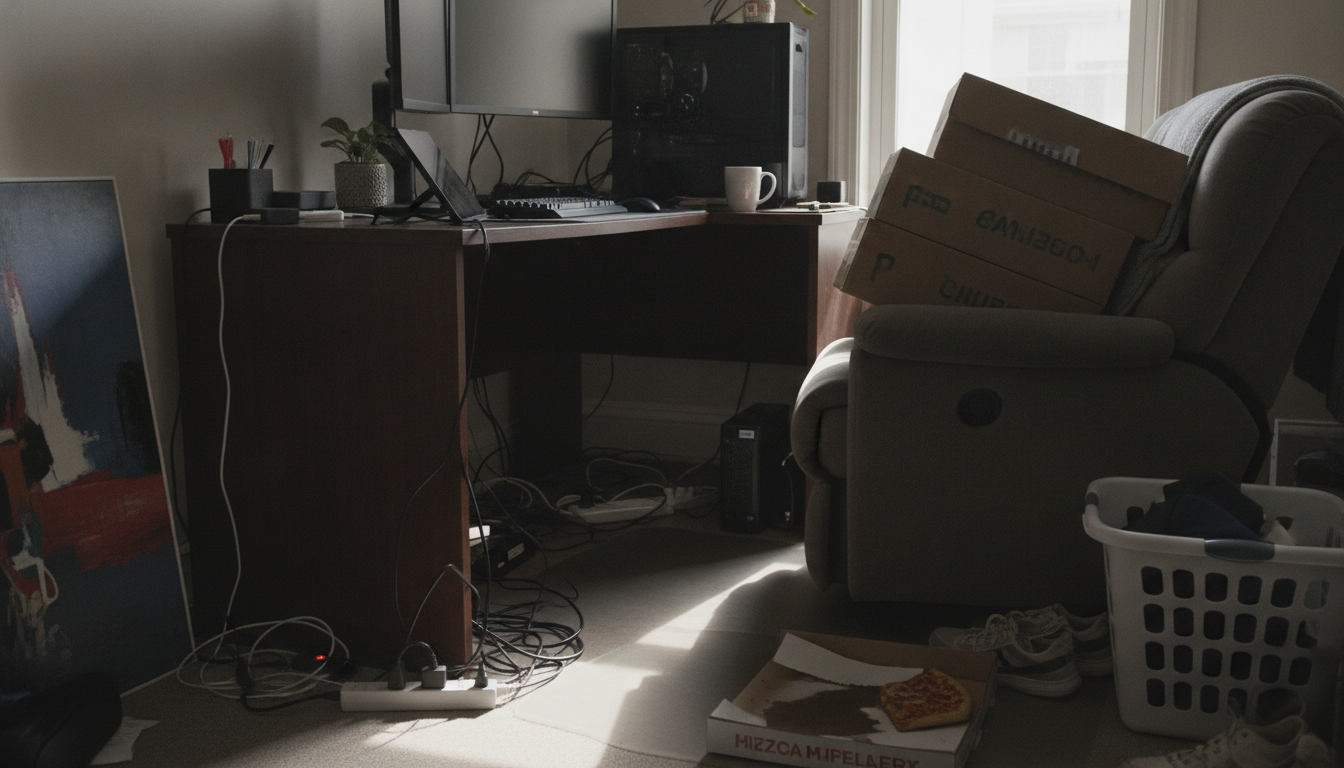
The inside corner can become a clutter magnet for monitors, chargers, and accessories. If the desk lacks grommets or a dedicated wire channel, cables can pile up at the back corner where they’re hard to route neatly and even harder to clean.
With two surfaces, it’s easy to end up twisting between a keyboard area and a secondary work zone. If monitor placement or chair position isn’t dialed in, that frequent rotation can add strain over long sessions.
Compared with a similar-quality rectangular desk, an L-shaped model often costs more due to extra materials and structure. It may also arrive in heavier parts, be trickier to assemble, and be awkward to relocate through tight hallways or staircases.
For a deeper breakdown of trade-offs, measurements to consider, and what to look for in a better design, see the main guide: https://brillaria.com/what-are-the-disadvantages-of-an-shaped-desk/.
They can, but only if the desk dimensions match your clearances for doors, drawers, and chair movement. Measuring both wall lengths and leaving enough space to pull the chair back usually makes the decision obvious.




Leave a comment