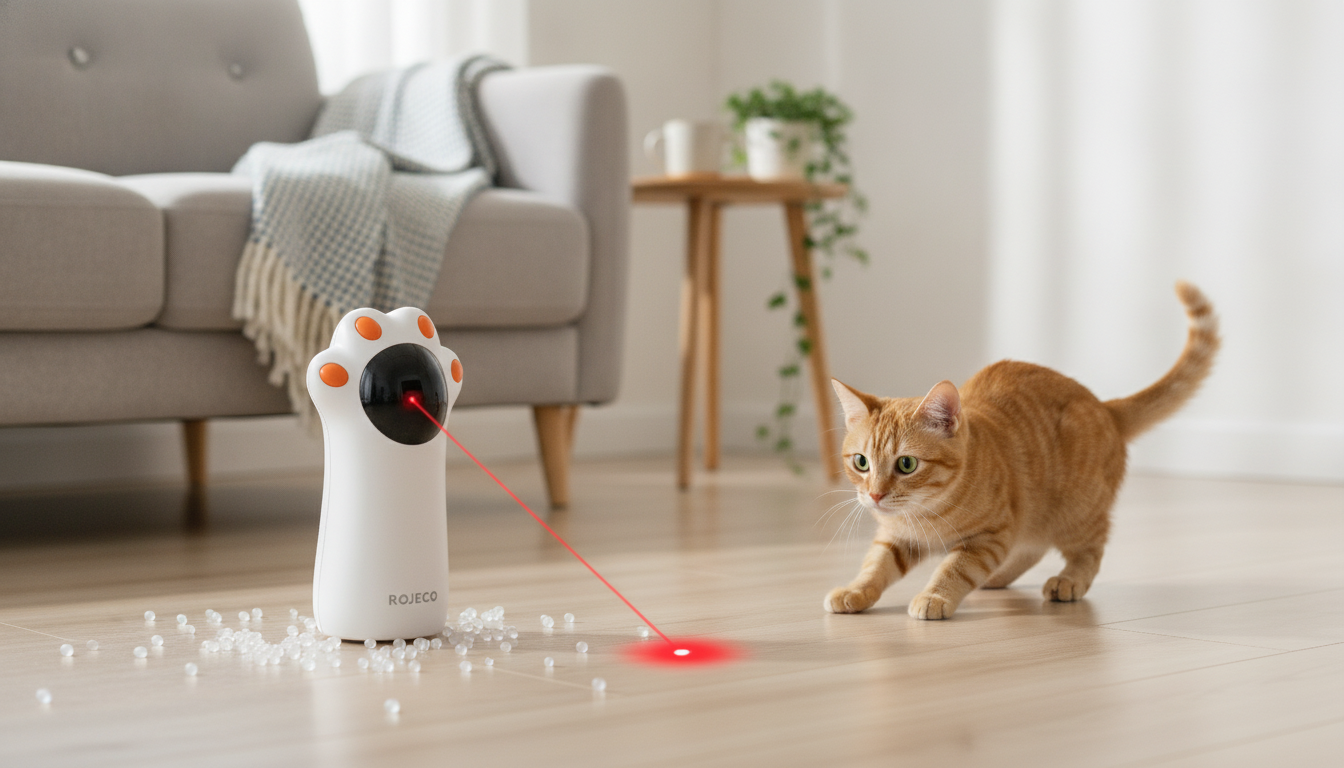
Cats thrive on short bursts of movement, stalking, and pouncing. An automatic LED laser toy adds hands-free action that can help break up quiet hours, encourage exercise, and provide daily enrichment—especially for indoor cats that need more variety in their routine. For more guidance, see [PDF] Smart Laser Toy for Cats – creol #ucf.
If your cat tends to get the “nighttime zoomies,” begs for attention while you’re working, or simply needs a safe outlet for hunting instincts, a rechargeable automatic laser can turn a few minutes of play into a consistent habit that supports a healthier routine. For further reading, see [PDF] Interactive Cat Toy – UCF ECE.
For many cats, the “magic” is the irregular path: a dart, a pause, then a sudden change in direction. That stop-and-go pattern mirrors how small prey moves, giving your cat a reason to crouch, creep, and sprint—without requiring you to hold a pointer the whole time.
It also helps to think about your home’s layout. A bright dot is easiest to track on surfaces with contrast (for example, a medium-toned rug or a matte floor). If your space is very sunlit, you may prefer play sessions in the evening or with curtains partially drawn.
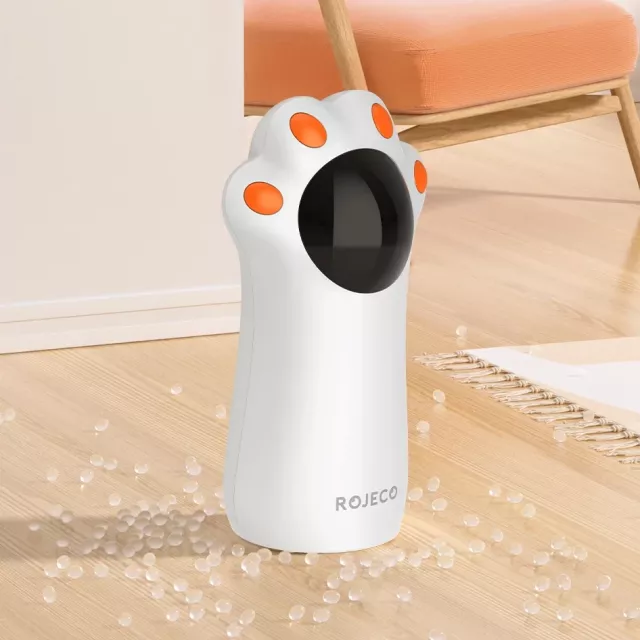
The USB Rechargeable Interactive Automatic LED Laser Toy for Cats is designed for hands-free play sessions with rechargeable convenience. Set it down, start a session, and let your cat chase and pounce while you supervise and keep the area safe.
| Detail | What to expect | Why it matters |
|---|---|---|
| Power | USB rechargeable | Less hassle than disposable batteries; easy to top up |
| Play style | Automatic LED laser movement | Encourages chase, stalking, and short sprints |
| Best play area | Open floor space with a clear line of sight | Helps cats track the dot and reduces accidental bumps |
| Session approach | Short, repeated sessions | Matches typical cat play cycles and supports healthy engagement |
| Supervision | Recommended | Helps prevent frustration and keeps play safe around obstacles |
A simple setup upgrade is to create a “runway” zone: push chairs in, clear stray cords, and give your cat a loop to sprint and circle back. If your cat tends to skid, try playing on a surface with more traction (like a low-pile rug) and keep turns wide by placing the toy farther from tight corners.
To make the “catch” finish easy, keep a few small rewards nearby. If you use treats, storing them in a dedicated container can help you stay consistent—something like the Vintage Embossed Glass Storage Jar with Airtight Seal – 23.7 oz can be a neat way to keep training treats fresh and accessible for a quick end-of-session payoff.
It can be safe when used correctly: keep the dot on the floor, never aim near eyes, and supervise early sessions. Short play bursts and ending with a physical toy or small treat help keep play positive and reduce frustration.
Most cats do best with short bursts of a few minutes, followed by a break. Adjust based on your cat’s excitement level, and finish with a toy they can grab or a small treat to create a satisfying endpoint.
Because the chase doesn’t include a physical “capture,” some cats stay keyed up or seem unsettled afterward. Pair laser play with a tangible toy at the end (or a small treat) to complete the hunting sequence.



Leave a comment