Kitchen Appliance Safety Survival Tips: A Printable Checklist for Home Cooks, Families, and Renters
Busy kitchens run on routines—and the fastest way to prevent burns, shocks, and small fires is to turn safety into a repeatable habit. The tips and checklist below are designed for real life: small apartments, shared rentals, family kitchens, and anyone juggling multiple appliances at once.
If you want a ready-to-post version with clear, fridge-friendly formatting, see Kitchen Appliance Safety Survival Tips – Printable Checklist.
Start with the three most common kitchen hazards
- Heat injuries: Hot surfaces, steam, boiling liquids, and overheated oil—especially when distractions happen during cooking.
- Electrical risks: Damaged cords, overloaded outlets, and appliances used near water (sinks, wet counters, damp hands).
- Fire and smoke: Unattended stovetops, crumb buildup in toasters, grease near burners, and flammables too close to heat sources.
Cooking-related fires remain one of the most common household fire scenarios, which is why consistent “small habits” matter. For deeper prevention tips, the NFPA cooking fire safety guidance is a solid reference point.
Kitchen setup that prevents accidents before they start
- Create a clear zone: Keep a 3-foot area around the stove and oven free of mail, towels, paper, and clutter; store potholders within reach but not on the range.
- Check outlet safety: Avoid “daisy-chaining” power strips; use appliances on dedicated outlets when possible; keep cords away from hot surfaces and sharp edges.
- Place appliances with airflow in mind: Give toaster ovens, air fryers, and microwaves clearance on all sides; never block vents.
- Stabilize work surfaces: Set heavier appliances (stand mixers, air fryers) on sturdy counters; keep cords routed so they can’t be snagged by kids or pets.
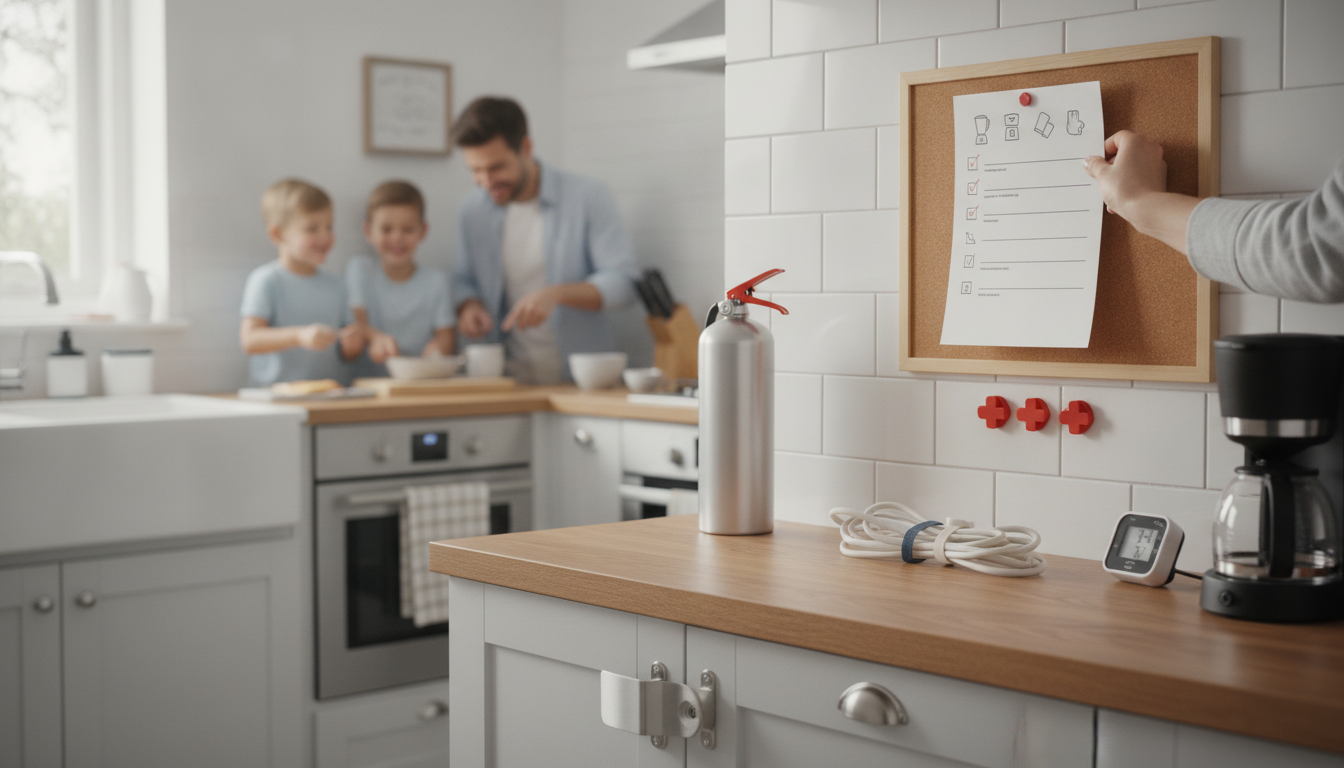
- Stock quick-response basics: A working smoke alarm nearby, a small kitchen-rated fire extinguisher, baking soda for small grease flare-ups, and a first-aid kit for minor burns and cuts.
Decluttering also improves safety. Airtight storage can help keep counters clear (and keep pantry items fresher), such as the Vintage Embossed Glass Storage Jar with Airtight Seal.
Daily safety checklist (print and post on the fridge)
- Before cooking: Wash and dry hands; clear the counter; confirm nothing is stored on the stovetop; pull long hair back and avoid loose sleeves.
- While cooking: Stay in the kitchen when frying, broiling, or boiling; turn pot handles inward; use timers; keep kids and pets away from hot zones.
- After cooking: Turn burners and oven off; move hot pans to cool areas; wipe crumbs/grease when surfaces are cool; unplug small appliances used that day.
Printable Kitchen Appliance Safety Checklist
| Task |
When |
Why it matters |
Quick check |
| Inspect cords and plugs (no frays, no scorch marks) |
Weekly |
Reduces shock and fire risk |
Replace or stop using if damaged |
| Confirm stove knobs are off and oven is off |
After every cook |
Prevents accidental gas/heat activation |
Hand-check the knob position |
| Clean toaster/air fryer crumb trays |
Weekly (or after heavy use) |
Crumbs can ignite |
Empty tray; wipe when cool |
| Wipe grease near burners and backsplash |
2–3x/week |
Grease fuels flare-ups |
Degrease once surfaces are cool |
| Check microwave interior for splatters and metal |
Weekly |
Avoids arcing/smoke and uneven heating |
No foil, no metal trim, clean splatter spots |
| Test GFCI outlets (kitchen/bath) |
Monthly |
Improves protection near water |
Press TEST then RESET |
| Confirm appliance vents are clear |
Monthly |
Prevents overheating |
Leave clearance; remove dust |
Appliance-by-appliance “survival tips” (what to watch for)
- Stovetop and oven: Keep a lid nearby for pan flare-ups; never pour water on a grease fire; use back burners when kids are present; avoid storing items in the oven that could be forgotten and heated.
- Microwave: Use microwave-safe containers; vent covers to prevent steam burns; stir and rest foods to reduce superheating; handle hot containers with dry mitts. For food-handling specifics, review USDA FSIS microwave oven food safety.
- Toaster and toaster oven: Unplug before deep cleaning; keep away from curtains and paper; never insert metal utensils to retrieve stuck food.
- Air fryer: Maintain clearance for airflow; avoid overfilling (can cause smoke); let it cool before washing baskets; watch for excess grease pooling.
- Electric kettle and coffee maker: Keep cords away from counter edges; don’t overfill; descale to prevent overheating and poor performance.
- Blender/food processor/stand mixer: Unplug before changing blades; keep hands and utensils away from moving parts; lock lids properly to prevent splatter burns.
Rental- and family-friendly rules that actually stick
What to do when something goes wrong
For broader consumer guidance on home and kitchen hazards, the U.S. Consumer Product Safety Commission safety resources are worth bookmarking.
Make the checklist effortless: print, place, and repeat
FAQ
What should be unplugged after use in the kitchen?
Unplug small countertop appliances that don’t need continuous power, like toasters, air fryers, toaster ovens, blenders, and waffle irons. Leave essential always-on appliances (like refrigerators) plugged in, and follow the manufacturer’s instructions for anything with a clock, memory, or standby features. Always unplug by gripping the plug—not yanking the cord.
How often should kitchen appliance cords be inspected?
Do a quick glance weekly and a closer check about once a month, especially for high-heat or high-wattage appliances. Replace or stop using cords/appliances with fraying, exposed wires, scorch marks, loose plugs, or brittle insulation rather than trying to “patch” them.
What is the safest way to handle a small grease flare-up on the stove?
Turn off the heat, then carefully cover the pan with a metal lid or baking sheet to smother the flames; for a small flare-up, baking soda can help. Never use water on burning grease, and call emergency services if the fire grows, spreads, or fills the kitchen with smoke.
Recommended for you






Leave a comment