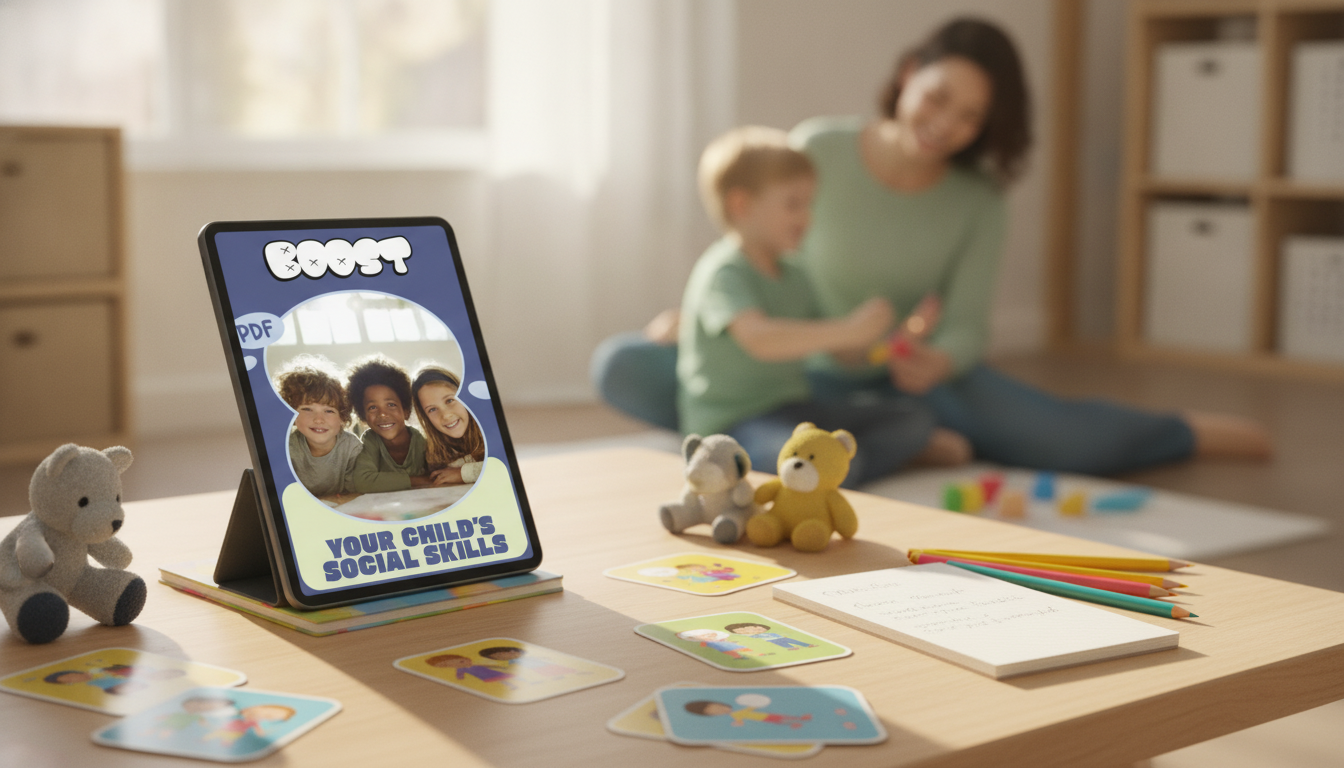
Social skills don’t appear overnight—they grow through small, repeatable moments: greetings at the door, taking turns in a game, listening without interrupting, coping with mistakes, and repairing conflicts after things get tense. The good news is that everyday routines at home, the playground, and school events offer plenty of low-pressure practice. With a few simple scripts and a calm coaching approach, kids can build confidence, connect with peers, and show kindness without losing their own voice.
Social development shifts quickly as kids move from “playing near” other children to navigating rules, friendships, and group dynamics. Watching what’s typical for an age can help parents choose the right skill to teach next.
| Situation | Skill to Practice | Parent Prompt |
|---|---|---|
| Joining a game | Entry and turn-taking | “Watch first, then ask: ‘Can I play when someone’s out?’” |
| Conflict over toys | Problem-solving words | “Tell them what you want without grabbing: ‘Can I have a turn after you?’” |
| Being left out | Coping and plan B | “Who else can you ask? What’s one new activity you can start?” |
| Teasing | Boundary-setting | “Use a calm voice: ‘Stop. I don’t like that.’ Then move to a safe adult if it continues.” |
| Big feelings | Self-regulation | “Hands on belly—slow breath—name the feeling—choose a next step.” |
Most “social problems” are really regulation problems first. When kids can notice feelings early and calm their bodies, they can access the words and flexibility friendships require.
For more on healthy, practical parenting routines that support social-emotional growth, see the CDC’s Positive Parenting Tips and guidance on HealthyChildren.org from the American Academy of Pediatrics.
Micro-skills are tiny behaviors that reduce friction and make kids feel easier to be around—without asking them to change who they are.
A helpful frame for building these skills is the social-emotional competency model from CASEL, which highlights self-awareness, self-management, social awareness, relationship skills, and responsible decision-making.
For a simple at-home routine, some families keep “starter phrases” in a visible spot. A small container like the Vintage Embossed Glass Storage Jar with Airtight Seal – 23.7 oz can hold folded conversation prompts or role-play cards so practice feels quick and casual.
If you want ready-to-use scripts and quick practice ideas you can pull up anytime, Boost Your Child’s Social Skills – Practical Parent Guide (Digital Download) is designed for realistic, repeatable coaching at home and on the go. It helps parents stay focused on teachable skills—communication, empathy, boundaries, and conflict repair—especially during playdates, school transitions, clubs, and everyday family routines.
| Tool | How It Helps | When to Use |
|---|---|---|
| Conversation prompts | Reduces awkward starts and one-word answers | Car rides, dinner, playdates |
| Role-play scenarios | Builds confidence through rehearsal | Before school, before activities |
| Repair scripts | Teaches how to apologize and reconnect | After conflicts with peers or siblings |
| Calm-down steps | Improves self-control during big feelings | Any time emotions escalate |
For families who like to keep practice materials organized (cards, printouts, small game pieces for turn-taking), a dedicated spot can help. The Sturdy 6×4 FT Metal Outdoor Storage Shed for Garden, Bike, and Tools can also help reduce household friction by giving outdoor gear a home—freeing up time and space for calmer routines.
Start with self-regulation, basic conversation (greet/ask/share), turn-taking, handling “no,” and repairing after conflict. One skill practiced repeatedly tends to stick better than many skills taught once.
Choose small-group or structured activities, use predictable “entry” scripts, and keep early playdates short. Practicing introductions at home and encouraging your child to observe first can make joining feel safer.
With consistent five-minute practice, small changes often show up within a few weeks. Deeper confidence and flexibility usually build over months, especially when you track effort and celebrate trying.




Leave a comment