A well-stocked emergency car kit helps reduce stress and risk when a breakdown, weather event, or unexpected delay happens on the road. The easiest way to build a kit that actually works is to organize supplies by scenario—vehicle trouble, medical needs, weather exposure, and communication—then store them so the most urgent items are reachable in seconds. Once the kit is assembled, a simple checklist makes refreshes quick before road trips and during seasonal transitions.
Before buying anything, picture the real problems drivers face most often and build around them:
For additional guidance on baseline supplies, the NHTSA emergency roadside kit recommendations and Ready.gov car emergency kit guidance are solid references.
These items cover the highest-frequency issues and the biggest safety risks when stopped on the shoulder:
| Category | What to pack | Why it matters | Refresh timeline |
|---|---|---|---|
| Vehicle recovery | Jumper cables/jump starter, tire inflator, pressure gauge, sealant (optional) | Gets the car moving again without waiting for help | Check quarterly; test jump starter monthly |
| Visibility | Reflective triangles/flares, high-vis vest, flashlight/headlamp | Helps other drivers see you and reduces roadside risk | Test lights monthly; replace batteries as needed |
| First aid | Bandages, antiseptic, gauze, pain reliever, tweezers, gloves | Handles minor injuries until medical care is available | Review every 6 months; replace expired items |
| Warmth & weather | Blanket, hand warmers, poncho, extra socks, sunscreen | Prevents exposure during long waits or weather changes | Seasonal swap (spring/fall) |
| Food & water | Water bottles, electrolyte packets, non-melting snacks | Maintains hydration and energy during delays | Rotate every 3–6 months |
| Communication | Power bank, cables, car charger, paper contacts | Keeps phone usable; backup info if phone fails | Charge power bank monthly |
Comfort and basic care matter when you’re waiting for help—or when a small issue could turn into a bigger one:
Temperature swings can ruin supplies and increase risk during delays, so plan for the extremes you actually drive in:
For winter-specific readiness, AAA’s safety resources are a helpful reference: AAA winter driving tips and preparedness.
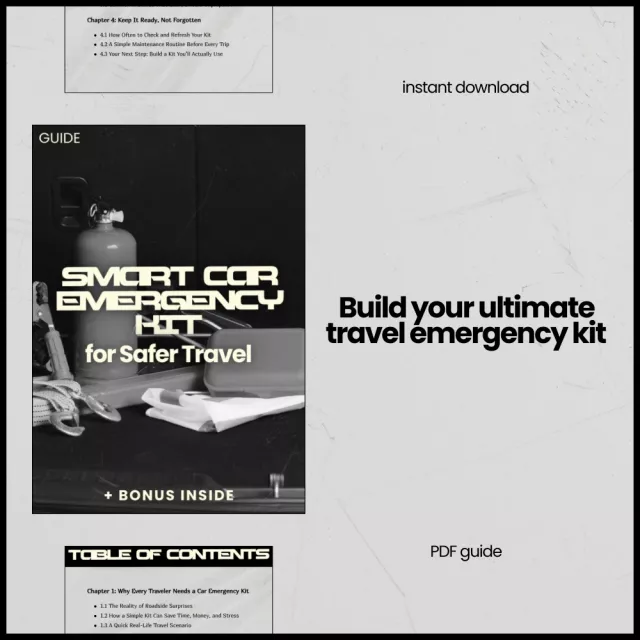
Printable Emergency Car Kit Checklist Download
Include vehicle recovery items (jump solution and tire tools), visibility gear (triangles/vest/light), basic first aid, water and shelf-stable snacks, and phone power. Add weather protection and any kid or pet supplies based on who’s riding with you.
Do a monthly check for lights and charging (power bank and jump starter), a quarterly inspection for tire/spare pressure and tool condition, and seasonal swaps for heat/cold items. Replace expired first aid supplies, medications, and food as needed.
Keep a secured main bin in the trunk or cargo area, and a smaller fast-access pouch (triangles, vest, flashlight) where it can be reached without unloading the vehicle. Make sure bins are strapped down so they don’t shift in a sudden stop.



Leave a comment