Shopping budgets work best when they’re simple to set up, easy to follow, and realistic for real-life spending. A practical AI-assisted approach can help turn vague goals into clear limits, category targets, and a repeatable routine—without needing complicated spreadsheets. With a few weeks of real transactions and a short weekly check-in, you can build a “smart shopping budget” that keeps essentials covered, reduces impulse spending, and makes your money feel more predictable from week to week.
A smart shopping budget isn’t about perfection. It’s about creating guardrails that still fit how you live and shop.
One of the biggest upgrades is shifting from “I’ll spend less” to “I’ll spend within a limit, by category, using a weekly reset.” That structure is what makes the system resilient.
AI shines when it reduces busywork and speeds up planning. It shouldn’t replace your priorities, preferences, or non-negotiables.
| Budget task | AI can help by | You decide |
|---|---|---|
| Setting category targets | Suggesting starting percentages based on prior spending patterns | What feels sustainable and aligned with goals |
| Building a shopping list | Grouping items, proposing substitutes, estimating totals | What to actually buy and what to postpone |
| Tracking spending | Summarizing receipts and highlighting spikes | Which changes to make next week |
| Handling “overspend” weeks | Offering recovery plans and trade-offs | Which trade-offs are acceptable |
| Reducing waste | Generating meal/usage ideas for items already owned | What fits preferences and time constraints |
This is a simple system that works with real shopping behavior (including imperfect weeks).
For foundational budgeting concepts and categories, the Consumer Financial Protection Bureau (CFPB) offers helpful, plain-language guidance you can pair with a lighter-weight shopping-focused routine.
If you want to sanity-check substitutions (especially for food items), USDA FoodData Central is a reliable reference for comparing nutrition and ingredients while you adjust your list.
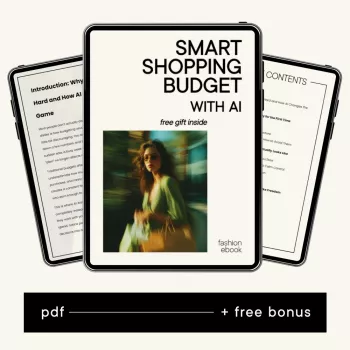
If you want a ready-to-use framework, Smart Shopping Budget with AI (digital download) is designed for quick setup and weekly repetition. It focuses on turning past spending into realistic category limits, building weekly caps, and using AI to reduce time spent categorizing, estimating, and planning.
| Item | Details |
|---|---|
| Format | Digital download (eBook guide) |
| Focus | Shopping budget planning and smarter spending using AI |
| Price | $13.99 USD |
| Availability | In stock |
| Best for | Anyone wanting a simpler system for category limits, weekly caps, and repeatable reviews |
For general guidance on being mindful with AI tools and claims, the Federal Trade Commission (FTC) publishes updates that can help you stay cautious and informed.
Before choosing, compare the product details with your daily routine, available space, care needs, and preferred setup. The strongest option is usually the one that fits the intended use clearly and remains simple to clean, store, and check before repeat use.
No. A basic AI tool plus a simple template is usually enough—you can export transactions from your bank or retailer accounts, paste totals into notes or a spreadsheet, and use AI to categorize and propose targets.
Most people get immediate clarity after the first setup, then see stronger results after 2–4 weekly cycles of tracking and adjusting. Starting with a realistic cap and refining category targets is what makes it stick.
It can be safer if you redact sensitive details, share category totals instead of full statements when possible, and double-check calculations. Keep final decisions personal and avoid uploading anything you wouldn’t want exposed.






Leave a comment