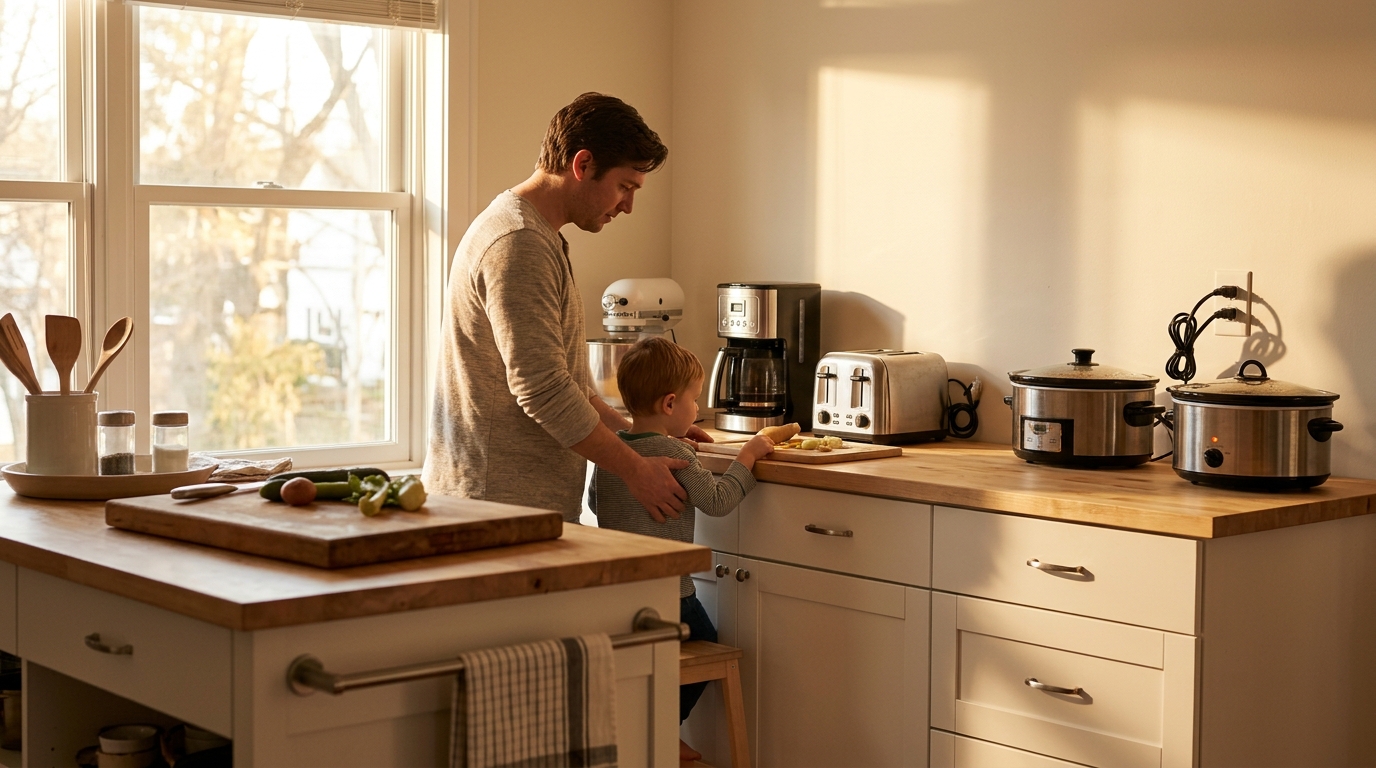
Kitchen appliances make cooking faster, but heat, sharp blades, electricity, and steam can turn small mistakes into burns, shocks, or fires. A few habits—before you plug in, while you cook, and when you clean—go a long way toward preventing accidents.
Check cords for fraying, cracking, or loose prongs, and replace damaged parts before using the appliance. Keep cords away from hot surfaces and the edge of the counter where they can be pulled. Avoid overloading outlets and power strips; high-wattage items like air fryers, toaster ovens, and microwaves should be plugged directly into a wall outlet whenever possible.
Unplug appliances before cleaning and never immerse units unless the manual says specific parts are dishwasher-safe. Keep hands dry when plugging in or unplugging, and don’t use appliances near a sink where splashes can reach outlets. Give hot appliances breathing room—leave clearance around vents and never cover them with towels or foil.
Follow the manufacturer’s instructions for temperature, cook time, and approved cookware. Don’t force lids, remove guards, or defeat interlocks on blenders, pressure cookers, and microwaves. If an appliance smells like burning plastic, makes unusual noises, or trips a breaker, stop using it and inspect it.
Set appliances on stable, heat-resistant surfaces and keep them away from curtains, paper towels, and wooden utensils. Turn handles inward on countertop griddles or electric skillets and keep kids and pets clear of hot zones. Stay nearby during use—especially with toasters, deep fryers, and anything that heats oil.
For a step-by-step printable checklist you can keep in a drawer, visit this kitchen appliance safety checklist.
Give cords a quick look before each use and do a closer inspection monthly. Replace cords or the appliance if you see fraying, exposed wire, or loose connections.







Leave a comment