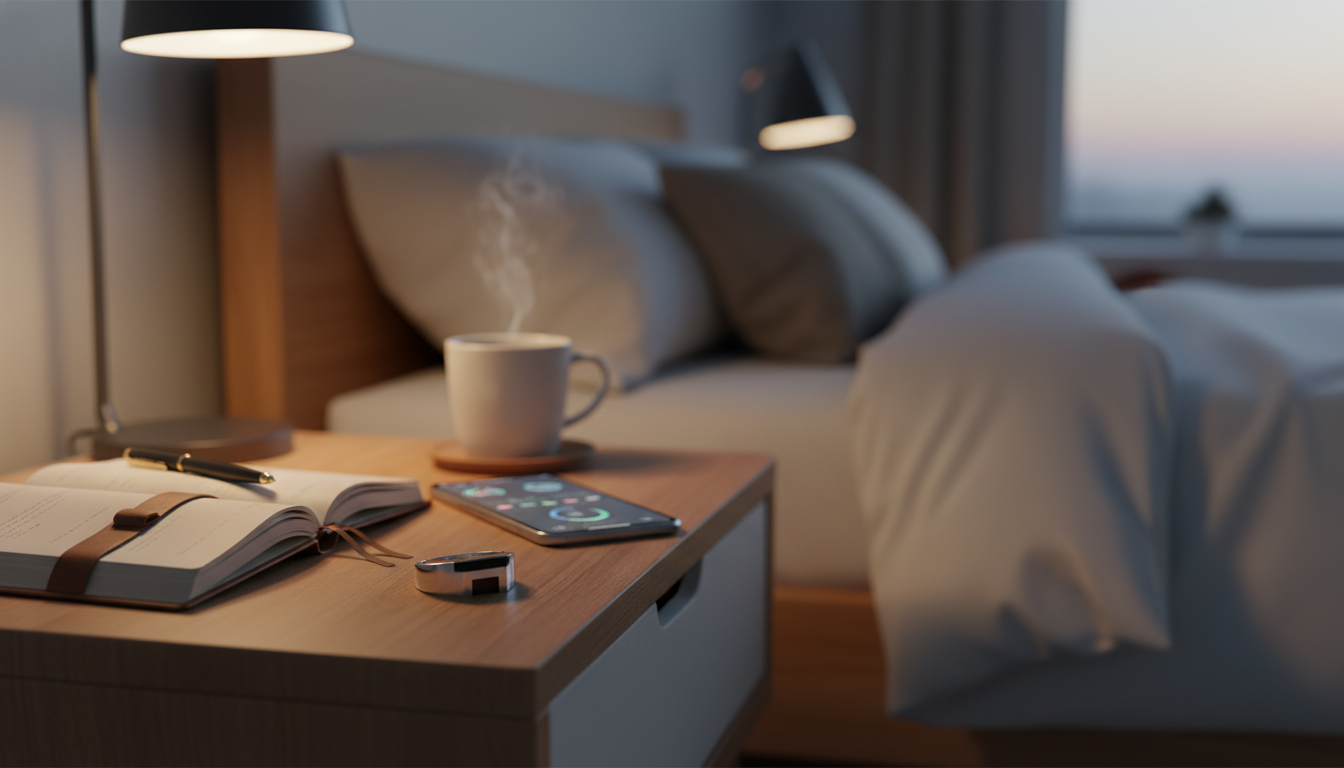
Smart rings can reveal patterns in sleep duration, timing, and recovery signals—but only when the data is collected consistently and interpreted correctly. The good news: a few setup tweaks and small nighttime habits can reduce missing segments, cut down on “false wake-ups,” and make your trends more trustworthy so you can make better decisions week to week.
Most smart rings track sleep by combining several signals: motion from an accelerometer, heart rate, heart rate variability (HRV), and skin temperature trends. Some models also estimate blood oxygen, depending on the hardware and subscription tier.
What rings typically estimate (rather than measure directly) includes sleep stages, sleep onset, wake after sleep onset, and total sleep time. These numbers are inferred by matching your sensor patterns to algorithms trained on large datasets. That’s why the data can drift when the patterns are ambiguous—like quiet wakefulness that looks like sleep, or restless movement that gets interpreted as lighter sleep.
The most reliable way to use ring sleep tracking is as a trend tool: compare your own weeks against your own baseline. One “bad” night score can be noise; two to four weeks of direction is actionable.
Your ring should be snug enough that it doesn’t spin overnight, but not so tight that it restricts circulation or leaves deep marks. Pick one finger and stick with it—frequent finger swapping can shift baselines, especially for optical heart-rate sensing.
Clean, dry skin and a clean inner ring surface help prevent signal dropouts. Sweat, lotion, and debris can reduce optical sensor quality—especially if you’re a warm sleeper or apply skincare right before bed.
Make sure Bluetooth is stable and the app is allowed to run in the background. If your ring integrates with a health platform, confirm that permissions are enabled so overnight data doesn’t get partially captured or delayed.
A critically low battery can stop recording mid-night, which often looks like a “short sleep” or missing heart-rate segments. A simple habit—topping up during dinner, a shower, or wind-down—can protect the full-night file.
If your app lets you set a typical sleep schedule, do it. When the algorithm knows your usual window, it’s less likely to interpret late-night sedentary time as sleep onset.
Accuracy is often less about the sensors and more about what happens around them.
| Factor | What you may see | Practical adjustment |
|---|---|---|
| Cold hands | Heart-rate gaps; lower confidence in stages | Warm bedding; keep hands warmer; ensure snug fit |
| Loose fit / ring rotation | Extra awakenings; inconsistent HR signals | Try a different finger; adjust size; wear consistently on same finger |
| Alcohol late evening | Higher resting HR; lower HRV; worse recovery | Limit or move earlier; compare alcohol-free nights |
| Late heavy meal | Elevated HR; more restlessness | Finish eating 2–3 hours before bed when possible |
| Long pre-bed scrolling in bed | Early sleep onset estimate; inflated sleep time | Wind down outside bed; keep bed for sleep |
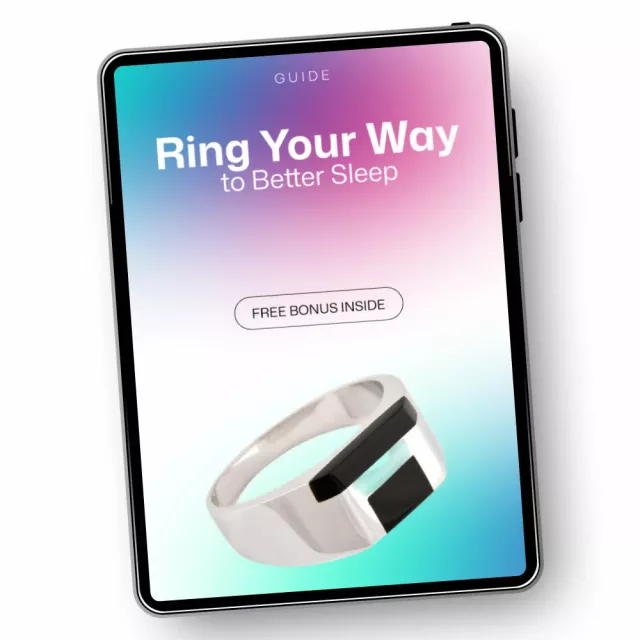
A structured approach makes it easier to stay consistent: a setup checklist, nightly routine prompts, and clear “interpretation rules” reduce guesswork and help your ring build a steadier baseline. For a step-by-step framework, see the Ring Your Way to Better Sleep: Smart Ring Sleep Tracking Accuracy & Tips eBook Guide.
If you’re pairing sleep experiments with nighttime routines (like herbal tea or a caffeine-cutoff plan), it can also help to keep supplies organized and airtight—such as the Vintage Embossed Glass Storage Jar with Airtight Seal – 23.7 oz.
For reputable sleep education, review resources from the American Academy of Sleep Medicine (AASM) – Sleep Education and the National Heart, Lung, and Blood Institute (NHLBI).
Smart rings estimate sleep and stages using wearable sensors and algorithms, which makes them useful for tracking trends and habit changes. Polysomnography in a sleep lab remains the clinical standard for diagnosis and detailed staging.
Quiet wakefulness—like lying still, reading, or scrolling—can look like sleep to an algorithm. A wind-down routine outside the bed and a more consistent schedule often reduce early sleep-onset estimates.
Start with a snug, consistent fit, clean/dry sensors, stable phone permissions, and warmer hands if you run cold. Then keep bed and wake times steady for a week so the algorithm can lock onto a reliable baseline.






Leave a comment