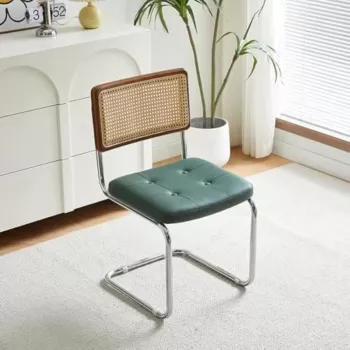
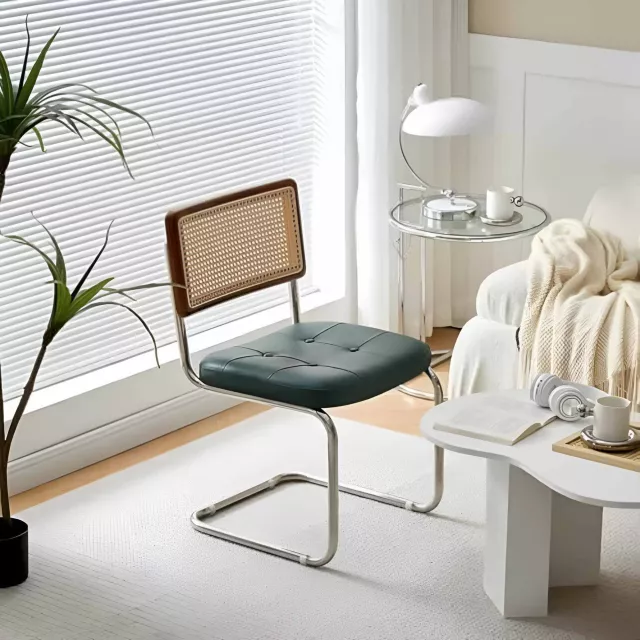
These armless dining chairs blend clean mid-century lines with the warmth of a woven rattan backrest and the easy-care finish of PU leather. The result is a light, open silhouette that fits small dining nooks and full-size tables alike—without sacrificing comfort or everyday practicality. If you like spaces that feel curated but not fussy, this mixed-material look delivers: airy texture up top, a tailored seat below, and a profile that tucks in neatly when the meal is done.
Mid-century modern design is known for being functional, approachable, and visually balanced—qualities that translate perfectly to everyday dining. Design museums frequently highlight the era’s emphasis on clean lines and honest materials, which helps explain why the style still feels current decades later (see the Metropolitan Museum of Art’s design collection: Modern Design and Decorative Arts).
Dining chairs get used hard: quick breakfasts, laptop time, weeknight dinners, and the occasional long gathering. This design supports daily use with features that make a difference in real homes.
The appeal here is contrast done right: organic texture meets a clean, tailored finish. Rattan brings a natural, handcrafted character—small variations in tone or weave can be part of what makes each chair feel less mass-produced. PU leather, meanwhile, provides a smooth surface that suits modern dining setups and simplifies routine cleaning.
For best performance, treat these materials like most indoor furnishings: stable conditions are ideal. Avoid prolonged high humidity and keep chairs away from direct heat sources. If you’re sensitive to odors or indoor pollutants, it’s also worth reviewing general guidance on indoor air quality and household products from the U.S. Environmental Protection Agency (EPA Indoor Air Quality).
| Element | Why it matters | Simple care habit |
|---|---|---|
| Rattan backrest | Adds texture, lightness, and airflow | Dust with a soft brush; keep out of direct sun for long periods |
| PU leather seat | Wipes clean and resists many everyday spills | Clean with a damp cloth; avoid harsh solvents and abrasive pads |
| Armless frame shape | Saves space and tucks neatly under many tables | Use felt pads to protect floors and reduce shifting noise |
Because the silhouette is open and the material mix is balanced, these chairs adapt well to several popular interior directions—especially those that prioritize warmth and simplicity.
A great-looking dining setup still needs to function well—especially when guests are getting in and out of their seats. These quick layout principles help armless chairs feel as comfortable as they look.
Keeping rattan and PU leather looking fresh is mostly about small habits done consistently. A few minutes of care now can help prevent fading, drying, or surface wear later.
Yes—rattan tends to feel comfortable because it’s breathable and has a slight natural flex. Comfort still depends on posture and seat padding, so a thin cushion can be a smart add-on for longer meals.
Wipe with a soft damp cloth for routine cleanup. For tougher spots, use mild soap and water, then dry fully; avoid solvents and abrasive scrubbers that can dull or damage the surface.
They often do because they tuck under many tables more easily and reduce visual bulk, which helps compact dining areas feel less crowded. Just be sure each seat still has comfortable spacing at the table for elbows and movement.





Leave a comment