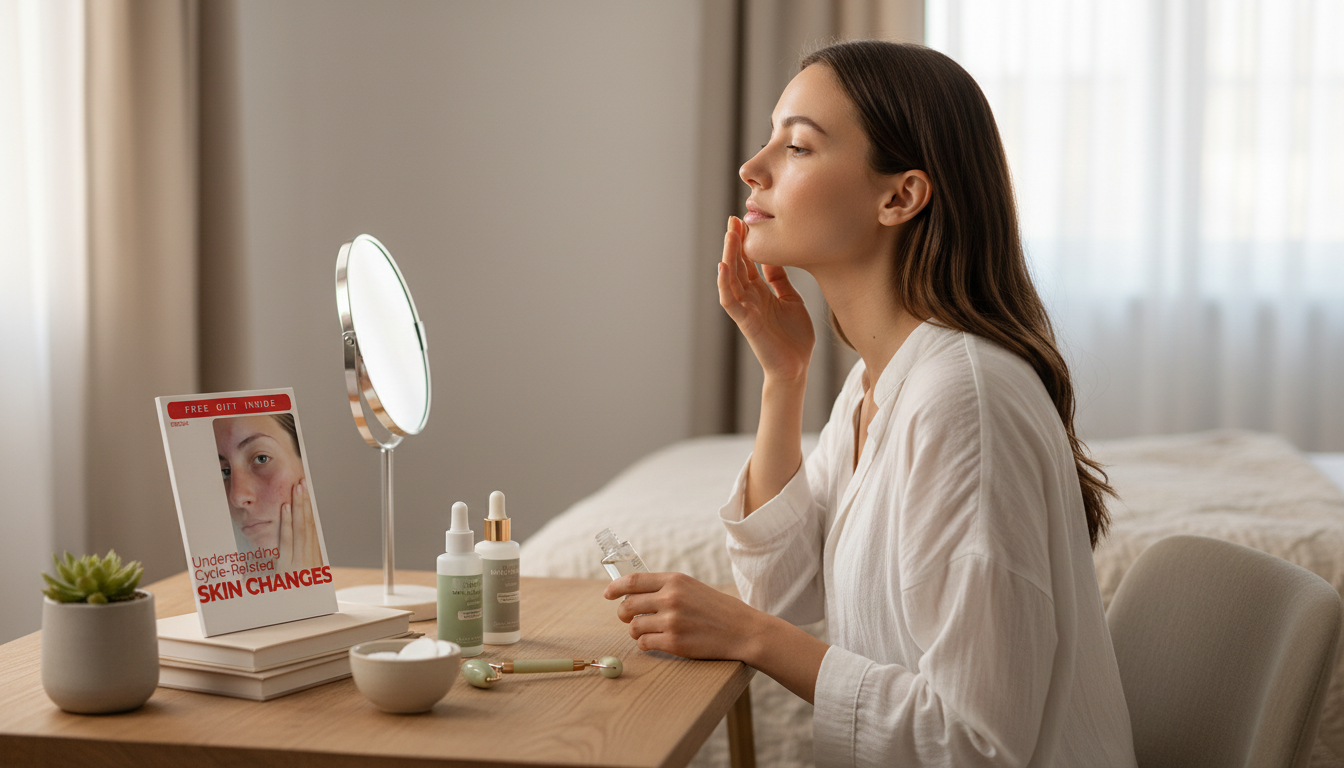
Skin can feel predictable for a week and suddenly turn oily, dry, or breakout-prone the next. These shifts often track with normal hormone fluctuations across the menstrual cycle, affecting sebum, inflammation, sensitivity, and hydration. A hormone-smart approach focuses on adjusting a simple routine by phase—supporting the barrier when skin is reactive, and using targeted actives when skin can tolerate them—so results are steadier and flare-ups are easier to prevent.
Hormones influence oil production, swelling, redness, and how quickly skin cells shed—factors that can trigger congestion or irritation. When oil production rises while dead skin doesn’t shed as smoothly, pores can clog more easily. When inflammation and sensitivity increase, products that normally feel fine may suddenly sting or cause redness.
In broad strokes, estrogen tends to support hydration and barrier function. Progesterone can be associated with increased sebum and a “puffier” feel in the days leading up to a period. Androgens can amplify oiliness and breakouts in some people. These normal shifts can be made more noticeable when stress, sleep changes, diet shifts, or routine changes stack on top of them.
The most useful next step is tracking. Note the first day of bleeding and, for 2–3 cycles, log dryness, sensitivity, shine, and breakout timing. Patterns often become clear (for example: “chin breakouts start 5 days before my period” or “my cheeks get tight and dry during bleeding days”). For a deeper overview of hormonal acne and common triggers, see the American Academy of Dermatology Association’s hormonal acne guide.
Not everyone experiences each phase the same way, but many people notice repeatable windows of sensitivity or congestion. Use the cycle as a planning tool—keeping your baseline routine steady while you adjust intensity.
Skin may feel drier, more reactive, or dull. This is a good time to avoid experimenting with brand-new strong actives. Keep cleansing gentle, moisturize well, and prioritize barrier repair.
Many people notice calmer, more even skin and better tolerance. If you use actives like vitamin C, azelaic acid, or a retinoid, this phase is often the easiest time to maintain consistent use (as tolerated).
Breakouts and congestion often appear here, along with redness or swelling. The goal is targeted acne care without irritating the barrier. Overdoing harsh treatments can prolong redness and make post-breakout marks linger longer. If you’d like a quick refresher on how acne forms (oil, clogged pores, inflammation), the Mayo Clinic acne overview is a helpful reference.
| Cycle phase | Common skin changes | Routine focus | Actives to prioritize (if tolerated) |
|---|---|---|---|
| Menstrual (bleeding days) | Dryness, sensitivity, dullness | Hydrate + calm, protect barrier | Ceramides, glycerin, hyaluronic acid, gentle niacinamide |
| Follicular (post-period) | More balanced, fewer flare-ups | Maintain baseline routine; build consistency | Vitamin C (AM), retinoid (PM) if already using, azelaic acid |
| Ovulation (mid-cycle) | Glow or increased oil; occasional clogged pores | Lightweight hydration; keep pores clear | BHA (sparingly), niacinamide, non-irritating antioxidants |
| Luteal (pre-period) | Oiliness, swelling, breakouts, redness | Simplify + target acne without over-drying | Benzoyl peroxide spot use, adapalene/retinoid (if established), sulfur, azelaic acid |
Need a structured, phase-by-phase template that’s easy to follow? The Understanding Cycle-Related Skin Changes – Hormone-Smart Skincare eBook for Clearer, Balanced Skin lays out step-by-step routines, tracking prompts, and troubleshooting so you can plan ahead for your pre-period breakout window.
In the luteal phase, shifts in progesterone and androgen activity can increase oiliness, swelling, and inflammation, which can trap oil in pores and trigger breakouts. Stress and irritation from over-treating the skin can amplify the flare.
Usually no—suddenly increasing exfoliation can irritate the barrier and make redness and breakouts look worse. Stick to a tolerable, consistent schedule and lean on targeted acne treatments while keeping skin hydrated.
Track patterns for 2–3 cycles, and give acne-focused actives about 8–12 weeks to show meaningful changes. The biggest improvements typically come from consistency plus small, phase-based adjustments rather than frequent product swaps.







Leave a comment