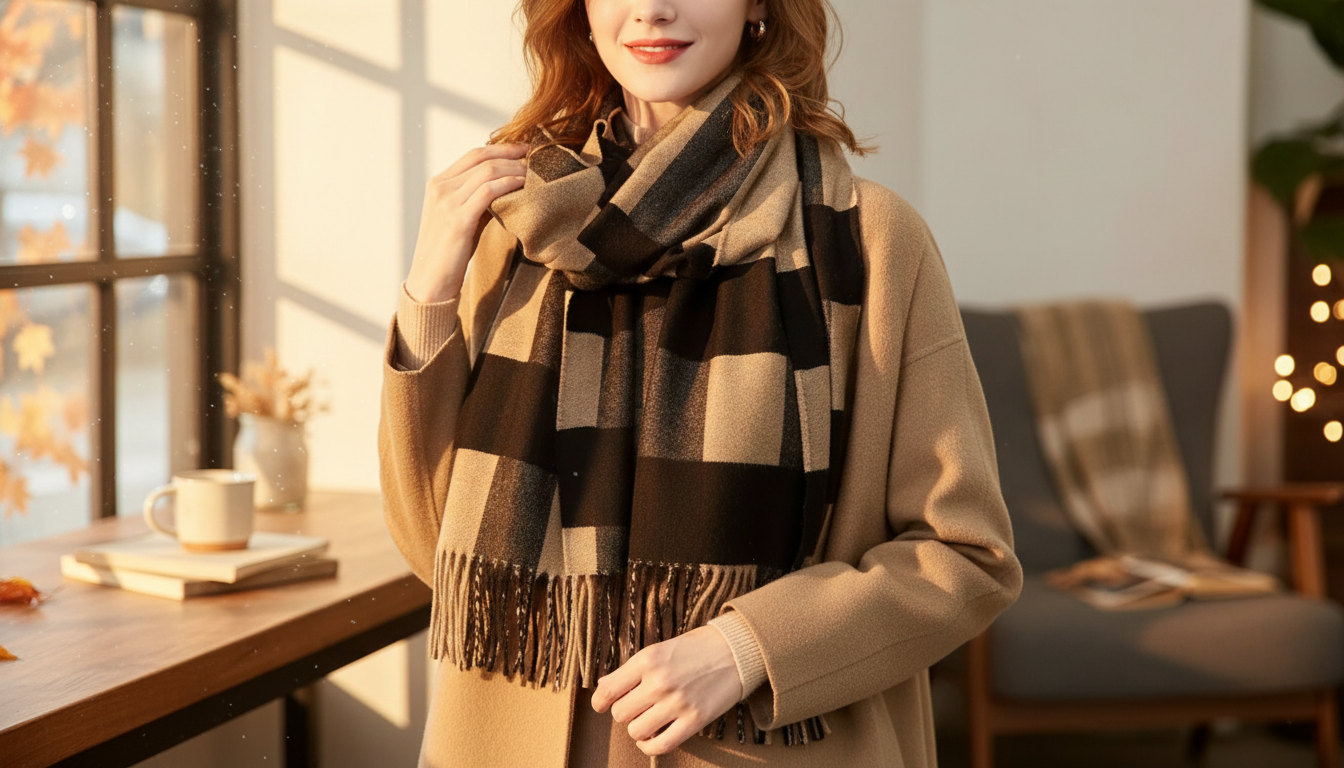
A plaid wool scarf is one of the fastest ways to add warmth and structure to cold-weather outfits while still looking put-together. The right plaid reads classic (not costume-y), frames the face, and makes even simple layers—like a sweater and jeans—feel more intentional. Below, you’ll find what to look for in fabric feel and finishing, easy winter styling ideas, three go-to ways to tie it, and practical care tips so your scarf stays soft and presentable year after year.
Wool can feel crisp, springy, or surprisingly smooth depending on fiber quality and finishing. For daily wear, prioritize a scarf that feels comfortable at the neck for more than a quick try-on—soft enough to wear against skin without constant adjusting.
Drape is what keeps a scarf looking elegant instead of bulky. A scarf with a smooth fall layers cleanly over lapels and under coat collars, and it helps knots sit flatter (especially helpful with thicker winter outerwear).
Denser weaves usually block wind better and hold their shape through repeated wraps. Lighter weaves are easier to tuck into a collar and pack for travel, and they can still be warm when wrapped once or twice.
Look for clean edges, even fringe (if present), and consistent plaid alignment. These details are small, but they’re often what separates a scarf that looks “nice” from one that looks genuinely refined.
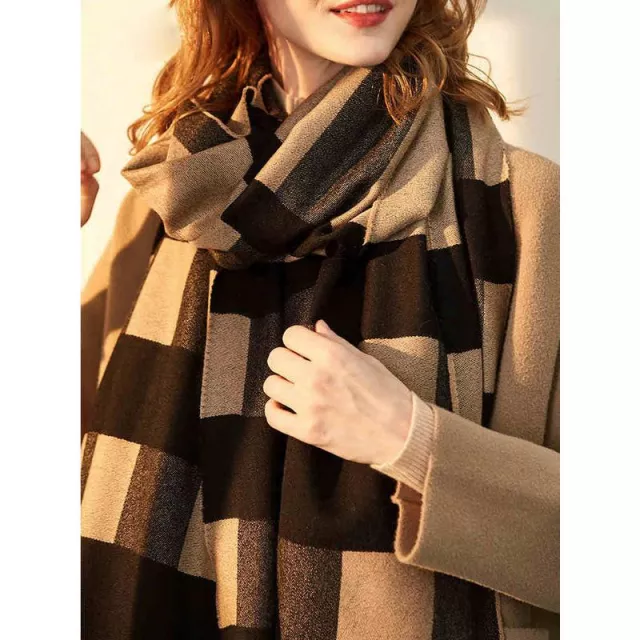
Rich, balanced plaid tones make styling easier. When the colors look clear (not muddy), the scarf pairs effortlessly with winter neutrals like black, camel, cream, gray, and navy.
Let the scarf be the focal point. Choose a solid overcoat—camel, black, navy, or cream—and wear the plaid high enough to brighten the face. Keep the wrap simple so the pattern remains readable.
Go for a longer drape and a minimal knot (a simple loop or once-around). This keeps the neckline from feeling overly padded while still sealing in warmth.
Pair a plaid scarf with a ribbed sweater, a chunky turtleneck, or a knit set for texture-on-texture that still looks clean. Looser wraps tend to look more modern with knitwear than tight knots.
Tuck the scarf ends under coat lapels for a neat line. Pull one color from the plaid—say, navy or burgundy—and echo it in shoes, a bag, or gloves for a subtle, coordinated finish.
Denim, boots, and a beanie become instantly sharper with a structured plaid scarf. It adds contrast and definition to casual layers without feeling overdressed.
Place the scarf around your neck with both ends hanging evenly. It’s ideal for indoor wear, short walks, and days when temperatures swing between chilly streets and warm interiors.
Wrap the scarf once around your neck and let the ends hang. You get a noticeable warmth boost while still showing off the plaid pattern clearly.
Tie a loose knot near the chest. This is especially useful in wind and while commuting because it keeps the ends from shifting and flapping as you move.
| Priority | What to Look For | Why It Matters | Best For |
|---|---|---|---|
| Maximum warmth | Denser weave; generous width; substantial hand-feel | Improves insulation and wind resistance | Outdoor commuting, long walks, colder climates |
| Easy layering | Medium weight; smooth drape; not overly bulky | Sits well under coat collars without bunching | Office days, travel, everyday errands |
| Elevated finish | Clean edges; tidy fringe; crisp plaid alignment | Looks polished and intentional with tailored outerwear | Workwear, dinner plans, gifting |
| Low-maintenance care | Care label that supports gentle washing or easy spot care | Reduces shrink risk and preserves shape | Frequent wear, shared households |
| Versatile color pairing | Plaid colors that echo wardrobe neutrals | Pairs across coats and sweaters without clashing | Capsule wardrobes, minimalist styling |
Wool is resilient, but it looks best with a little routine care. For general fiber background and why wool performs so well in winter, see Britannica’s overview of wool. For care guidance and best practices, the Woolmark care instructions are a helpful reference.
Comfort varies by fiber quality and how the wool is finished. If you’re sensitive, try wearing the scarf over a thin turtleneck or collared top, or choose a softer-feel wool scarf designed for direct-to-skin wear.
Follow the care label first. If washing is allowed, use cool water, a gentle wool detergent, minimal agitation, no wringing, and dry flat; when you’re unsure, professional dry cleaning is the safest option.
Keep one pattern dominant and let the other act as an accent. Match one color from the scarf to the coat’s palette and stick to simple ties—like a drape or once-around—to avoid visual clutter.






Leave a comment