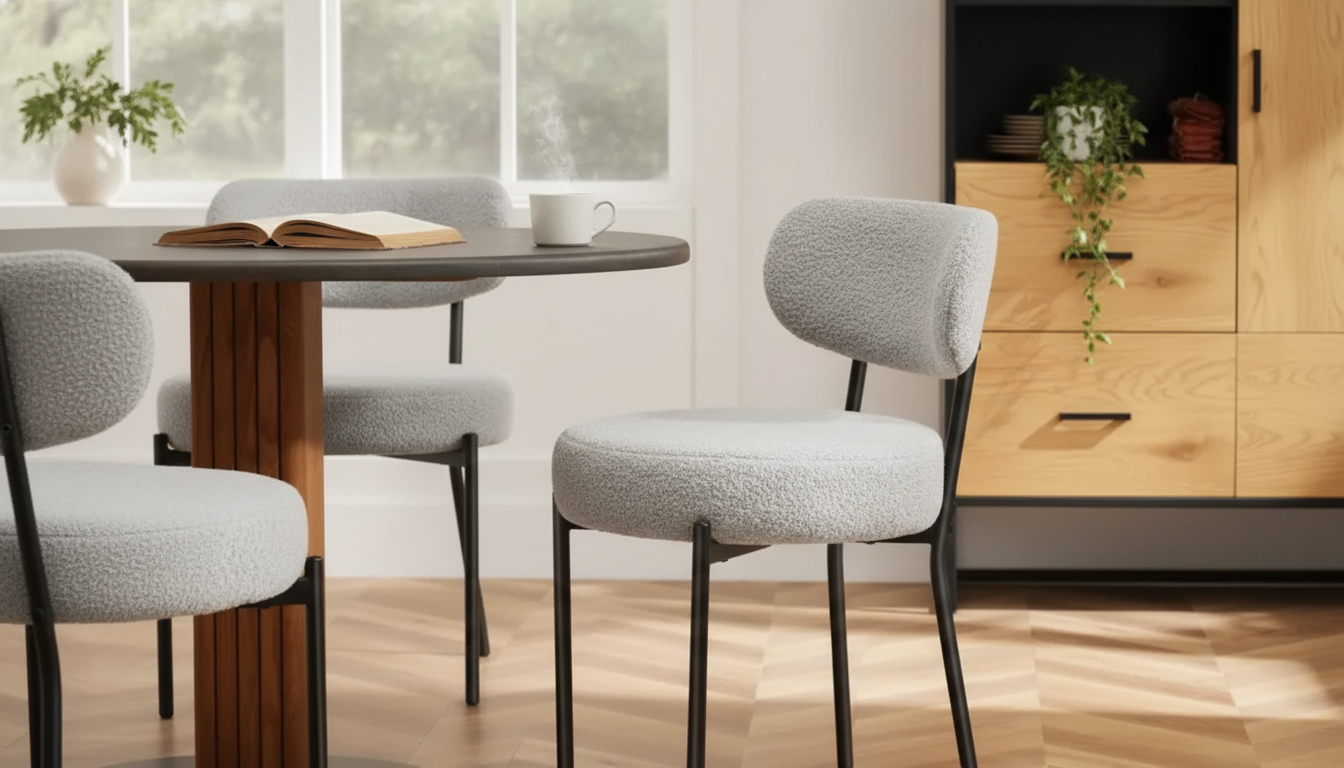
Round-back dining chairs can soften the look of a dining area while supporting a more relaxed seated posture for meals, coffee breaks, and work-from-home moments at the table. When comfort is the priority, the “right” chair is less about a single style trend and more about fit, supportive structure, and how the chair behaves after the first 20 minutes. This guide covers what to look for—measurements, ergonomic features, materials, and placement—so a set of two feels natural in both compact kitchens and full-size dining rooms.
Ergonomics isn’t limited to office seating. A dining chair can feel noticeably better when its shape and proportions work with the body instead of against it—especially during longer meals, game nights, or laptop time at the table.
If multiple people use the same dining area, it helps to keep human-size variation in mind. Broad population measurement data (like the CDC’s NHANES reference datasets) is one reason “middle-of-the-road” seat heights and depths tend to suit most households without feeling too tall, too low, or too shallow. For general ergonomics guidance, NIOSH offers practical background on how posture and support relate to comfort and musculoskeletal strain.
Sources:
Anthropometric Reference Data for Adults (U.S. CDC),
Ergonomics and Musculoskeletal Disorders (NIOSH)
Round-back dining chairs offer a mix of visual ease and practical comfort—particularly in rooms dominated by straight edges (rectangular tables, cabinets, tile lines, and shelving).
A pair is a flexible way to upgrade comfort without locking the room into a fully matched set. It’s also easier to fit into smaller homes where dining areas often do double duty.
Comfort depends on how the chair and table work together. Measuring takes minutes and can prevent years of “almost right” seating.
| What to measure | Good target | Why it matters |
|---|---|---|
| Seat-to-table clearance | About 10–12 in (25–30 cm) | Helps arms and legs move comfortably under the table |
| Chair width at widest point | Leave several inches between chairs | Prevents crowding and makes sitting down easier |
| Back height vs. tabletop | Depends on style preference | Lower backs feel lighter; higher backs can feel more supportive |
| Seat cushioning firmness | Supportive, not overly soft | Reduces bottoming out and improves comfort over time |
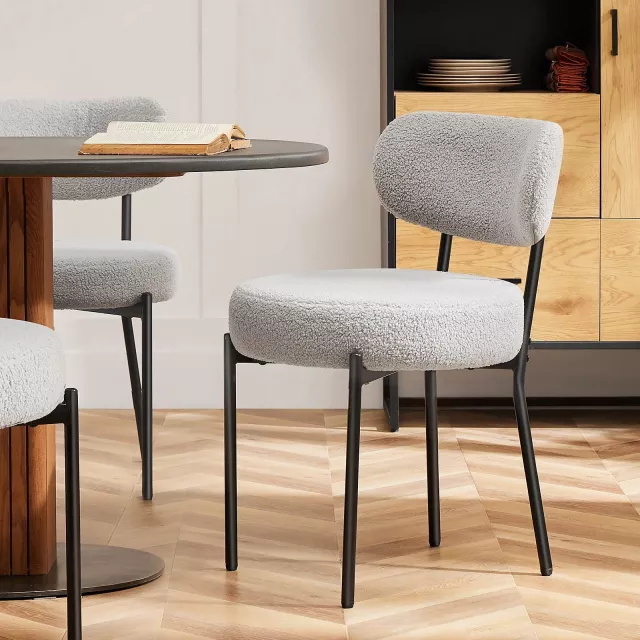
If the goal is a coordinated look with comfort-first proportions, the Ergonomic Round Dining Chairs Set of 2 is designed to slot easily into everyday dining routines.
For a quick tabletop upgrade that pairs well with refreshed seating, consider storing sugar, coffee beans, or snacks in a Vintage Embossed Glass Storage Jar with Airtight Seal – 23.7 oz. Keeping staples within reach can make the dining area feel more intentional—especially in breakfast nooks and open kitchen layouts.
Aim for enough elbow room that people can sit and stand without bumping—often several inches between chair edges when placed side by side. Adjust based on chair width and table length, and prioritize comfort over squeezing in an extra seat.
They can be, especially when the curve supports the upper back and shoulders in a natural resting position. Seat depth and supportive cushioning matter just as much; if you tend to sit for hours, a slightly firmer seat and a back that encourages upright posture usually feels better over time.
Stick-on felt pads or proper chair glides are the simplest solution, and they’re most effective when checked regularly for grit buildup. In high-movement areas, a low-pile rug can add protection, but it should be stable enough that chairs still slide without catching.





Leave a comment