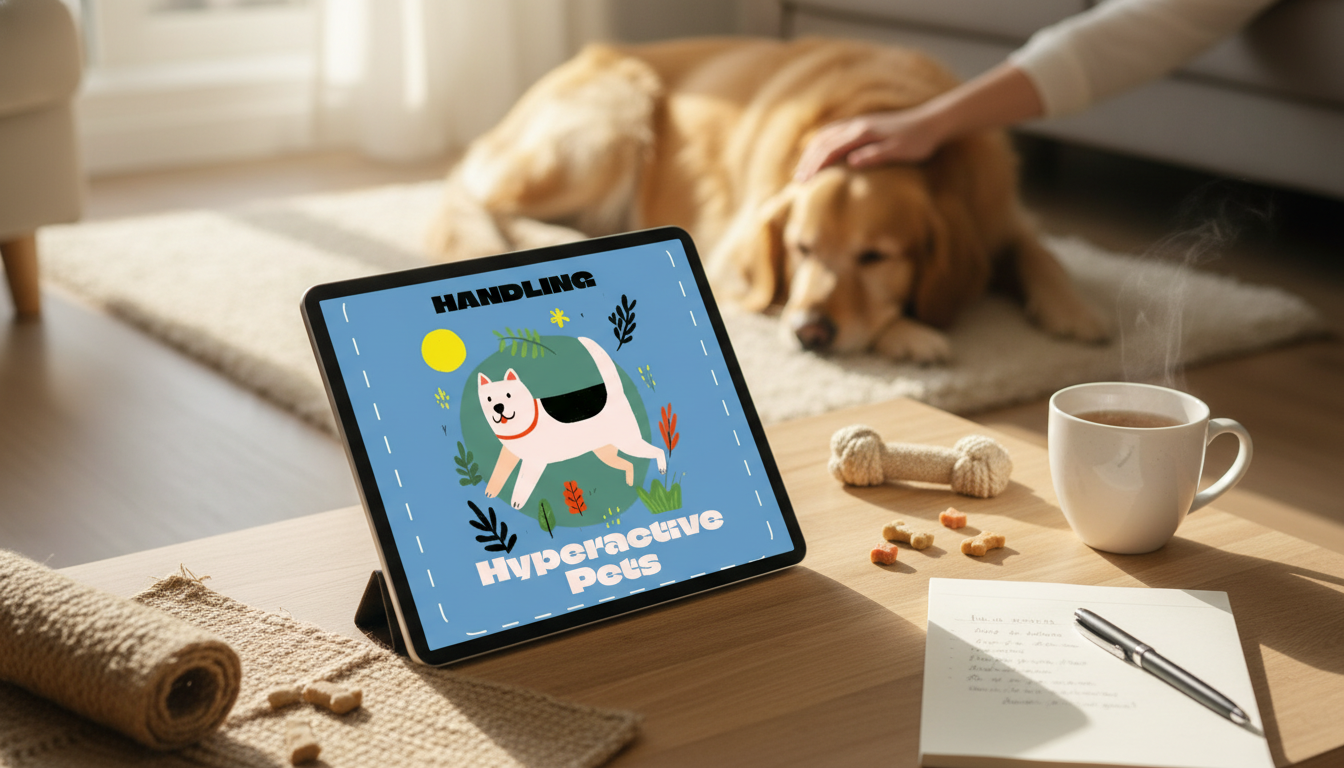
A hyperactive pet isn’t “bad” or “stubborn”—they’re often overstimulated, under-enriched, inconsistent in routines, or struggling with unmet needs. The goal is not to suppress personality, but to channel energy into predictable patterns: safe outlets, clear cues, and calm recovery. This guide lays out practical steps to reduce chaos at home, support better behavior, and build a calmer daily rhythm.
Many pets have “busy” phases, especially puppies, adolescents, and high-drive breeds. Energy becomes a real problem when it regularly prevents settling or creates unsafe habits.
| What you see | Common cause | First step to try |
|---|---|---|
| Jumping and barking when someone enters | Over-arousal + lack of default behavior | Practice a “place” routine and reward four paws on the floor before greetings |
| Destructive chewing when left alone | Boredom, anxiety, excess energy, or teething | Increase enrichment; use safe chews; create a calm departure routine; consider crate/pen training |
| Zoomies after walks | Arousal overflow or insufficient decompression | End walks with sniffing time and a short settle routine at home |
| Pulling hard on leash | Overstimulation + reinforcement history | Use distance, teach loose-leash in low-distraction areas, reward check-ins |
| Nipping during play | Overexcited play + poor bite inhibition | Shorten sessions, add breaks, redirect to toys, reward calm pauses |
When everything feels unpredictable, pets stay “on.” A simple rhythm can lower arousal before training even starts.
Hyperactive behavior often improves fastest when outlets become more intentional. The goal is “satisfied and settled,” not simply “exhausted.”
For more mental stimulation ideas, the American Kennel Club’s brain games guide is a helpful starting point.
Calm is a skill. It becomes reliable when it’s taught the same way as “sit” or “come”—with clear steps, repetition, and easy wins.
When choosing training methods, prioritize humane, reward-based guidance. The American Veterinary Society of Animal Behavior (AVSAB) and the RSPCA’s reward-based training overview explain why punishment-based approaches can increase fear and worsen behavior.
If a clear framework helps you stay consistent, The Smart Guide to Handling Hyperactive Pets (eBook) offers a structured approach to behavior management, calm routines, and training strategies you can apply progressively.
For day-to-day organization, it also helps to keep treats and enrichment items in a predictable spot; a dedicated container like the Vintage Embossed Glass Storage Jar with Airtight Seal – 23.7 oz can make calm-reward routines easier to maintain.
Small improvements can show up in days (fewer escalations, faster recovery), but reliable new habits usually take weeks of consistent routines, enrichment, and calm reinforcement. Adolescents and high-drive breeds often need a longer runway, especially if they’ve practiced frantic behavior for months.
Not always—more high-intensity exercise can create a stronger endurance athlete who still can’t settle. Combine purposeful physical outlets with decompression (sniffing) and “off switch” skills like mat training and short settles, plus plenty of recovery time.
Prevent rehearsal with gates, a leash, or a “place” routine, then reinforce an alternate behavior like four paws on the floor, sitting, or calmly standing. Keep play sessions short, add breaks before arousal spikes, redirect to toys, and reward calm pauses immediately.





Leave a comment