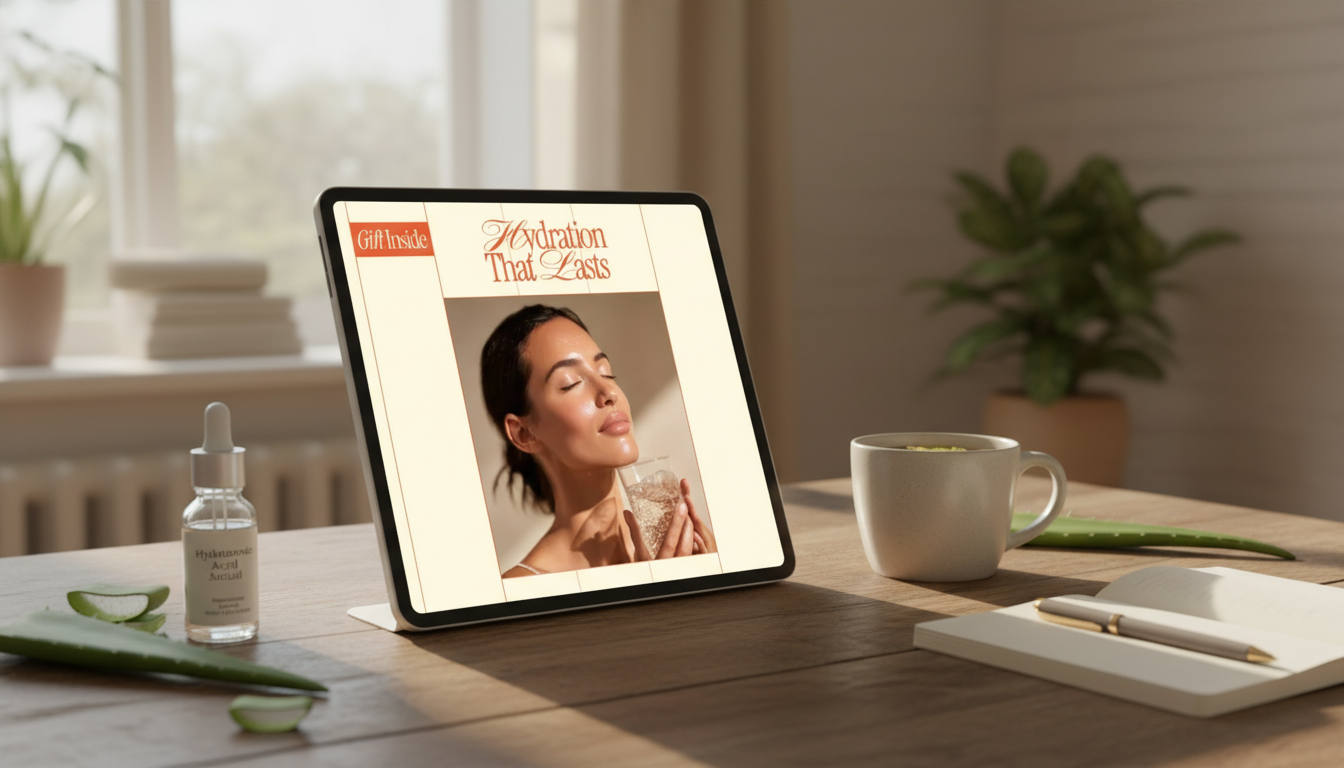
All-day hydration is less about one “miracle” cream and more about building a routine that attracts water into the skin, then seals it in while reducing everyday dehydration triggers like over-cleansing, dry indoor air, and harsh actives. The steps below focus on barrier support, smart layering, and quick midday fixes that keep skin feeling calm from morning to night.
Skin can look fine in the morning and still feel tight by lunchtime because hydration is constantly evaporating from the surface—especially when your barrier is stressed or your environment is drying.
For practical background on causes and everyday fixes, the American Academy of Dermatology Association and the National Eczema Association both emphasize the importance of gentle cleansing and barrier support.
The most comfortable routines usually follow a simple logic: cleanse without stripping, add humectants on damp skin, then seal with barrier lipids and a comfortable protective layer.
| Step | Goal | What to look for | Common mistakes |
|---|---|---|---|
| Cleanse | Remove buildup without stripping | Low-foam, fragrance-free, mild surfactants | Hot water; squeaky-clean feeling |
| Hydrate | Add water-binding ingredients | Glycerin, HA, panthenol, urea (low %), beta-glucan | Applying to completely dry skin; using too many actives at once |
| Moisturize | Rebuild barrier and soften | Ceramides, squalane, shea butter, dimethicone | Skipping moisturizer if skin is oily |
| Seal (optional) | Reduce water loss overnight | Ointment on dry patches; occlusive balm | Applying heavy occlusives over irritated, inflamed breakouts without patch testing |
| Protect | Prevent UV-driven dryness and sensitivity | Broad-spectrum SPF 30+ | Not reapplying; using drying alcohol-heavy formulas on sensitized skin |
When skin starts to feel tight, the goal is to add a small amount of comfort without disturbing layers underneath.
If dryness is persistent or associated with itching or irritation, the NHS guide to treating dry skin is a helpful reference for gentle care habits.
If you want a clear, step-by-step structure (plus troubleshooting for midday dryness), Hydration That Lasts – How to Keep Skin Hydrated All Day | Digital Skincare Ebook Guide turns the basics into an easy routine you can follow and adjust by season.
To make routines easier to maintain, it can help to keep daily essentials organized and visible. A countertop container like the Vintage Embossed Glass Storage Jar with Airtight Seal – 23.7 oz works well for cotton rounds, reusable pads, or travel-size backups (and the airtight seal helps keep items clean between uses).
If hydration changes are part of a bigger skin reset, taking consistent progress photos can help you notice what’s working (especially when makeup starts applying smoother). The Snap It in Style: iPhone Outfit Photo Checklist – How to Take Outfit Photos with iPhone can be adapted as a simple checklist for lighting, angles, and consistency when documenting skin comfort and texture over time.
Tightness often points to barrier disruption from over-cleansing, hot water, or too much exfoliation. Apply hydrating steps on damp skin, then use a ceramide-based moisturizer; if needed, add a small amount of occlusive on the tightest areas to reduce water loss.
Hyaluronic acid is a humectant, so it helps attract water but doesn’t “seal” it in by itself. Pair it with a moisturizer (ideally with ceramides or other barrier lipids), and consider glycerin-based formulas for reliable comfort across different climates.
Gently press a tiny amount of moisturizer onto flaky spots (don’t rub), and let it settle before lightly smoothing makeup. A quick mist can help first, but always seal it with a touch of moisturizer, and reapply sunscreen if you’ll be outdoors.







Leave a comment