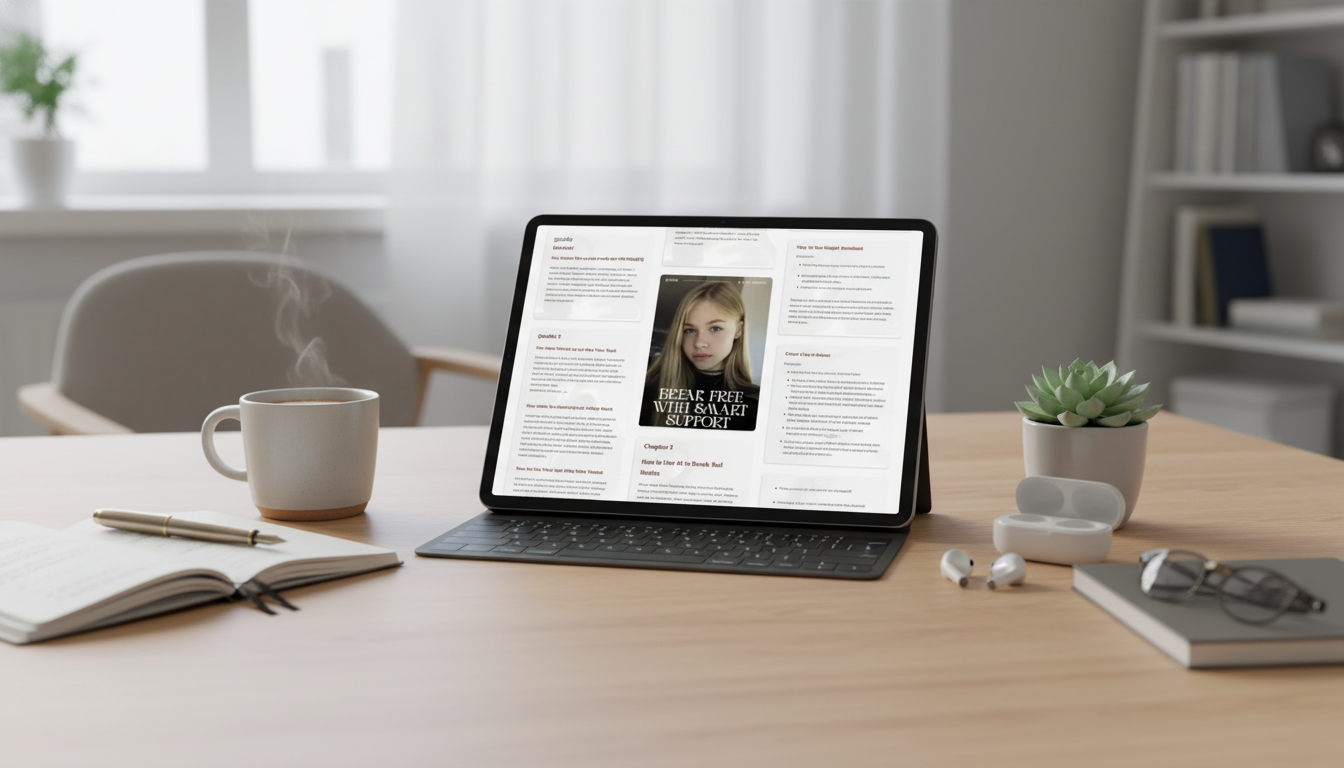
Changing habits is easier when support is immediate, practical, and consistent. AI can act like a personal coach—helping spot triggers, plan replacements, track progress, and recover quickly from slip-ups. Instead of relying on willpower at the exact moment you’re stressed, tired, or bored, you can use “smart support” to make better choices feel more automatic and less draining.
Researchers and health organizations commonly describe habits as learnable patterns shaped by cues, rewards, and repetition. If you can identify your pattern and adjust the environment and the next action, your odds improve. For background reading on how habits form and how behavior change works, the American Psychological Association (APA) and the National Institutes of Health (NIH) offer accessible overviews.
Smart support is less about motivation and more about reducing guesswork. AI tools can help you capture what happened, make sense of patterns, and keep the next step small enough to repeat.
Trying to fix everything at once usually creates decision fatigue. Choose one behavior for a 2–4 week focus window, then build a replacement routine that meets the same need in a safer or more helpful way.
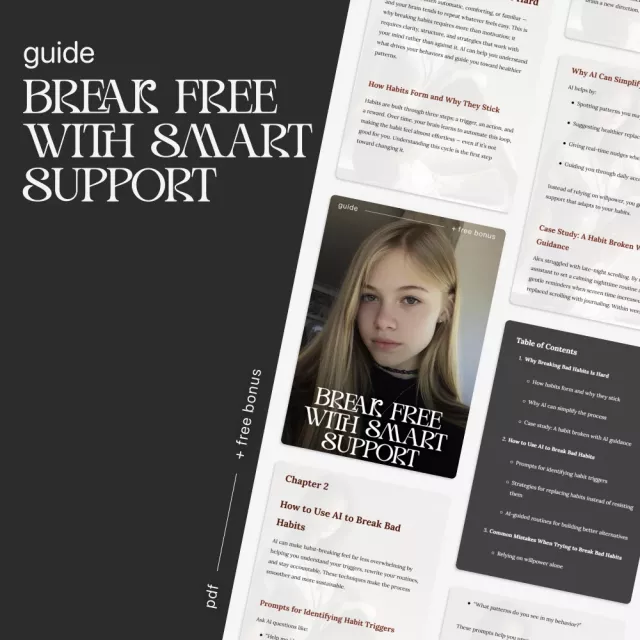
If you want a plug-and-play structure for this step, Break Free With Smart Support | Guide on How to Get AI Help for Breaking Bad Habits and Building Better Routines is designed around defining triggers, choosing replacements, and tracking results without making the process complicated.
A short, repeatable check-in is more valuable than a long journal you never finish. Keep it simple and use the same template so summaries stay accurate.
Example evening log: “CLOSE CALL — 9:40pm, tired, alone, phone in bed; did 2-minute stretch, then read 5 pages.” Small logs like this add up fast.
Most habits follow a loop: cue → craving → response → reward. Once you know your common cues and rewards, you can intervene earlier—before you’re arguing with yourself.
| Trigger pattern | What it usually signals | 2-minute alternative | Environment tweak |
|---|---|---|---|
| Late-night scrolling | Overstimulation + avoidance | Stand up, stretch, set a 2-minute timer | Charge phone outside the bedroom |
| Stress snacking | Need for relief | Drink water, slow breathing for 6 breaths | Pre-portion snacks; keep healthy option visible |
| Skipping workouts | All-or-nothing thinking | Put on shoes and walk 2 minutes | Schedule a short session; lay out clothes |
| Impulsive spending | Seeking novelty or comfort | Wait 10 minutes and review a saved wishlist | Remove stored cards; add a 24-hour rule |
For stress snacking, environment design can be surprisingly effective. Something as simple as storing pre-portioned snacks in an appealing container can reduce “mindless reach.” The Vintage Embossed Glass Storage Jar with Airtight Seal – 23.7 oz is one practical option for visibility and portion control—especially if your plan includes “grab the pre-set option first.”
If you prefer structure over improvising daily prompts, guided templates can remove friction and keep your tracking consistent. Break Free With Smart Support | Guide on How to Get AI Help for Breaking Bad Habits and Building Better Routines includes repeatable exercises for identifying triggers, designing replacements, and running quick check-ins that stay focused on what to do next—so one slip doesn’t turn into a lost week.
Yes—AI can help you plan replacements, reflect quickly after cravings, detect patterns in your logs, and reframe setbacks into specific next steps. It supports behavior change, but it doesn’t replace professional care when safety or serious mental health concerns are involved.
Use a “minimum version” that takes about two minutes and pair it with an if-then plan. Starting frictionless builds consistency first, and you can scale the routine only after it’s reliably happening.
Run a brief reset script, identify the earliest trigger you can change next time, and adjust one variable (environment, timing, or plan). Then complete one tiny action within 24 hours to reestablish momentum.




Leave a comment