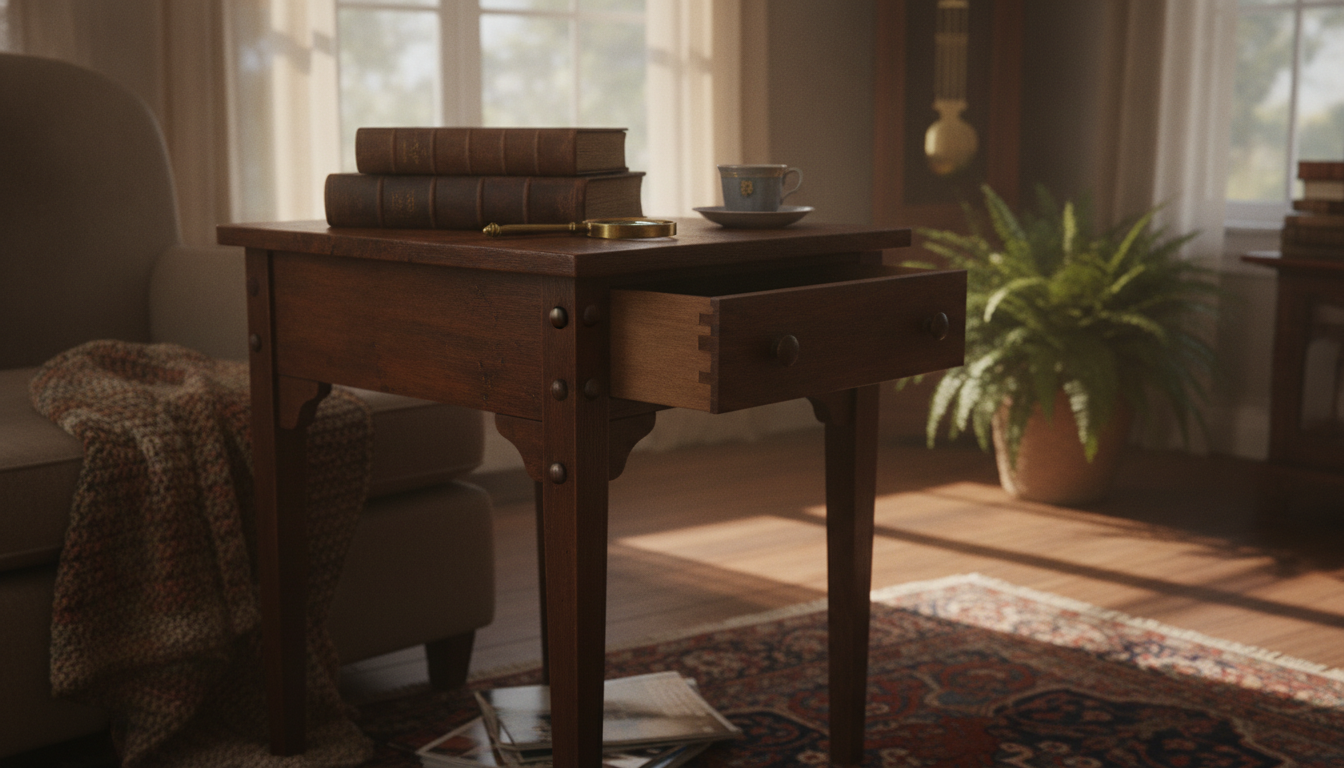
Identifying an antique side table comes down to a few practical checks: age clues, construction methods, materials, and signs of honest wear. Start with the basics—true “antique” typically means around 100+ years old—then look for details that are hard to fake consistently.
Flip the table over and look underneath. Older pieces often show hand-cut dovetails in drawers, uneven saw marks, and subtle irregularities that come from hand tools. Machine-cut joinery can still be old, but crisp, perfectly uniform cuts often point to later production. Also note the hardware: slotted screws generally predate Phillips-head screws, which became common later.
Solid wood expands and contracts over decades. On authentic older tables, you may see slight separations at seams, gentle warping, and a finish that has softened rather than looking glassy-new. Check the underside and inside drawers for a darker oxidized tone compared to the top; an even “aged” color everywhere can suggest artificial distressing.
Patina is more than scratches—it’s the gradual sheen and color change from handling and time. Look for wear where hands naturally touch: table edges, drawer pulls, and leg stretchers. Be cautious with “all-over” distressing that looks patterned or repetitive.
Repairs aren’t necessarily bad; they can support authenticity. However, mismatched screws, fresh wood patches, or brand-new brackets may indicate heavy modification. Check whether feet, casters, or drawer pulls appear newer than the rest of the piece.
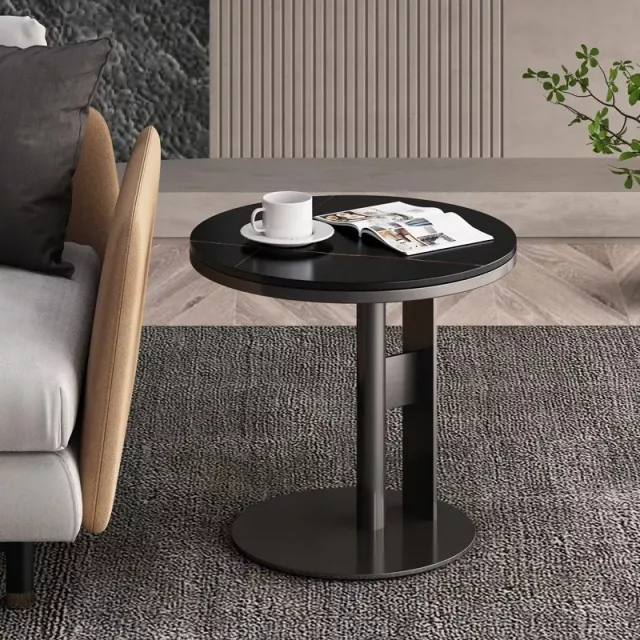
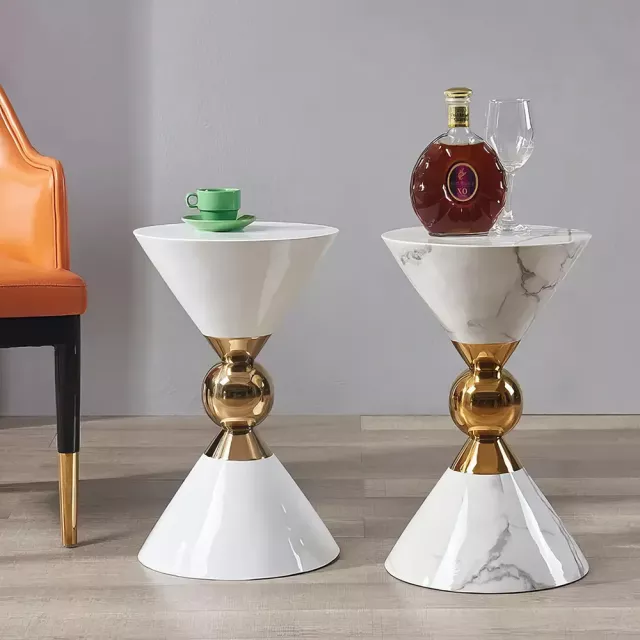
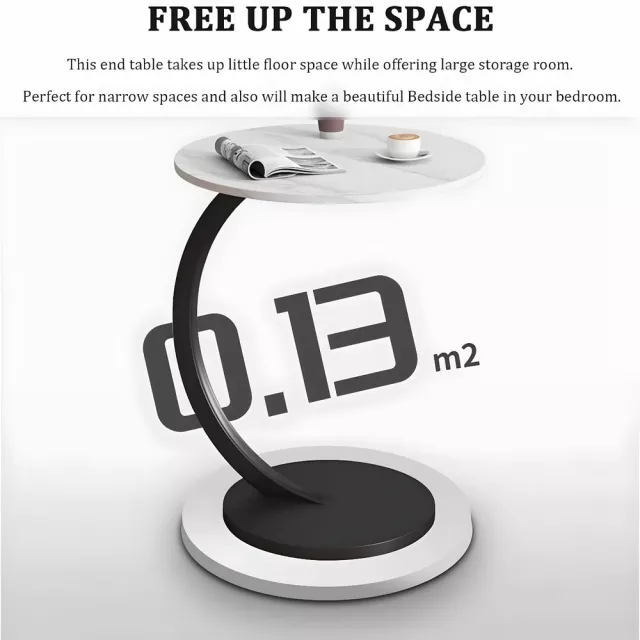
Many antique side tables were built for earlier room layouts, so heights and proportions can differ from modern standards. If you’re comparing older design elements with today’s streamlined looks, this guide to round side tables is a helpful reference point: Nordic minimalist round side table guide.
Oak, walnut, mahogany, and pine are common, depending on region and era. Many older tables also use secondary woods inside drawers or on the back where they won’t be seen.



Leave a comment