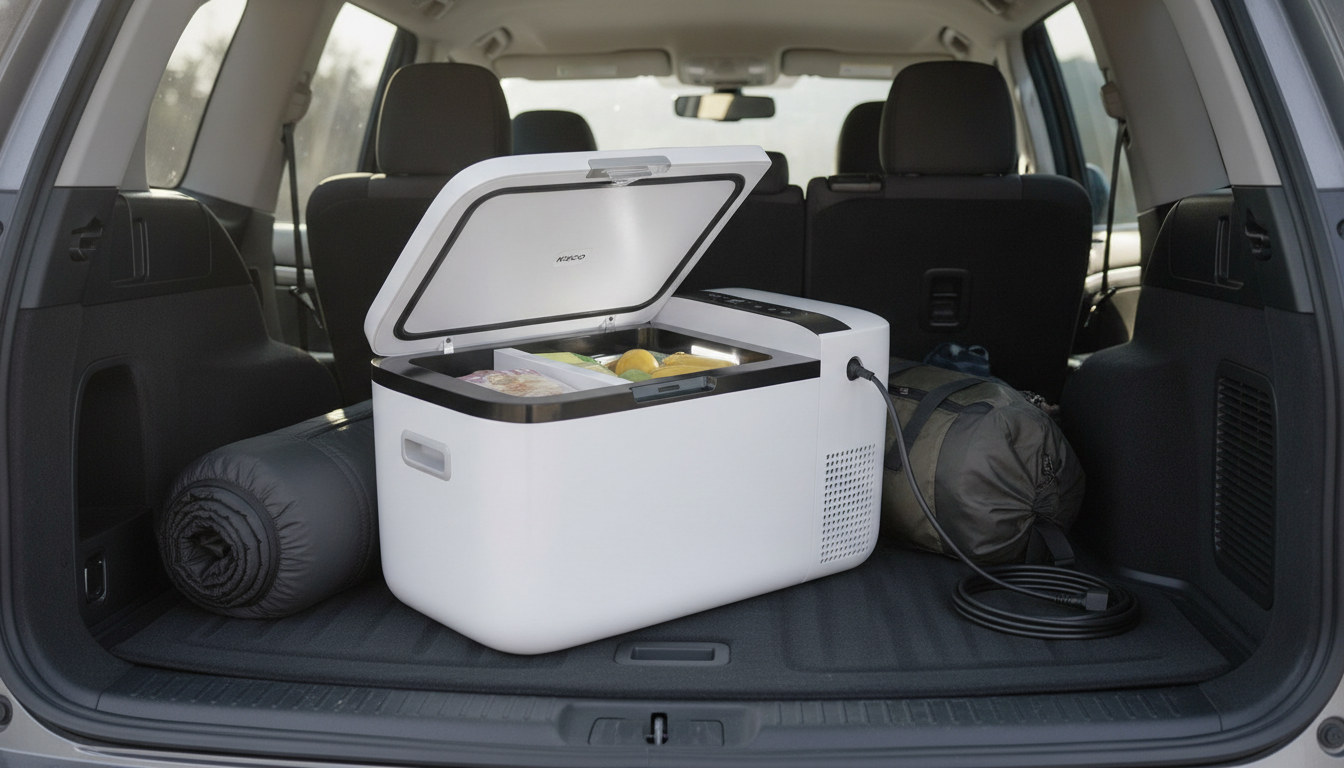
A compact 21-quart 12V refrigerator can keep drinks cold, groceries safe, and meal prep simple during commutes, road trips, and off-road weekends. This model pairs a space-efficient cabinet with a SECOP compressor for consistent cooling in vehicles commonly used for camping and travel, including Subaru, Jeep, and Lexus.
This size and style of vehicle refrigerator is built for real movement: driving, parking, tailgates, trailheads, and quick stops where you want stable cooling without dealing with melting ice.
If you’re shopping specifically for a compact compressor option, see the 21 Quart 12V Refrigerator with SECOP Compressor for Subaru, Jeep, Lexus.
Vehicle cabins can swing from cool to scorching fast—especially when parked in sun—so the cooling system matters as much as the box size.
Twenty-one quarts is a sweet spot when you want a dedicated cold zone but don’t want to sacrifice the whole cargo area. It’s typically enough for 1–2 travelers carrying drinks, snacks, breakfast items, and ingredients for simple meals.
For tidier organization on the go (and less odor transfer), pairing a vehicle fridge with sealed containers can help. A simple add-on for dry goods or campsite organization is the Vintage Embossed Glass Storage Jar with Airtight Seal – 23.7 oz.
Placement is mostly about access, stability, and airflow. The most convenient location is often the one you can reach without unloading half the car.
Most “it won’t cool” headaches on the road come from power issues, not the fridge itself. Plan your connection and your parked-time strategy before the first trip.
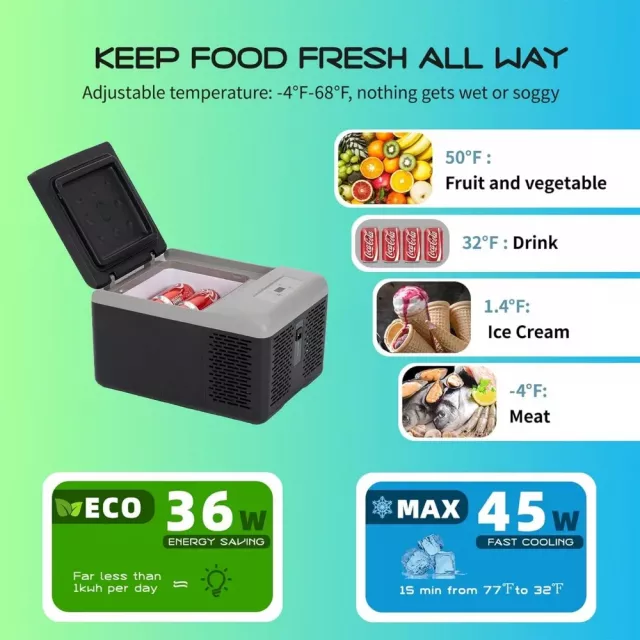
For food safety during travel, aim to keep perishable foods at 40°F/4°C or colder and avoid extended time in the “danger zone.” The CDC’s cold food storage guidance is a helpful baseline for trip planning.
| What to check | Why it matters | Quick tip |
|---|---|---|
| Cargo-space footprint and lid clearance | Prevents fit issues and ensures the lid can open fully | Test with a cardboard template and confirm tailgate/seat movement |
| Ventilation space around the cabinet | Improves cooling efficiency and reduces compressor run time | Keep soft bags and blankets away from vents |
| 12V outlet behavior when parked | Determines whether the fridge can run without ignition on | Check owner settings or test with a phone charger overnight |
| Battery plan for long stops | Reduces risk of a dead starting battery | Use an auxiliary battery or power station for extended camping |
| Securing method | Minimizes shifting on turns or trails | Use tie-down points and non-slip mats |
It depends on your exact cargo dimensions and how the lid opens in your chosen spot. Measure the intended location, allow extra clearance for ventilation, and confirm you can still access tie-down points for securing the unit.
Sometimes, but it depends on battery health, whether your 12V outlet stays powered when parked, and how hard the compressor has to work overnight. For reliable overnight use, an auxiliary battery or power station is the safer plan.
Keep perishable foods at about 40°F/4°C or colder and minimize lid openings to maintain a stable interior temperature. Use a thermometer if possible, and keep raw items sealed and separated to reduce cross-contamination.



Leave a comment