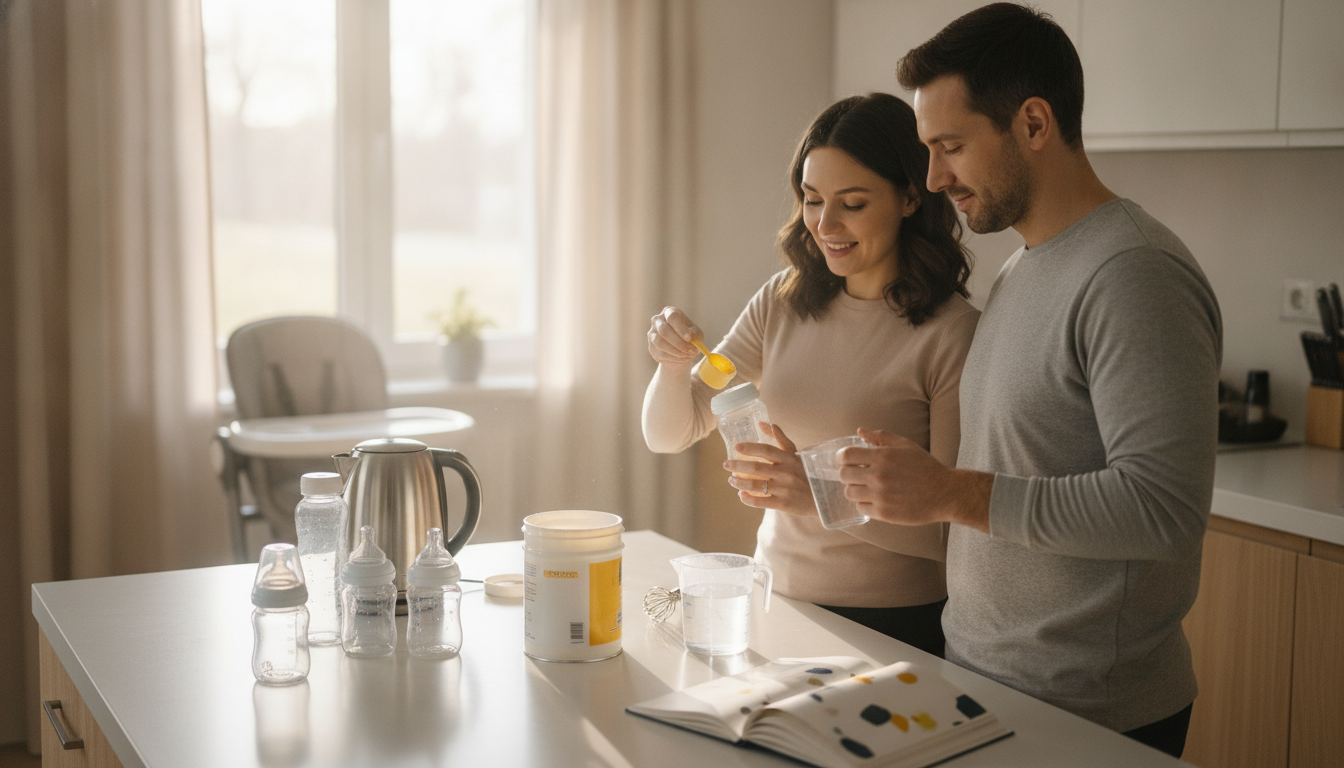
Getting a bottle ready can feel high-stakes when sleep is short and a hungry baby is waiting. A simple, repeatable routine helps prevent common mixing mistakes, supports safe handling, and makes day-to-day feeds smoother—whether preparing a single bottle or setting up for the next 24 hours.
“Correct” formula mixing is less about speed and more about consistency. Start with the basics: use the exact directions on the container for that specific formula type (powder, liquid concentrate, or ready-to-feed). Ratios matter—adding extra water or extra powder can change hydration and nutrition in ways that aren’t safe for babies.
Hygiene matters, too. Wash hands and use a clean work surface each time. Many families sanitize bottles and nipples for newborns or for babies with higher infection risk, especially if their clinician recommends it. Water quality is another key variable; if you’re unsure about local water safety or fluoride levels, check with your pediatrician. For detailed, public-health guidance on safe preparation and storage, see the CDC’s infant formula preparation and storage page.
A “ready-to-mix” station prevents last-minute scrambling and helps caregivers follow the same steps every time.
If you like having a quick visual routine that any caregiver can follow at 2 a.m., a compact guide can be handy: Mixing Baby Bottles Safely and Easily | Step-by-Step Formula Mixing eBook for New Parents.
Powder formula is the most common type that requires careful measuring. Use this routine as a baseline, then follow the label if it specifies different steps.
For formula-feeding basics and practical newborn feeding tips, the American Academy of Pediatrics guidance on formula feeding is a solid reference.
Not all formula is mixed the same way, and swapping steps between types can create problems.
Powder formula handling is often emphasized in safety guidance because it isn’t sterile. For deeper background on safe handling practices, consult the WHO recommendations on safe preparation, storage, and handling of powdered infant formula.
| Situation | What to do |
|---|---|
| Bottle freshly prepared and kept cold | Store in the refrigerator and use within the timeframe stated on the formula container or clinician guidance. |
| Bottle at room temperature | Use promptly; discard if left out longer than the label or safety guidance allows. |
| Baby started feeding from the bottle | Discard remaining formula within the timeframe stated on the label/safety guidance (saliva introduces bacteria). |
| Traveling with prepared bottles | Keep cold in an insulated bag with ice packs; avoid leaving bottles in a warm car or in direct sun. |
For a compact walkthrough designed for real-life feeds (including labeling and storage habits), keep a copy near your feeding area: Mixing Baby Bottles Safely and Easily | Step-by-Step Formula Mixing eBook for New Parents.
If you like keeping small feeding tools together (like a clean, fully dry spare scoop or a nipple-vent brush), a lidded container can help keep items dust-free between uses. Consider something like Vintage Embossed Glass Storage Jar with Airtight Seal – 23.7 oz for dry accessories—avoid storing prepared formula or anything damp inside, since moisture can encourage bacterial growth.
Generally, measure water first so the volume is accurate, then add the exact number of level scoops—unless the formula label instructs otherwise. This helps prevent accidentally concentrating or diluting the feed.
No. Microwaves can create dangerous hot spots even if the bottle feels lukewarm overall; warm with a bottle warmer or a warm water bath and test on your wrist before feeding.
Time limits vary by product type and brand, so follow your formula container instructions and your pediatrician’s guidance. When a baby has started a bottle, discard leftovers within the recommended timeframe because saliva can introduce bacteria.





Leave a comment