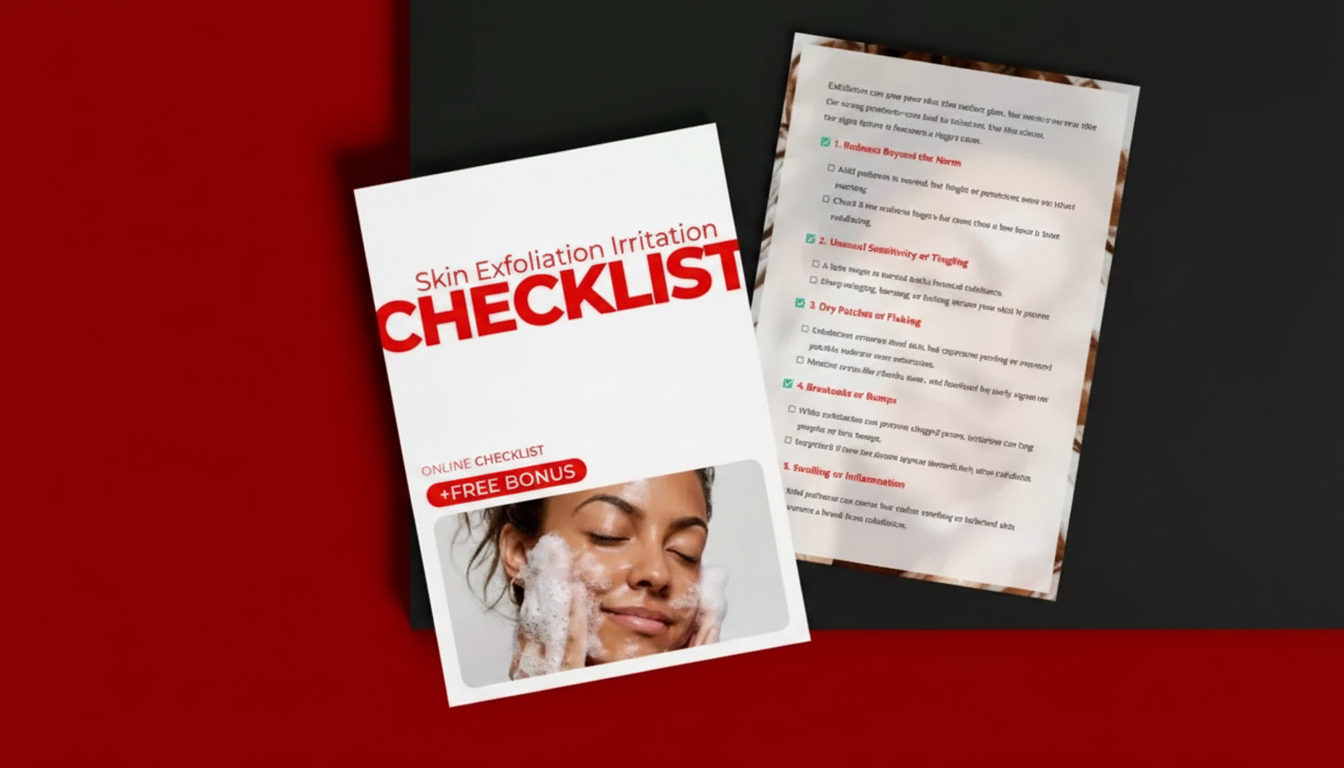
Exfoliation can make skin look smoother and more even-toned, but irritation can show up fast when your barrier is already stressed, the method is too strong, or the timing is off. The goal is simple: remove dull buildup without stripping the protective layer that keeps moisture in and irritants out. Use the checklists below to spot early warning signs, avoid common triggers, and build an exfoliation routine you can actually stick with.
If you want a single-page version to keep by your sink, Skin Exfoliation Irritation Checklist: A Handy Guide to Prevent Skin Damage is available as a quick-reference download.
Mild, short-lived tingling during application can happen with some acids. Stinging that continues after you rinse (or builds over the next few hours) is a red flag. Other common signs of barrier stress include tightness, burning, an unusual shiny look, increased sensitivity to plain water, and makeup that suddenly sits patchy or pills.
Breakouts can be confusing. Some ingredients can bring clogged pores to the surface (“purging”), but widespread inflamed bumps, itching, or a rash-like texture is more consistent with irritation. Discontinue exfoliation if swelling, hives, blistering, or severe pain occurs, and seek medical advice if symptoms escalate.
| What you notice | More likely normal | More likely irritation | What to do next |
|---|---|---|---|
| Light tingling for a few minutes | Yes (with some acids) | No, if brief | Rinse on time, moisturize, reduce frequency if needed |
| Burning that lasts hours | No | Yes | Stop exfoliating; focus on barrier repair for 1–2 weeks |
| Tight, squeaky-clean feeling after cleansing | No | Yes | Switch to gentle cleanser; avoid exfoliation temporarily |
| Flaking around mouth/nose plus redness | Sometimes (dryness) | Often | Pause actives; add bland moisturizer and sunscreen |
| One or two new pimples in usual areas | Sometimes | Not necessarily | Monitor; avoid stacking strong actives until stable |
| Itching, rash-like bumps, swelling | No | Yes | Stop product; consider medical guidance, especially with swelling |
Not all exfoliation works the same way, and “stronger” isn’t automatically better. A method that fits your skin’s oil level, sensitivity, and schedule is usually the one that delivers results without the rebound redness.
| Skin situation | Lower-risk option to start | Use frequency | Avoid or limit |
|---|---|---|---|
| Sensitive, reactive, easily red | PHA or very mild enzyme exfoliant | 1x/week | Harsh scrubs, high-strength acids, daily exfoliation |
| Oily, clogged pores, blackheads | BHA (salicylic acid) leave-on or wash-off | 1–3x/week | Combining BHA with multiple other actives the same night |
| Dry, rough texture, dullness | Low-strength AHA or PHA plus rich moisturizer | 1x/week, then adjust | Over-cleansing; exfoliating on already flaky, tight skin |
| Post-acne marks and uneven tone (stable barrier) | AHA in low to moderate strength | 1–2x/week | Using acids after sun exposure without daily sunscreen |
For additional safety basics, see guidance from the American Academy of Dermatology Association and an overview of benefits/risks from Cleveland Clinic. For sunscreen reminders, the NHS sun safety guidance is a helpful refresher.
If you like keeping cotton pads, clips, or printed routine cards tidy near your sink, Vintage Embossed Glass Storage Jar with Airtight Seal – 23.7 oz can help keep small essentials clean and easy to grab.
A single-page checklist can make exfoliation decisions faster and safer—especially when you’re trying a new acid, scrub, or tool. The Skin Exfoliation Irritation Checklist: A Handy Guide to Prevent Skin Damage includes before/during/after prompts, warning-sign reminders, pairing “do not mix” notes, and a step-down plan when sensitivity starts.
Most people do best starting at 1x/week, then adjusting based on comfort and results. Oilier, more resilient skin may tolerate 2–3x/week with gentle formulas, while sensitive skin often needs less frequent use or milder options like PHA.
Stacking exfoliants with retinol or benzoyl peroxide commonly increases stinging, peeling, and barrier damage. Alternating nights or separating routines (for example, exfoliation on one night and retinol on another) is usually easier for skin to tolerate unless a clinician specifically directs otherwise.
Pause exfoliants and other strong actives, switch to a gentle cleanser, apply a bland moisturizer frequently, and add an occlusive layer if skin feels very dry. Use sunscreen daily and seek medical care if you have swelling, hives, blistering, or severe pain.







Leave a comment