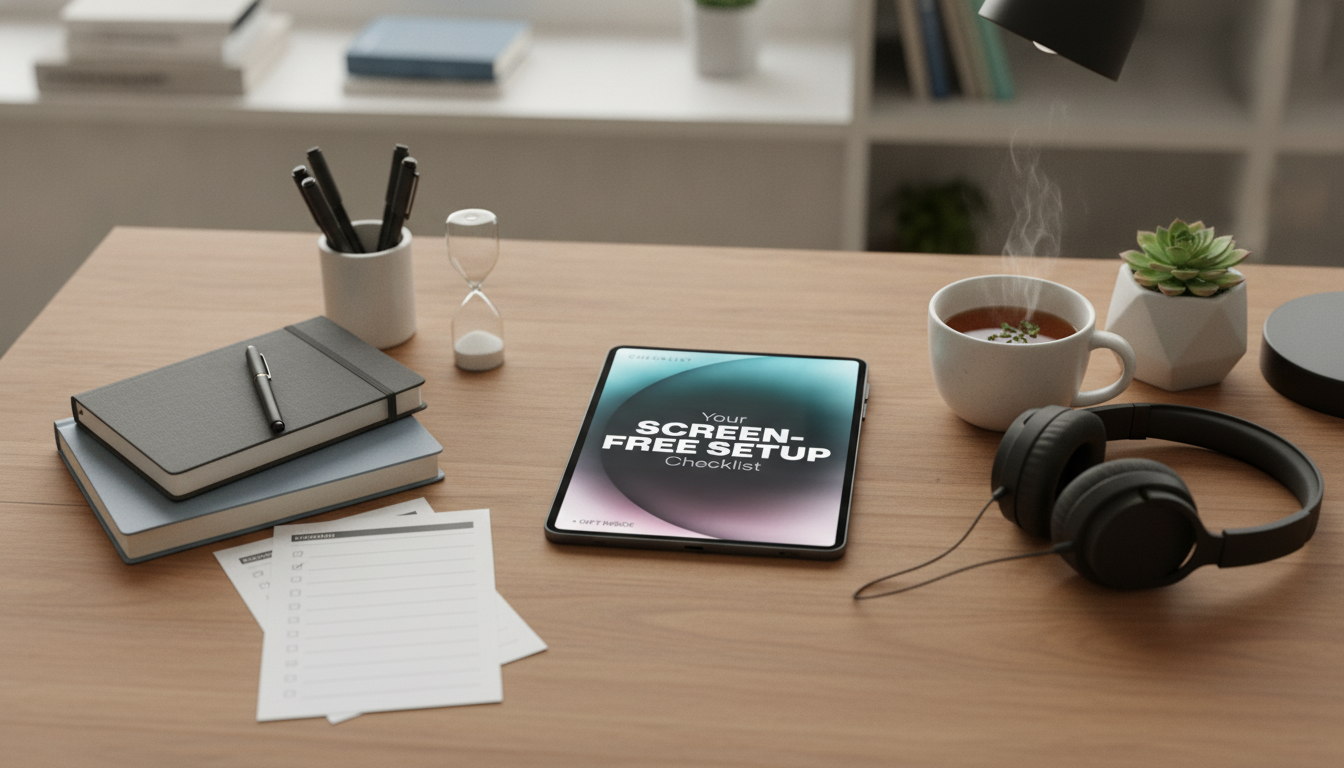
A “study reset” is a short, repeatable sequence you do before the first real task begins. The goal isn’t perfection—it’s to remove small points of friction (clutter, missing supplies, unclear next steps) so your attention can land on reading, problem sets, or writing without a warm-up lap of scrolling and rearranging.
“Screen-free” doesn’t mean zero technology. It means your default study mode minimizes optional screens and keeps devices out of arm’s reach unless they’re truly required. That matters because switching between tasks and streams of information makes sustained attention harder to maintain. The American Psychological Association notes that multitasking can reduce performance and increase errors, especially when attention is split between competing inputs (APA: Multitasking and attention).
The magic is consistency. A simple setup routine becomes a cue → action loop: you reset the desk, define the next action, start the timer, and begin. Over time, your brain associates that sequence with “focus starts now,” which makes procrastination less sticky. Minimalist focus is also decision reduction: fewer objects on the desk, fewer open tabs, fewer choices to negotiate before you can begin.
This reset is designed to be fast enough that you’ll actually do it—even on tired days. Aim for 5–10 minutes, then start a real focus block immediately.
| Step | Action | Placement Tip | Why It Helps |
|---|---|---|---|
| 1 | Clear the desk | Put extras in a bin or a shelf behind you | Reduces visual noise and rummaging |
| 2 | Write the next action | Top-left of the page or on a sticky note | Prevents vague “study” goals |
| 3 | Remove the phone | Another room or sealed drawer | Cuts the highest-impact distraction |
| 4 | Set a timer | Analog timer or offline mode | Creates urgency without checking apps |
| 5 | Prepare only needed materials | Arrange in a single “U” around the page | Stops mid-task searching |
| 6 | Start the first focus block | Begin within 60 seconds of finishing the reset | Builds momentum immediately |
A small space can work in your favor: fewer surfaces means fewer places for clutter to spread. The key is to make “study mode” easy to set up and easy to put away.
For small items (paper clips, index cards, highlighters), a dedicated container prevents the “where did that go?” spiral. The Vintage Embossed Glass Storage Jar with Airtight Seal – 23.7 oz is a tidy way to keep tiny essentials contained without adding desk clutter.
If evening studying is part of your schedule, consider how screens can affect wind-down. The National Sleep Foundation discusses how blue light can impact sleep by influencing circadian rhythms (National Sleep Foundation: How blue light affects sleep). A screen-light approach late at night can help protect tomorrow’s focus.
If you want the reset to feel automatic, a dedicated printable can turn “getting ready” into a quick, repeatable routine. Your Screen-Free Setup Checklist – Minimalist Focus Planner, Printable Study Reset is designed for fast setup, with a minimalist layout that keeps prompts clear and gives you space to define the next action. It’s useful for reading-heavy courses, exam prep, and short review sprints—print once for a binder, or print weekly and keep it in your study tray.
Make screen-free your default: plan and problem-solve on paper, then use the screen only for retrieval and submission. Write a quick purpose note and set a timer before you open the device so it stays a tool, not a distraction source.
Keep only what supports the current task: the book/worksheet you’re using, one pen or pencil, paper/notebook, a timer, and water. Put everything else in a tray or out of sight, and move your phone away to reduce visual and mental pull.
Five to ten minutes is ideal—consistency matters more than perfection. Clear the surface, write the next action, remove the phone, set the timer, and start immediately.






Leave a comment