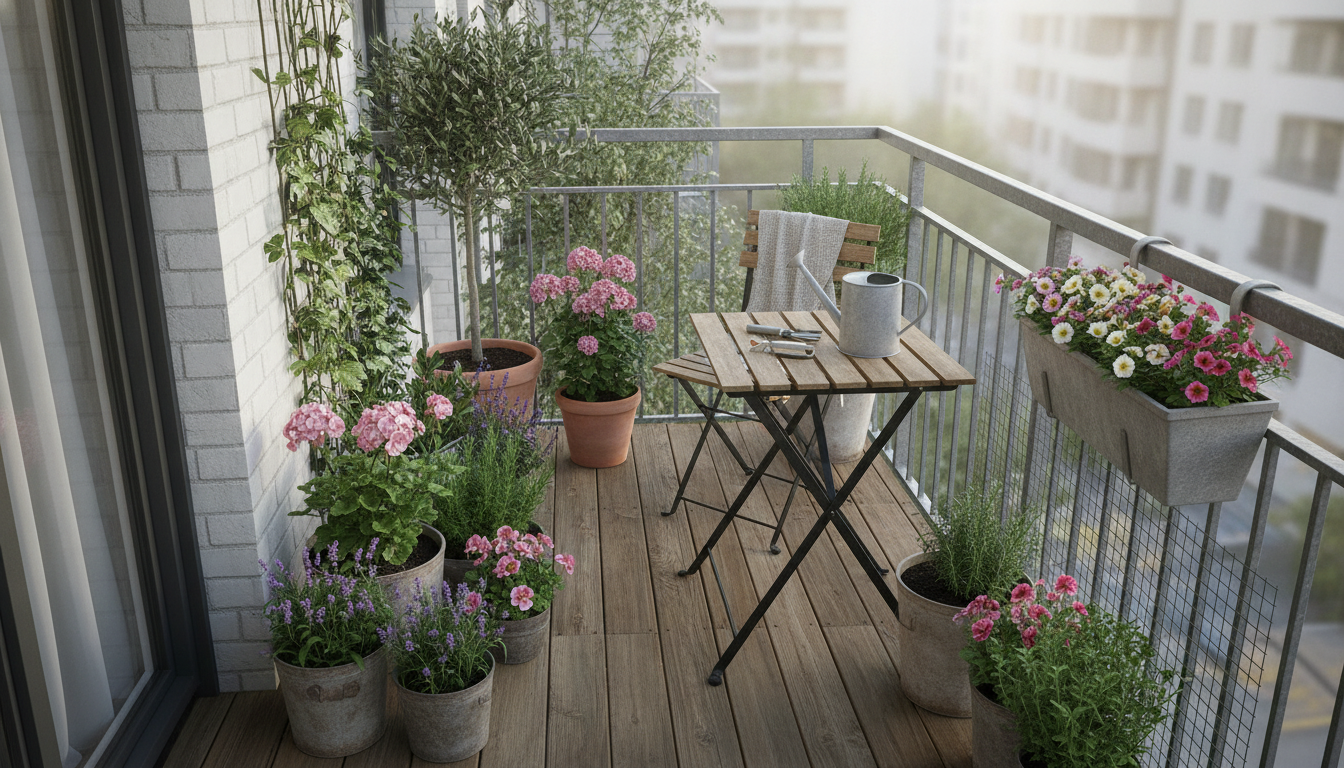
A beautiful balcony garden starts with a clear plan: choose a style, pick plants that match your light and wind conditions, and use containers that look cohesive while staying safe for your building. With a few smart choices, even a small balcony can feel like an outdoor room—lush, colorful, and easy to maintain.
Before buying plants, note how many hours of sun you get, which direction the balcony faces, and whether it’s windy. Full-sun balconies thrive with geraniums, lavender, rosemary, and many herbs; shadier spots do well with ferns, begonias, and leafy greens. If wind is a factor, prioritize sturdy plants, heavier pots, and secure placements along walls rather than exposed railings.
Pick one of these easy looks and repeat it: a Mediterranean herb corner, a tropical-green retreat, or a modern monochrome planter set. Repetition is what makes small spaces feel intentional—repeat 2–3 pot colors, 2–3 plant types, and one accent material (wood, black metal, or terracotta).
Use vertical space to make the balcony feel fuller without crowding the floor. Try a tall plant in one corner, mid-height planters along the wall, and trailing plants near the front. Plant stands, tiered shelves, and wall-mounted planters help create that “garden” feeling fast.
Beauty shouldn’t come with risk. Be mindful of total weight (pots, wet soil, furniture), keep top-heavy containers from tipping, and prevent water runoff that could drip to neighbors below. For a deeper safety checklist—especially for wind and drainage—read this guide: Balcony garden safety: wind, water, and weight.
Define a small “sit spot” with a compact chair, an outdoor mat, and warm lighting. A single lantern-style light or a short string of outdoor-rated lights can make plants look richer at night and extend the time you’ll actually use the space.
Choose sturdy, flexible plants like lavender, rosemary, sedums, ornamental grasses, and compact shrubs. Use heavier containers and position plants near walls or corners to reduce gust impact.




Leave a comment