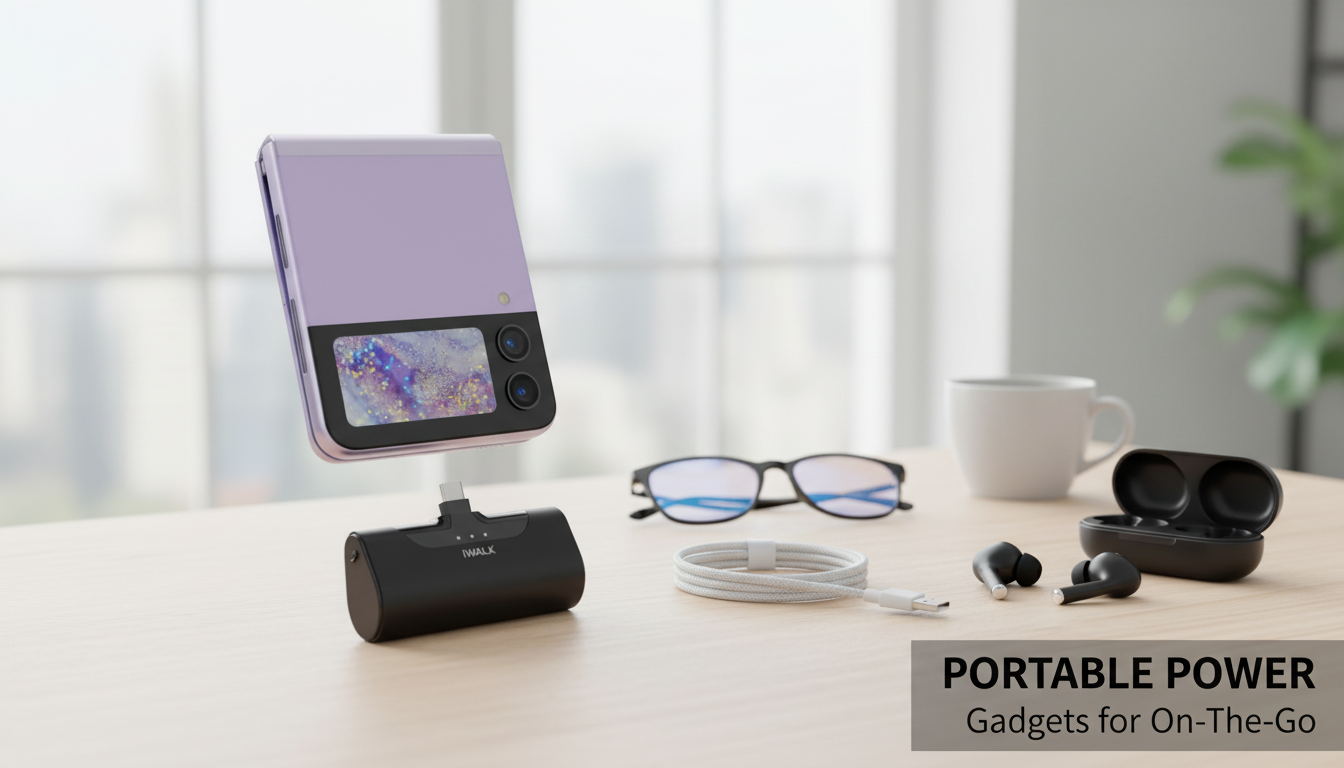
A pocket-size power bank is most useful when it’s quick to top up, easy to carry, and compatible with both iPhone and Android. This ultra-compact 4500mAh USB-C power bank is built for everyday carry—ideal for commutes, short trips, events, and backup power when an outlet isn’t available. The goal isn’t to replace a wall charger or a high-capacity brick; it’s to keep your phone out of the danger zone when you still need maps, messages, tickets, or a rideshare pickup.
Smaller power banks shine when the day is unpredictable and “just enough” power is the difference between staying connected and getting stranded at 1%.
A 4500mAh rating is best thought of as “top-up capacity.” It’s designed for partial recharges and quick boosts rather than multiple full phone charges. Real-world delivered capacity is typically lower than the rated number due to voltage conversion and efficiency losses inside the power bank (a normal, expected behavior).
The sweet spot is getting your phone from a low-battery warning up to a safer range so you can finish the day—especially if you’re relying on navigation, messaging, or mobile boarding passes.
| Scenario | What to expect | Why it matters |
|---|---|---|
| Phone is at 5–20% | A practical top-up to keep it usable | Helps avoid shutdown during maps, transit apps, or calls |
| Modern large-battery phones | Likely a partial recharge | Bigger batteries need more stored energy for a full cycle |
| Older or smaller-battery phones | Closer to a full recharge | Lower battery capacity requires less energy overall |
USB-C is now the practical default for modern charging. It simplifies what you carry, especially if you bounce between devices. If your phone and power bank both support faster charging, a short stop at the battery pack can be more productive—meaning you can unplug sooner and get back to moving.
For more context on adapters and charging behavior, Apple’s official guidance on power adapters is a helpful reference: Apple Support: About USB power adapters. For USB-C standards and connector basics, the USB-IF maintains the most authoritative technical resources: USB-IF (USB Implementers Forum) — USB Type-C resources.
A compact USB-C power bank is especially convenient in mixed-device households. One small backup battery can serve different phones as long as you match the right cable to the right port.
When a charge seems “on and off,” the issue is often the cable fit, cable quality, or pocket lint in the port rather than the battery itself. Keeping ports clean and using a well-made cable usually fixes the problem quickly.
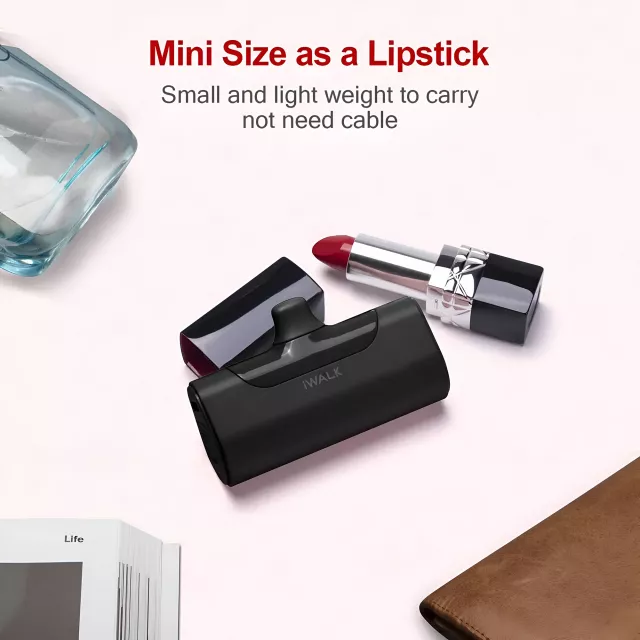
The most useful power bank is the one you actually bring. An ultra-compact 4500mAh unit is built to reduce “leave it behind” moments—because it doesn’t demand a dedicated compartment or add noticeable weight to a small sling or coat pocket.
Like any lithium battery, a little care goes a long way for performance and longevity.
If you fly often, TSA’s guidance on portable chargers is a good baseline to check before packing: TSA: Portable chargers and power banks.
It depends on your phone’s battery size and normal efficiency losses during charging. Many modern, large-battery phones will get a partial recharge, while older or smaller-battery models may get closer to a full charge.
Most phones will charge over USB-C, but “fast” charging depends on what standards your phone supports and the cable you use. USB-C iPhones typically use USB-C to USB-C, while Lightning iPhones need a USB-C to Lightning cable for compatible fast charging.
Power banks are generally allowed in carry-on luggage (not checked bags), as long as they meet airline rules. Check your airline and TSA guidance and keep the power bank protected from short-circuits during travel.






Leave a comment