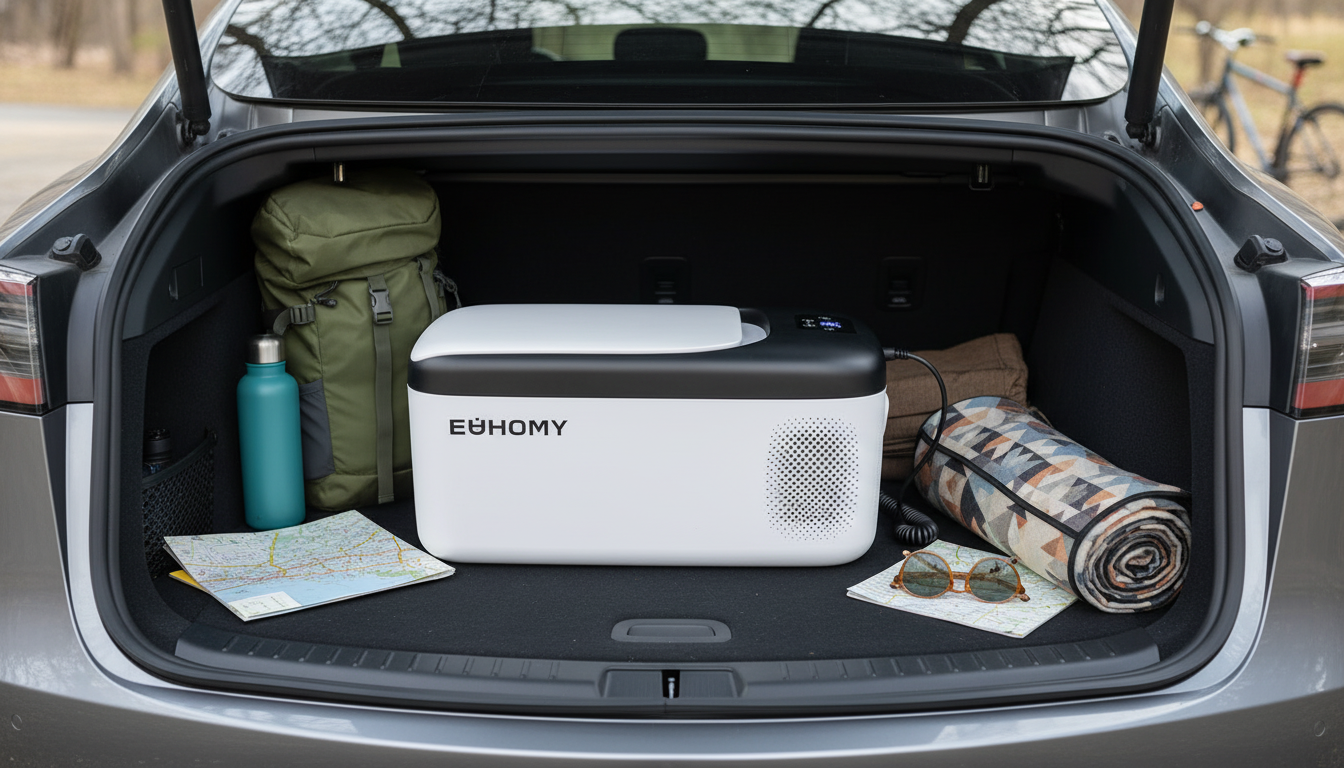
A compact 17-quart 12V portable freezer can keep groceries, drinks, and temperature-sensitive items reliably cold during commutes, camping weekends, and long road trips. Designed to fit neatly in many Ford, Tesla, and Jeep cabins and cargo areas, this style of portable freezer offers true refrigeration/freezing capability without relying on ice—helping reduce mess, food waste, and last-minute stops.
A 17QT unit hits a practical sweet spot: big enough for everyday essentials, small enough to move between vehicles or reposition for better access. Typical real-world uses include:
If food safety is a concern (especially with raw meat, seafood, or dairy), stable temperature control is the main advantage over a traditional cooler. For government guidance on cold holding, reference the USDA Food Safety and Inspection Service and the FDA’s safe food storage resources.
Placement is mostly about three things: airflow, stability, and access. Many drivers place a 17QT freezer in the trunk/cargo area, a rear footwell, or behind the front seats (depending on passenger needs). In a Jeep, the cargo area is common, but it’s smart to plan for off-road vibration and shifting loads.
Loose items become projectiles in sudden stops. For additional safety reminders on securing cargo, review load-securing guidance from the National Highway Traffic Safety Administration (NHTSA).
| Where it goes | What to check | Why it matters |
|---|---|---|
| Trunk / cargo area | Tie-down points and lid clearance | Stability during braking and easier access on trips |
| Rear footwell | Passenger legroom and vent airflow | Convenient reach for snacks; avoids shifting |
| Behind front seats | Seat travel range and cord routing | Prevents cable damage and keeps controls reachable |
| Jeep cargo area | Cargo barriers and off-road vibration control | Reduces movement on rough terrain |
A portable freezer is convenient because it can run from a vehicle’s 12V outlet, but power planning matters—especially during long stops. Start with the basics:
For many drivers, the most noticeable difference comes from pre-chilling and organizing: a well-packed freezer cycles less often than one that’s constantly opened or filled with warm items.
Cold storage is only helpful if it stays in a safe range. These simple targets are widely recommended for holding temperatures:
For a quick grocery run, the freezer can act like insurance—helping keep frozen items from softening in traffic, hot parking lots, or long drives home.
For daily driving, a 17QT freezer is less about maximum capacity and more about usability. The most helpful qualities tend to be:
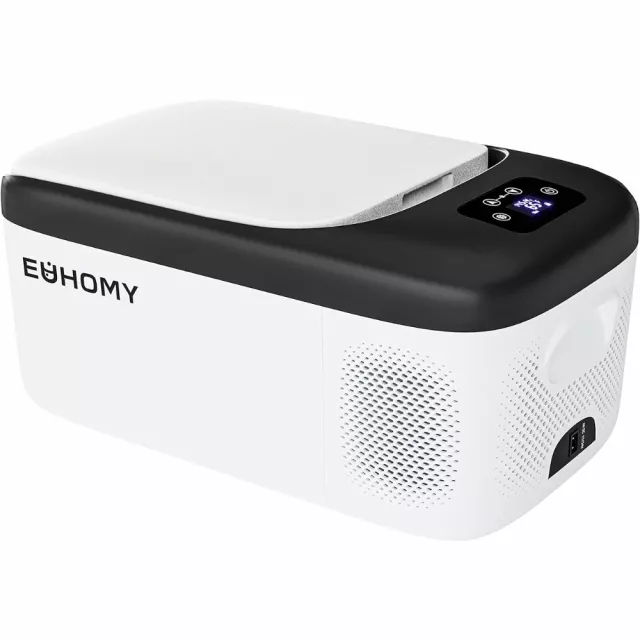
When you want a dedicated in-car cold zone, consider the 17QT 12V Portable Freezer for Ford, Tesla & Jeep for a compact footprint that’s well-suited to road trips, errands, and weekend adventures.
For added organization at home between drives—especially for dry goods that pair with your travel meal prep—consider a simple container like the Vintage Embossed Glass Storage Jar with Airtight Seal – 23.7 oz.
Many 12V portable freezers are designed to run while driving; set a safe temperature, pre-chill items, and limit lid openings for steadier cooling. For sensitive loads, verify with a thermometer and aim for 40°F/4°C or below for refrigeration and 0°F/-18°C or below for freezing.
Yes, continuous operation can drain a starter battery over time, especially during long stops. For extended parking, use a power station or auxiliary battery setup when possible, and follow your vehicle’s guidance on accessory power behavior (including which outlets stay active in EVs).
A portable freezer uses a compressor to control temperature, while an ice cooler depends on melting ice and ambient conditions. The freezer offers steadier temperatures and less mess, but it requires power and good ventilation to run properly.





Leave a comment