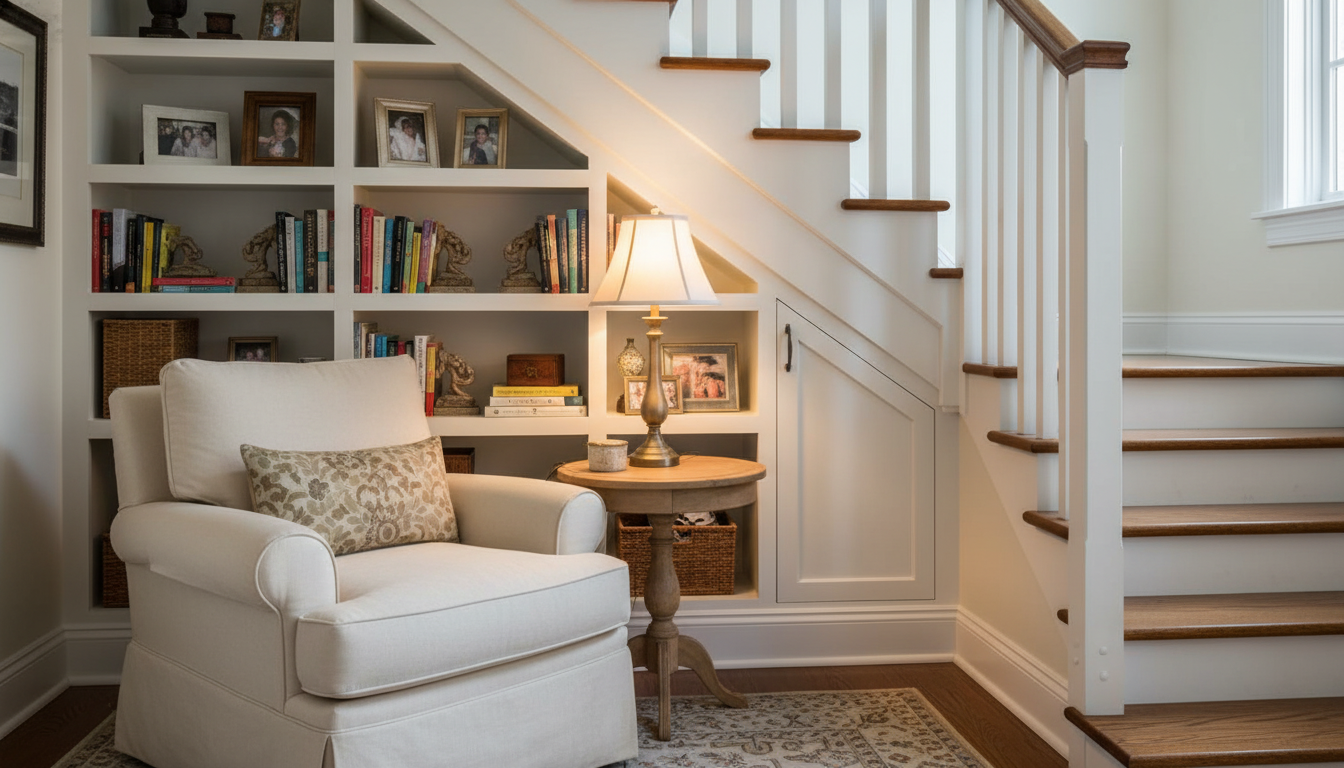
That awkward triangle under the stairs can become one of the most useful zones in the home. With the right measurements, lighting, and a plan for access, it can hold everyday clutter, add seating, or even carve out a small “room” that feels intentional rather than leftover. The best under-stair projects start by treating the space like a tiny floor plan: define what it needs to do, design how you’ll reach things, then finish it so it looks like it’s always been part of the house.
Before choosing drawers, doors, or shelves, get a clear picture of what you’re working with. Under-stair spaces look similar from the outside, but the usable volume can vary dramatically once you account for framing, angles, and utilities.
| Goal | Best-Fit Ideas | Access Type | Typical Difficulty |
|---|---|---|---|
| Hide clutter fast | Pull-out drawers, closed cabinets, tilt-out bins | Full-extension slides or hinged doors | Medium |
| Add everyday function | Mudroom cubbies, mail station, charging nook | Open + a few closed compartments | Low–Medium |
| Create a cozy spot | Reading nook, kid fort, pet den | Open front or curtain/door | Low–Medium |
| Showcase decor | Built-in shelves, lit display niches, gallery wall | Open shelving | Low |
| Expand storage capacity | Pantry-style pull-outs, broom closet, luggage closet | Tall doors + adjustable shelving | Medium–High |
If the goal is to reduce visual clutter, closed storage under the stairs can feel like an architectural upgrade rather than an afterthought—especially when the face of the build is clean and aligned with nearby trim.
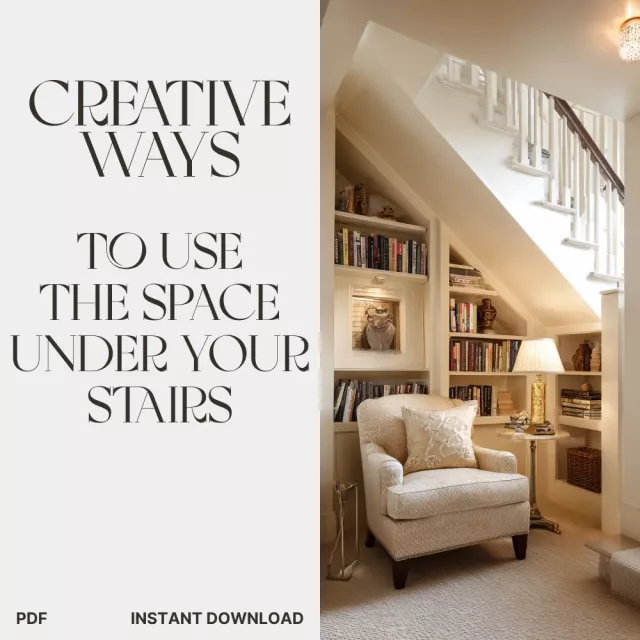
For a compact, ready-to-use planning resource that helps you choose a layout and map storage zones, consider the Creative Ways to Use the Space Under Your Stairs eBook.
Not every under-stair solution has to be about hiding things. A nook can make the space feel warm and purposeful, especially in hallways that otherwise act as pass-through zones.
If your under-stair cavity touches an exterior wall, insulation and air sealing can help prevent that “cold closet” effect; the U.S. Department of Energy’s guidance on insulation is a helpful reference point before you close anything in.
For shelf storage that looks curated (not cluttered), a vintage embossed glass storage jar for tidy shelf storage can hold small essentials like batteries, clothespins, pet treats, or tea bags while keeping open shelving visually calm.
If indoor storage is already maxed out, shifting bulky outdoor gear elsewhere can free up your under-stair build for everyday items; a sturdy 6×4 FT metal outdoor storage shed for garden, bike, and tools is an option for bikes, yard tools, or seasonal equipment.
When projects touch wiring, panel access, or enclosed electrical areas, follow code requirements and best practices; the NFPA overview of the National Electrical Code (NEC) and the International Residential Code (IRC) are solid starting references before you finalize a build plan.
Start with open shelving or a simple bench paired with baskets so the setup stays removable and low-commitment. Measure carefully, keep walkways clear, and add a small light (puck or LED strip) to make it feel like a finished zone rather than overflow.
Match cabinet fronts, trim profiles, and hardware to nearby built-ins or doors, and carry the same paint color and toe-kick height across the face. Flat panels with push-latches reduce visual breaks and help the storage blend into the wall.
It can be safe if you locate plumbing, electrical, and HVAC first and maintain required access to panels and shutoffs. Avoid enclosing equipment that needs ventilation, and use a licensed professional if you’re altering wiring or working near service components.





Leave a comment