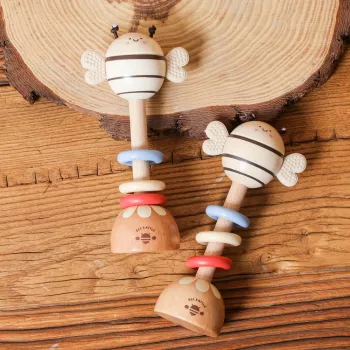
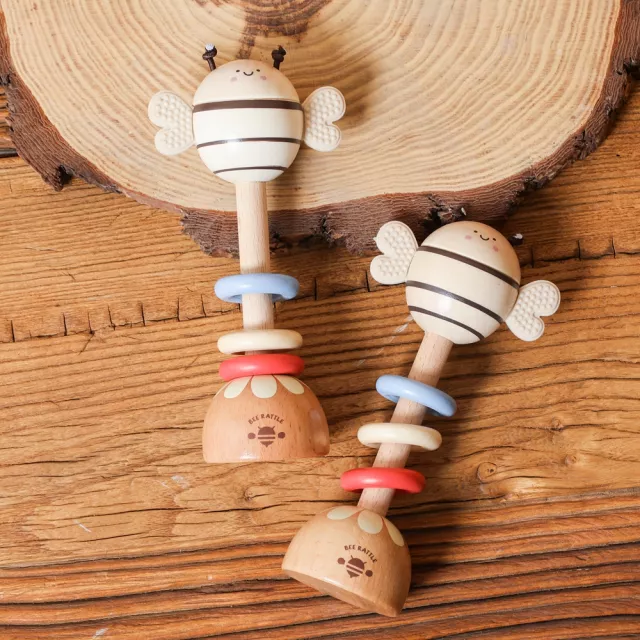
A garden-themed wooden music set can turn everyday play into rich sensory exploration—without batteries, bright screens, or overwhelming noise. With simple instruments sized for little hands, babies and toddlers can practice grip, coordination, listening, and early rhythm while caregivers guide play gently, one sound at a time. For a ready-to-gift option, see the Montessori Wooden Garden Music Set for Babies and Toddlers.
What a garden-themed wooden music set encourages
Musical toys feel playful, but the learning underneath is wonderfully practical—especially when instruments are simple, tactile, and predictable.
- Cause-and-effect learning: A tap or shake produces a predictable sound, supporting early problem-solving and confidence.
- Focused attention: Repeating a single tone or pattern helps toddlers practice concentration in short bursts.
- Order and routine: Instruments can be introduced one at a time, then returned to a consistent spot after play.
- Language support: Naming instruments and sounds (tap, shake, loud, soft, fast, slow) builds vocabulary through play.
- Social connection: Turn-taking and call-and-response patterns create simple, joyful interaction.
For more ideas on why music and movement matter in early childhood, the American Academy of Pediatrics shares practical guidance for families here: Music and Movement for Children.
Skills supported by musical play (by age range)
Children use instruments differently as they grow. Matching expectations to developmental readiness keeps music time enjoyable and calm.
- Babies (around 6–12 months): Grasping, wrist rotation, sound tracking, and sensory exploration.
- Young toddlers (around 12–24 months): Intentional striking/shaking, bilateral coordination, and beginning turn-taking.
- Toddlers (around 2–3 years): Rhythm imitation, volume control, and short pattern sequences (e.g., tap-tap-pause).
- Mixed-age play: Older toddlers can “demonstrate” while younger children explore, promoting gentle peer learning.
Simple musical activities and what they practice
| Activity |
How to do it |
What it builds |
| Single sound discovery |
Offer one instrument; demonstrate once; pause and let the child try |
Cause-and-effect, attention, confidence |
| Loud/soft contrast |
Play one note loudly, then softly; invite imitation |
Self-control, listening discrimination |
| Stop-and-go game |
Play for 3–5 seconds, then stop and wait; restart after eye contact or a cue |
Impulse control, shared attention |
| Two-sound pattern |
Use two instruments (A-B-A-B) with a slow tempo |
Memory, rhythm foundations, sequencing |
Materials and build details that matter for little ones
When the audience is small hands and busy mouths, details matter. A well-made wooden set helps keep the focus on sound exploration rather than frustration.
- Wooden construction: A sturdy feel, satisfying sound resonance, and a natural tactile experience.
- Smooth edges: Rounded corners reduce scrapes during enthusiastic shaking and banging.
- Finish and paint: Look for well-sealed surfaces that wipe clean easily after messy play.
- Size and weight: Instruments should be light enough for one-handed use but stable enough to stay put when tapped.
- Sound level: Pleasant tones that aren’t piercing make it easier to keep play calm and repeatable.
For toy safety reminders (including age-appropriateness and supervision), the U.S. Consumer Product Safety Commission is a helpful reference: Toy Safety.
Setting up a calm, Montessori-aligned music space
Montessori-aligned musical play is less about “performance” and more about purposeful, repeatable actions. A simple setup helps children engage longer and transition out of play more smoothly.
- Use a small tray or basket: Keep the set visually organized and easy to return after use.
- Rotate instead of overload: Present 1–3 instruments at a time to reduce distraction.
- Model once, then wait: Demonstrate a single action and let the child explore without frequent corrections.
- Create a predictable routine: A short “music time” followed by putting each piece back supports independence.
- Choose a soft surface: A rug or play mat can reduce noise spikes and protect floors.
If you’d like broader Montessori-at-home ideas (including routines and independence), the American Montessori Society offers family-friendly guidance here: Montessori at Home.
Safe use and caregiver supervision
- Check age guidance: Follow the maker’s recommended age range and supervise closely during early exploration.
- Inspect regularly: Look for loosened parts, cracks, or splinters—especially after drops.
- Mind small pieces: Keep any detachable components out of reach of children who mouth objects.
- Hearing comfort: If a child startles or covers ears, move to softer instruments or play farther away.
- Store dry: Keep wood away from soaking water to prevent warping and finish breakdown.
When this set makes a thoughtful gift
- First musical toy: A gentle introduction to rhythm and sound without screens or batteries.
- Birthday or holiday present: Small instruments invite repeated practice rather than one-time novelty.
- Playdate staple: Encourages turn-taking and short, cooperative games.
- Nursery or toddler corner upgrade: Adds purposeful, sensory-focused activity to a toy rotation.
Product details and quick buying notes
In stock now: Montessori Wooden Garden Music Set for Babies and Toddlers
Helpful add-on for organization: Keep small accessories together in a dedicated container like the Vintage Embossed Glass Storage Jar with Airtight Seal – 23.7 oz (store out of reach and use only with caregiver handling).
FAQ
What age is a wooden music set appropriate for?
Many wooden music sets work well from around 6 months through age 3, depending on the child’s ability to grasp, sit steadily, and explore safely. Always follow the product’s stated age guidance and supervise closely—especially during the mouthing stage.
How can musical play be kept calm instead of noisy?
Limit the number of instruments available at once, play on a rug or soft mat, and model “soft” sounds before introducing “loud.” Short sessions with turn-taking or stop-and-go games also help keep volume and excitement manageable.
How should wooden instruments be cleaned and stored?
Wipe with a lightly damp cloth, dry immediately, and avoid soaking to protect the wood and finish. Store the pieces in a dry tray or basket and do quick safety checks for splinters, cracks, or loose parts.
Recommended for you





Leave a comment