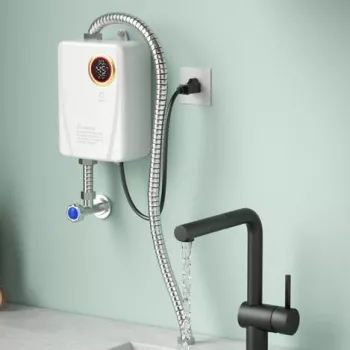
An instant wall-mounted electric water heater delivers hot water on demand without a bulky storage tank. With an LCD display for clear temperature monitoring, this style of heater can suit small bathrooms, sinks, and point-of-use setups where space, response time, and control matter most.
Tankless, point-of-use electric heaters are built around a simple idea: heat water as it flows, not while it sits. That design brings several practical advantages in tight spaces and quick-use scenarios.
For a deeper overview of how demand-type systems work and where they fit, the U.S. Department of Energy offers a helpful explainer on tankless or demand-type water heaters.
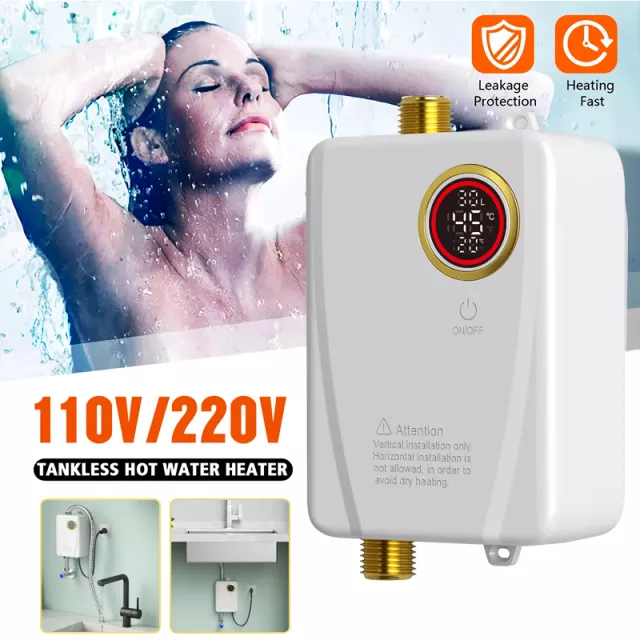
The biggest “quality of life” feature on many compact instant heaters is the screen. A good display and control setup makes the heater easier to live with, especially when different people use the same sink or shower.
For households with kids or guests, visibility also supports safer habits. Scalding risk can increase when settings drift higher than intended, so it helps to keep temperature changes obvious. The U.S. Consumer Product Safety Commission shares guidance on scald burn prevention.
Instant electric heaters can be compact, but they’re not “plug-and-play” in many homes. A clean installation starts with placement, electrical verification, and straightforward plumbing runs.
| Item to verify | Why it matters | What to confirm before ordering |
|---|---|---|
| Electrical capacity | Instant heaters can draw significant power | Dedicated circuit availability, panel capacity, correct voltage and breaker sizing |
| Water pressure and flow | Performance depends on flow rate and incoming temperature | Typical household pressure, expected flow at the fixture, seasonal inlet temperature swings |
| Mounting location | Affects usability and service access | Dry, accessible spot with proper clearances and a solid mounting surface |
| Plumbing connections | Reduces leaks and installation complexity | Compatible pipe size, shutoff valves, and a plan for strain-free connections |
| Safety protections | Helps prevent damage and unsafe operation | Overheat protection, pressure relief approach per local code, and manufacturer guidance |
Instant electric heaters are best understood in terms of temperature rise at a given flow rate. The colder your incoming water and the higher your flow, the harder the unit must work to reach your target temperature.
If efficiency comparisons are part of the decision, ENERGY STAR maintains a general overview of water heater types and efficiency considerations, which can help frame expectations across different technologies.
A compact instant heater can be dependable for daily use, but reliability is closely tied to correct sizing, safe electrical work, and routine upkeep—especially in hard-water areas.
If the goal is compact hot water delivery with clear on-unit temperature monitoring, the Instant Wall-Mounted Electric Water Heater with LCD Display is built for wall-mounted, tankless-style use and quick temperature checks.
For garage or workshop setups, keeping parts and tools organized can make installation and maintenance easier. A weather-resistant storage option like the Sturdy 6×4 FT Metal Outdoor Storage Shed for Garden, Bike, and Tools can help store supplies, spare fittings, and seasonal gear away from the work area.
It can, but shower suitability depends on the heater’s rated output, incoming water temperature, and shower flow rate. Check the expected temperature rise at your typical flow, and note that reducing flow can help the outlet temperature climb.
When another fixture opens, the available flow and pressure through the heater can change, which affects how much heat it can add. Proper sizing, stable pressure, and limiting simultaneous draws help keep temperature steadier.
It depends on water hardness and how frequently the heater runs. In hard-water areas, descaling may be needed more often; follow the manufacturer’s recommended interval and approved method for your model.





Leave a comment