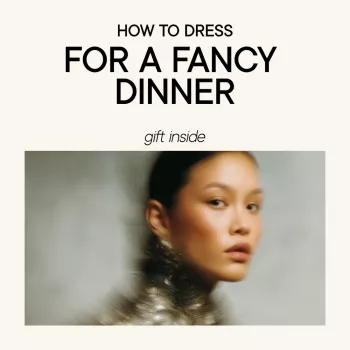
A fancy dinner looks different depending on the invitation, venue, time of day, and who’s hosting. The goal is simple: match the formality, look polished up close, and feel comfortable enough to enjoy the evening. Use this guide to decode the dress code, choose an elegant outfit formula, and finish with details that look intentional from the first toast to the last photo. For more guidance, see The Only Formal Attire Guide You Need – Dress Codes 101.
Before you pull a single hanger, anchor your look to what the host actually expects. A “fancy dinner” at a private club reads differently than a chef’s-counter reservation at a trendy spot—even if both are expensive. For further reading, see The Vogue Guide to Formal Attire Dress Code.
If you’re still unsure, look up the restaurant’s photo tags or gallery. You’re not copying outfits—you’re checking the “average” level of polish (heels vs. sneakers, jackets vs. hoodies, satin vs. cotton).
Dress codes can feel vague until you translate them into fabric and silhouette. These cues help you land in the right zone without overthinking.
| Dress code | Outfit direction | Best fabrics | Avoid |
|---|---|---|---|
| Black tie | Gown or formal evening dress; tuxedo or very dark formal suit | Silk, satin, velvet, fine wool | Casual footwear, loud logos, daytime cotton |
| Formal / Black-tie optional | Sleek midi dress or tailored set; dark suit with elevated styling | Crepe, satin, chiffon, fine wool | Distracting prints, wrinkly fabrics |
| Cocktail | Statement dress or jumpsuit; suit with crisp shirt | Crepe, jacquard, structured blends | Overly casual denim, chunky sneakers |
| Smart casual (upscale) | Blazer + dressy top; knit dress; refined trousers | Merino, ponte, structured cotton blends | Gymwear elements, flip-flops, worn-out shoes |
For deeper etiquette context, the Emily Post Institute’s guidance on dress codes is a reliable reference point. For black tie specifics, The Black Tux black tie guide breaks down what’s considered standard today.
When the clock is ticking, use a formula. You’ll look intentional, and you won’t end up changing three times because the outfit feels “almost right.”
A quick way to avoid looking overdone: pick a single “special” element (a satin skirt, a sharp blazer, a statement neckline) and keep everything else clean and tailored.
At a fancy dinner, people notice the finishing more than the trend. The most expensive outfit can look off if it tugs, wrinkles, or competes with itself.
If you’re building confidence fast, start with what you can control: a clean hemline, steamed fabric, and shoes that look pristine.
These are the details that make your outfit read “evening” the moment you walk in—and they also keep you comfortable at the table.
Aim for cocktail-leaning polish: a tailored silhouette, elevated fabric (crepe, satin, fine knit), and refined shoes. Check the venue’s photos to gauge the average level of formality, then go slightly dressier than what you expect to see.
Usually no for formal settings. If the restaurant is upscale but clearly casual, dark non-distressed denim can work with a blazer, an elegant top, and dress shoes—otherwise, choose trousers or a dress.
Prioritize fit, breathable fabrics, supportive shoes, and smart underlayers. A wrap-style midi, a tailored set with a bit of stretch, or a defined-waist jumpsuit can look elevated while still feeling easy to wear.





Leave a comment